Ancient World Map
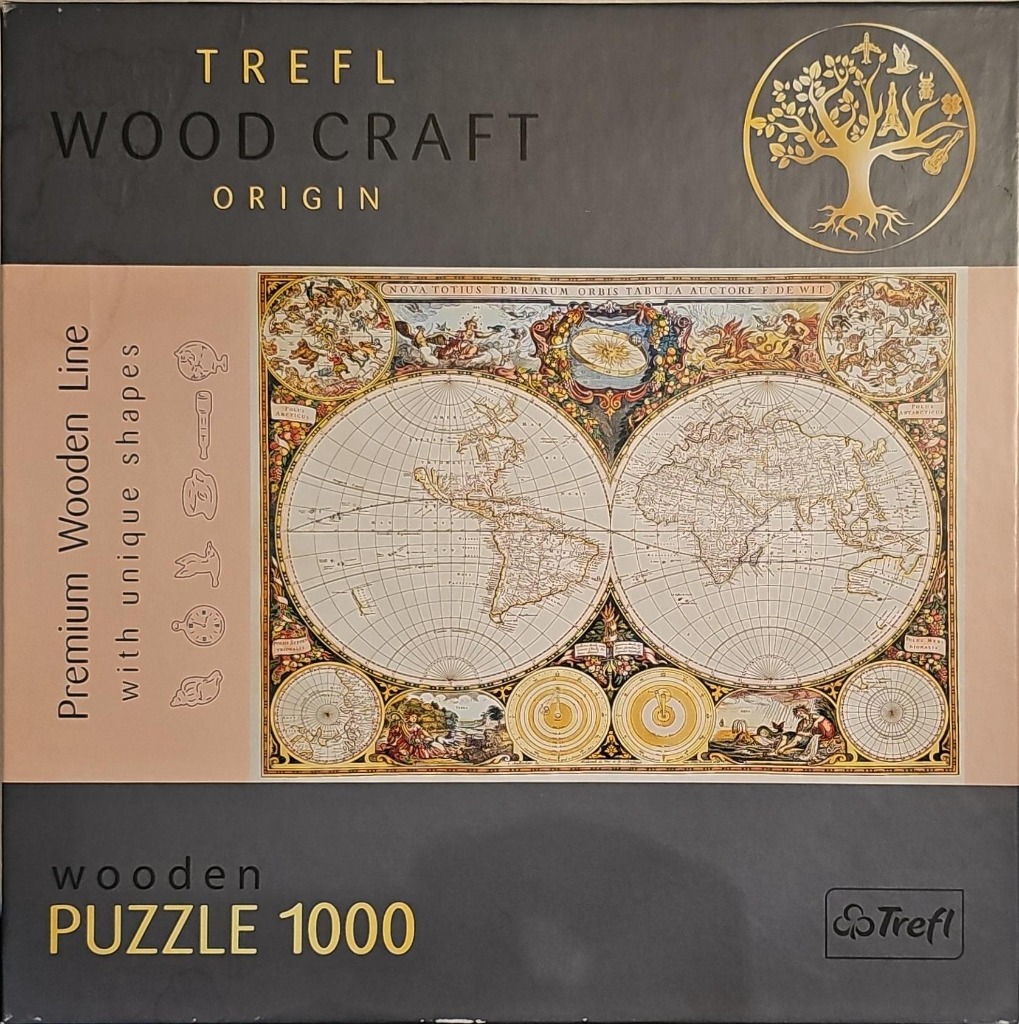
The central image is a detailed, antique-style world map featuring two large circular hemispheres set against a cream-colored background. The map displays the continents as they were understood during the era of early cartography, surrounded by a complex web of longitude and latitude lines. The title, "NOVA TOTIUS TERRARUM ORBIS TABULA AUCTORE F. DE WIT," is printed in elegant lettering along the top edge of the map.
The composition is highly decorative, with the space surrounding the two main hemispheres filled with intricate illustrations. Along the top, there are celestial depictions of figures and zodiac signs. Below the hemispheres, four smaller circular diagrams are positioned in the corners and center, showing planetary alignments and additional geographical details. The artwork uses a warm, muted palette of sepia, ochre, soft blues, and muted greens, giving it the appearance of an aged parchment document.
Fine, dark ink lines define the borders, landmasses, and the many allegorical figures that frame the maps. The overall aesthetic is classical and scholarly, reminiscent of 17th-century engraving and painting styles. The presentation is flat and illustrative, prioritizing intricate detail and decorative flourish over photorealism, creating a timeless, historical atmosphere.
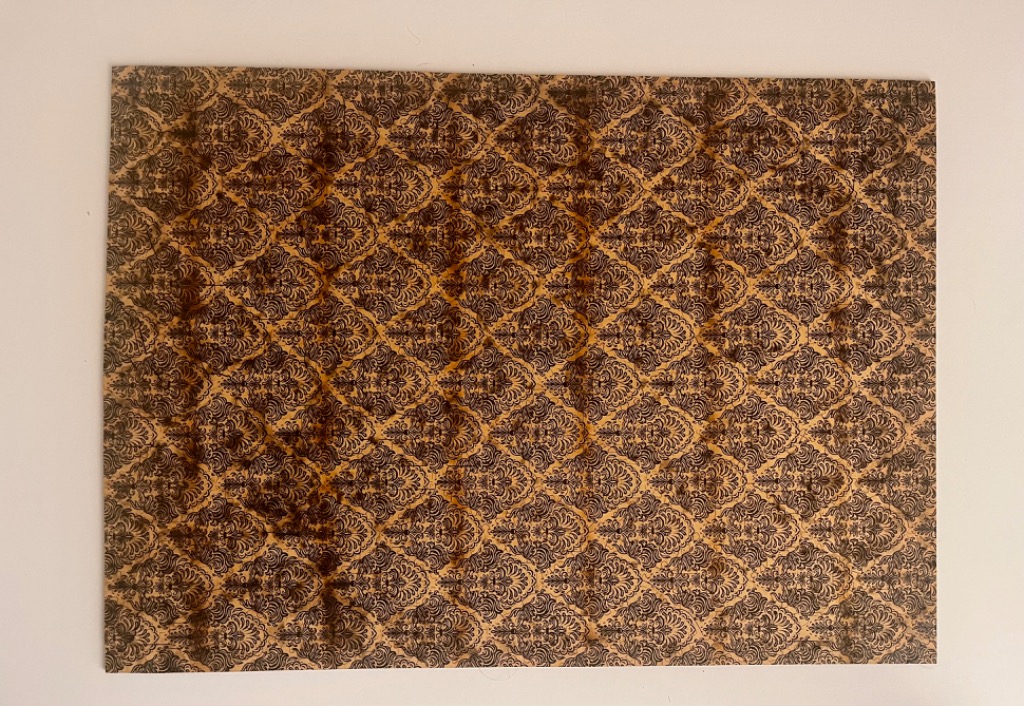
The image features a repeating damask pattern characterized by ornate, dark brown, symmetrical floral and leaf motifs. These intricate shapes are interconnected in a diamond-like grid, creating a sense of Victorian-era elegance and traditional textile design.
The background layer is a warm, distressed yellow or ochre tone, which appears aged and weathered. There are subtle, uneven patches of darker shading and mottled textures that simulate the look of antique paper, parchment, or a decaying wall covering. This artificial aging gives the design a vintage, rustic, and somewhat moody aesthetic.
The overall composition is a flat, uniform pattern that spans the entirety of the rectangular space without a central focal point. The contrast between the dark, detailed damask foreground and the textured, sepia-toned background creates a depth of field that feels tactile and historical, reminiscent of classical wallpaper or vintage fabric.
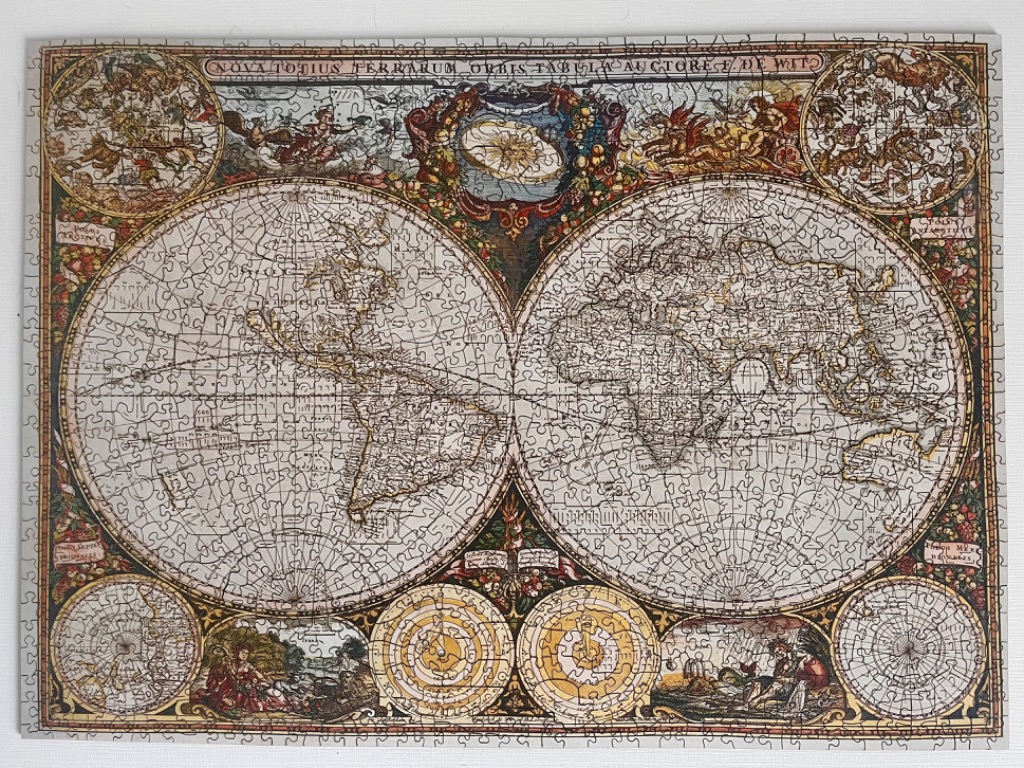
This image depicts a reproduction of an ornate 17th-century antique map titled "Nova Totius Terrarum Orbis Tabula Auctore F. de Wit." The central focus consists of two large, circular hemispheres showing the geography of the known world as it was understood during the historical period. The continents are rendered in a vintage cartographic style with faded parchment tones, detailed line work for coastal outlines, and grid lines traversing the oceans.
Surrounding the two primary hemispheres is a wealth of classical ornamentation. The four corners and central spaces are filled with detailed celestial circular charts and mythological allegorical scenes featuring figures in period dress. The spaces between the maps and the decorative elements are densely packed with floral motifs, scrollwork, and intricate cartouches.
The colour palette is muted and aged, relying heavily on parchment creams, soft ochres, dark earthy browns, and faded reds. The artistic style mimics a copperplate engraving, giving the entire composition a sophisticated, academic feel. The overall mood is that of a historical artifact, emphasizing the era of discovery through its balanced, busy, and symmetrical layout that integrates geographical data with artistic, cosmological, and mythological storytelling.
Cons: Pieces are smaller than average. Very easy to shift pieces out of position because many don’t interlock.
by Larry Hostetter 2025-03-29