The Roses of Heliogabalus
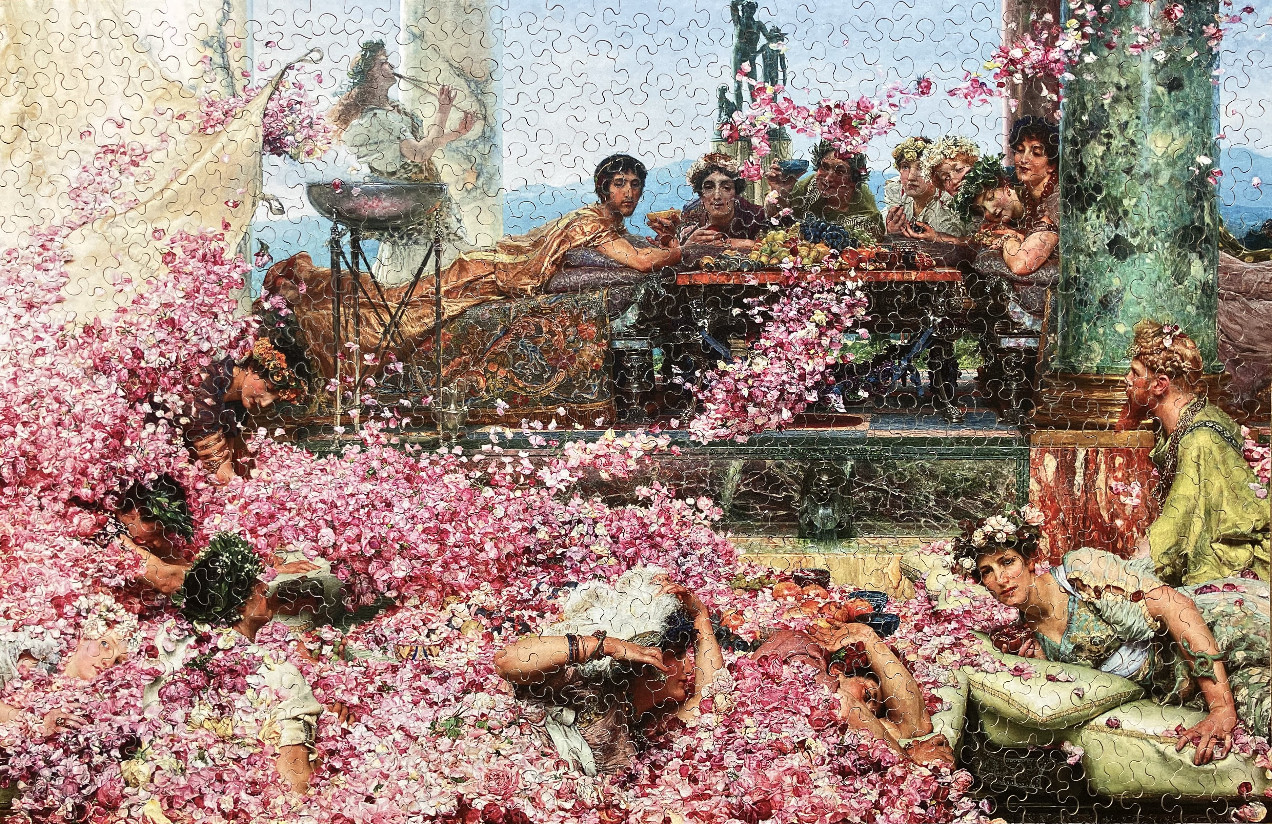
This classical academic painting depicts a lavish Roman banquet, famously known as The Roses of Heliogabalus. A large group of guests is reclining on couches and pillows, but they are being overwhelmed by a massive, falling torrent of pink rose petals that covers the foreground and obscures much of the floor. The subjects are dressed in period-appropriate tunics and togas, many adorned with laurel wreaths or floral crowns. A woman stands to the left playing a double pipe, while a stone fountain and ornate marble columns frame the opulent interior setting.
In the distance, the scene opens to a bright, sun-drenched landscape with hills and a clear blue sky, visible behind the guests at the long table. The composition is structured around the contrast between the rigid, architectural elements of the Roman villa and the fluid, chaotic cascade of flowers. The scene is imbued with a sense of decadence, indulgence, and excess, highlighted by the rich textures of the fabrics and the vibrant, overwhelming mass of the petals.
The colour palette is dominated by an explosion of soft pinks, mauves, and magentas from the flowers, which sharply contrast against the cooler grey-blues of the distant sky and the deep, earthy tones of the marble columns and antique furniture. The lighting is bright and airy, suggesting a clear Mediterranean day, and the style is highly realistic, typical of nineteenth-century historical genre painting, focusing on intricate detail and a dramatic narrative moment.
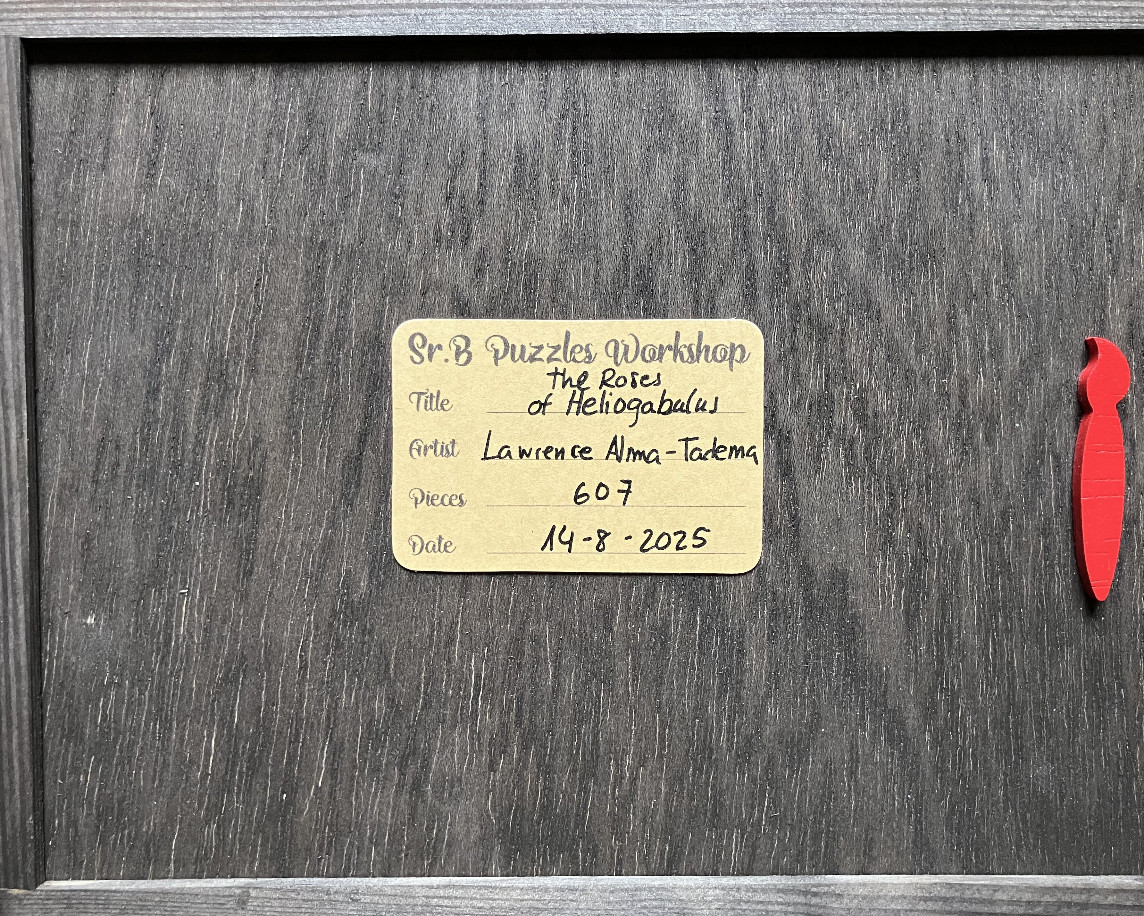
The central element is a rectangular, tan-coloured label affixed to a dark grey surface that features a prominent, vertical wood-grain texture. The label acts as an information card, with the header "Sr.B Puzzles Workshop" written in a decorative, cursive script at the top. Below this, the label provides specific details in neat, handwritten black ink, listing the "Title" as "The Roses of Heliogabalus", the "Artist" as "Lawrence Alma-Tadema", the "Pieces" count as "607", and the "Date" as "14-8-2025".
To the right of the central label, a small, bright red icon shaped like a paintbrush is mounted against the grey wooden background. The contrast between the saturated red of the brush icon and the neutral, dark grey wood grain creates a minimalist yet distinct visual accent. The overall composition is clean and orderly, with the label squarely positioned to convey its information against a textured, rustic backdrop.
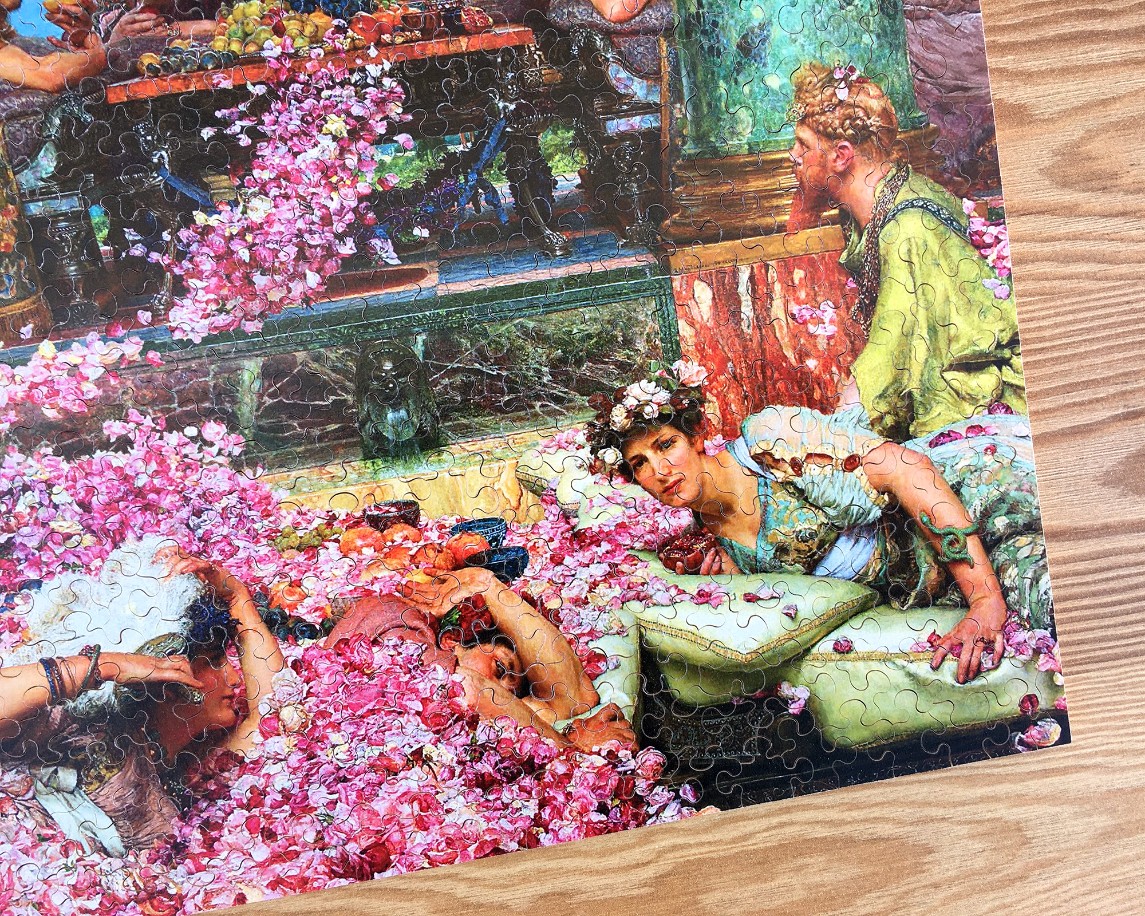
This classical-style oil painting depicts a decadent, opulent scene set within an ornate Roman interior. The composition is centered around a deluge of pink rose petals that cascade from above, nearly burying the reclining figures. A woman wearing a flower wreath gazes directly at the viewer while lounging on plush cushions, and a man with a beard, dressed in a pale green tunic, looks toward the falling petals. Another individual is partially obscured by the immense pile of blossoms in the foreground.
The setting is characterized by architectural details such as green marble pillars and deep red stone accents. In the background, a banquet table laden with fruit and vessels is visible, partially obscured by the thick shower of flowers. The artistic style is highly detailed and academic, with soft, realistic flesh tones and meticulous rendering of fabric textures and floral elements.
The colour palette is vibrant, dominated by a stark contrast between the intense, warm pinks and magentas of the rose petals and the cooler, muted greens and earth tones of the architecture and clothing. The lighting appears soft and atmospheric, highlighting the languid, luxurious mood of the scene. The overall effect is one of excessive indulgence and classical romanticism, capturing a moment of sensory overload as the figures are swamped by the fragrant avalanche of blossoms.
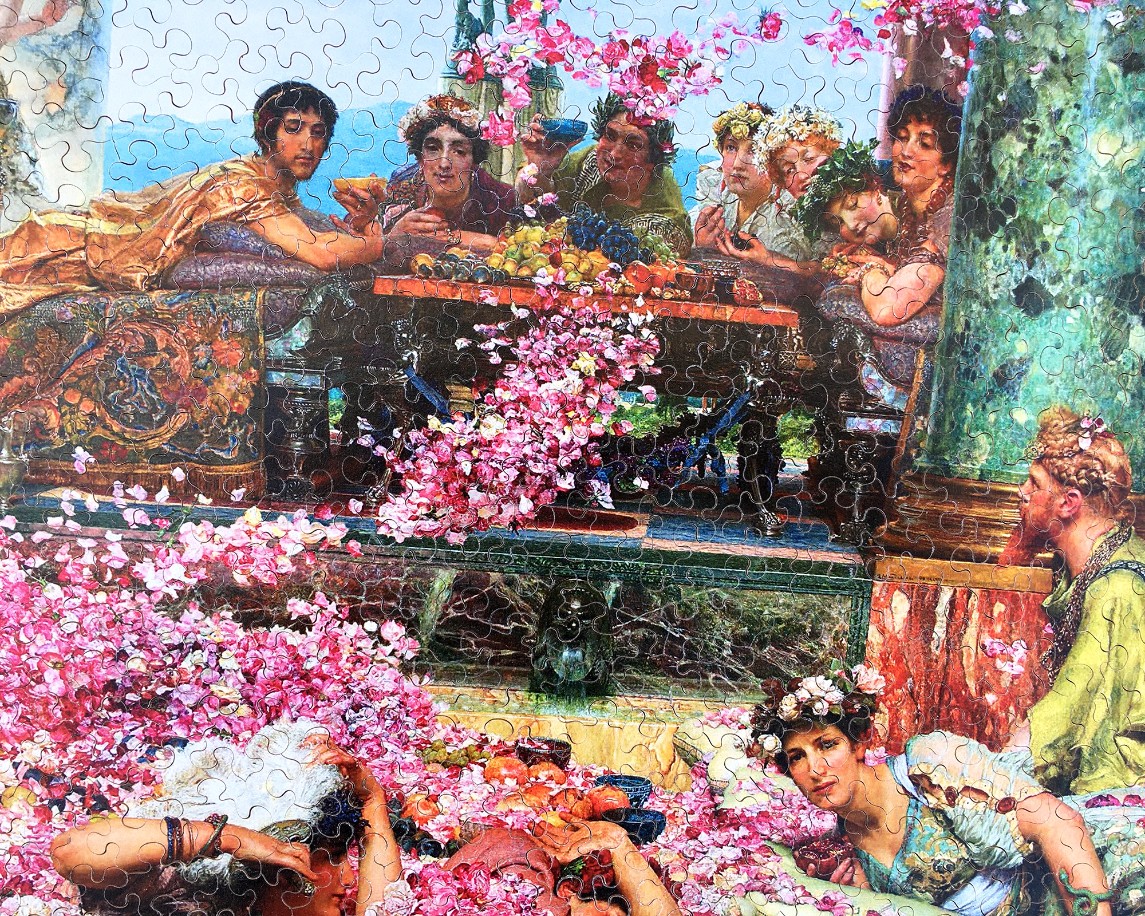
This classical-style oil painting depicts a lavish Roman banquet, defined by an overwhelming abundance of pink rose petals that cascade from the table and blanket the floor. A group of figures reclines on couches, draped in flowing togas and ornate fabrics, their heads adorned with floral wreaths. They share a table overflowing with fruit, appearing lost in a state of hedonistic languor as the petals rain down upon them from above, partially obscuring the view.
The composition is layered, with the primary feast taking place on an elevated terrace. In the lower foreground, two additional figures are nearly submerged in the deep pile of flowers, their expressions languid and relaxed. The architectural setting features marble pillars and intricate decorative motifs, suggesting a decadent palace interior. In the background, a glimpse of a calm, pale blue sky and distant hills provides a contrast to the dense, floral foreground.
The colour palette is dominated by the vibrant, varying shades of pink from the rose petals, which create a striking focal point against the warm skin tones of the revelers and the earthy, rich textures of their clothing. The lighting is soft and ethereal, capturing a dreamlike quality that emphasizes the sensory overload of the scene. The style is highly detailed and painterly, characteristic of 19th-century academic art, with a focus on textures ranging from the velvet petals to the smooth marble and ornate textiles.
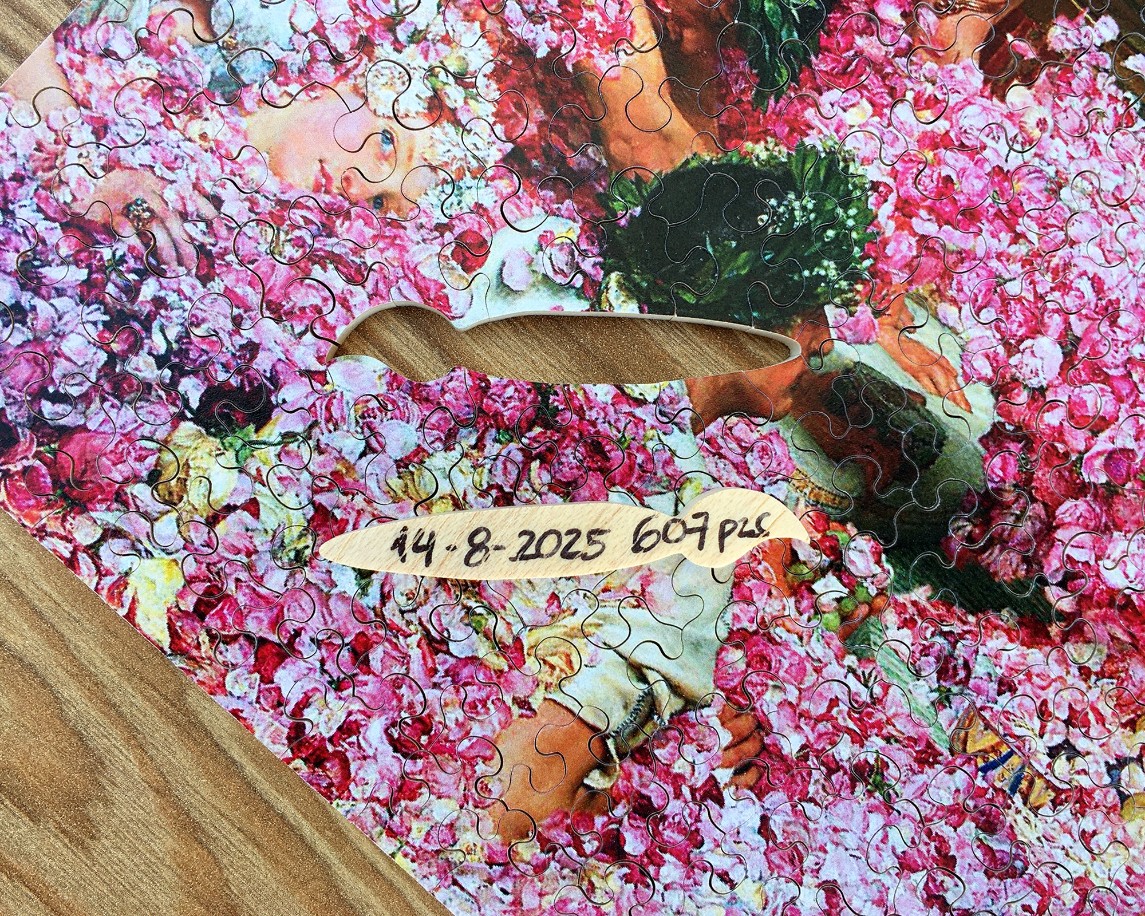
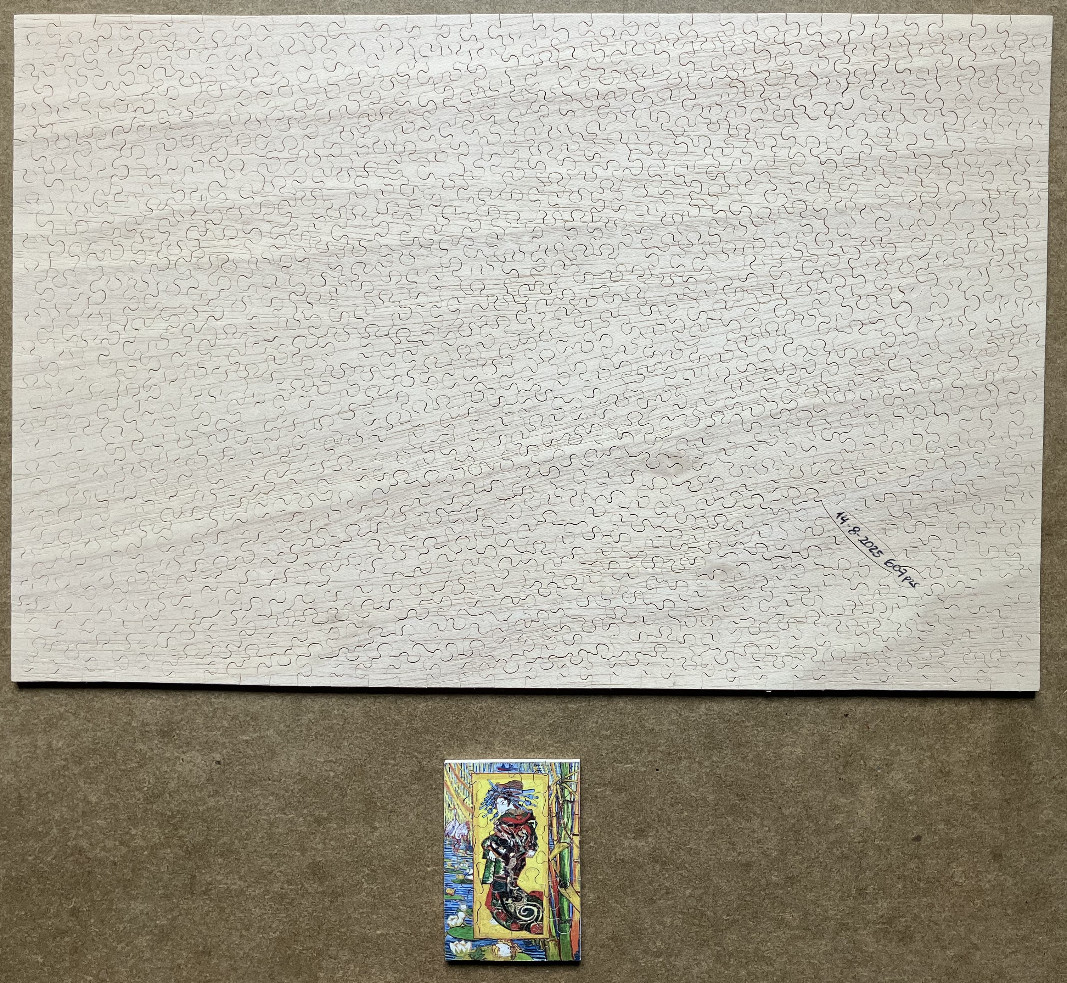
This image is a reproduction of the famous Victorian-era oil painting, The Roses of Heliogabalus. The scene is dominated by a dense, suffocating sea of pink rose petals that covers almost every surface of the composition. Within this floral deluge, the pale, exposed limbs and faces of human figures are partially visible, suggesting individuals reclining or struggling amidst the abundance of blossoms.
Compositionally, the image is packed with vibrant colour and texture. The rose petals range from deep crimson to soft, pale pinks and whites, creating a lush and somewhat overwhelming visual effect. The skin tones of the figures provide a stark, warm contrast to the cooler and more saturated pinks of the flowers. Deep shadows and hints of dark green foliage emerge from beneath the petals, adding depth to the crowded frame.
Stylistically, the work mimics the classical, realist brushwork of late 19th-century academic art. The figures appear draped in ornate, historical clothing, though they are largely obscured by the falling flowers. A central element appears to be a wooden, leaf-shaped insert bearing handwritten text that reads "14-8-2025 607 pls," which sits prominently over the lower middle portion of the scene.
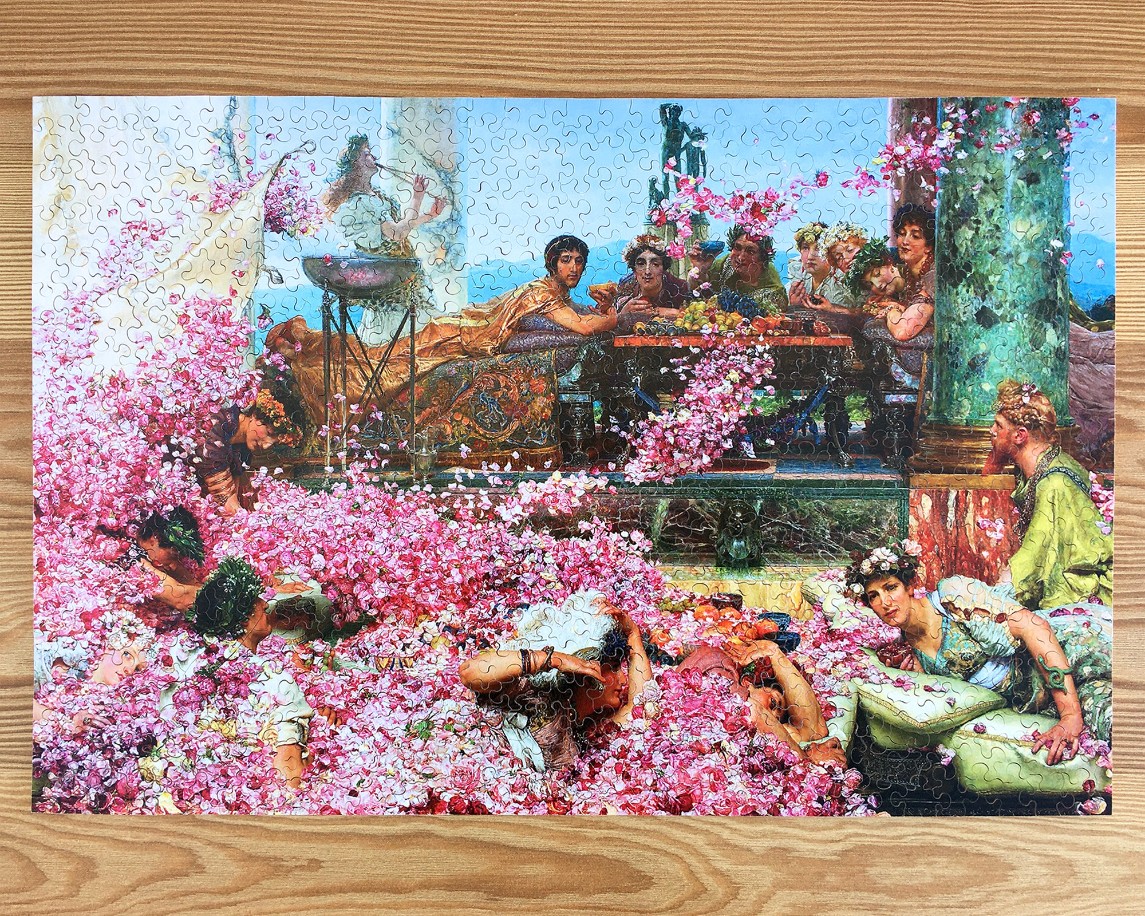
This scene is a dramatic, classical-style oil painting depicting the decadence of a Roman banquet being overwhelmed by a torrential cascade of pink rose petals. In the foreground, numerous figures in flowing, ancient-style robes are partially submerged within deep mounds of blossoms. The atmosphere is one of opulence and excess, as people lounge on cushions and amidst the sea of petals, some appearing playful while others look concerned by the encroaching floral tide.
In the mid-ground, a group of figures sits around a long table set with fruit and wine, appearing oblivious or perhaps paralyzed by the falling petals. The setting is an open-air marble terrace, flanked by tall, ornate columns and decorated with statues. Through the architectural openings, a distant, serene blue landscape suggests a vast horizon beyond the terrace.
The colour palette is dominated by the vibrant, saturated pinks of the rose petals, which contrast sharply with the cooler tones of the marble architecture and the distant blue sky. The lighting is warm and golden, highlighting the figures' skin tones and the intricate folds of their garments. The painting style is highly detailed and academic, capturing the textures of the petals, fabric, and stone with a sense of classical realism and narrative drama.