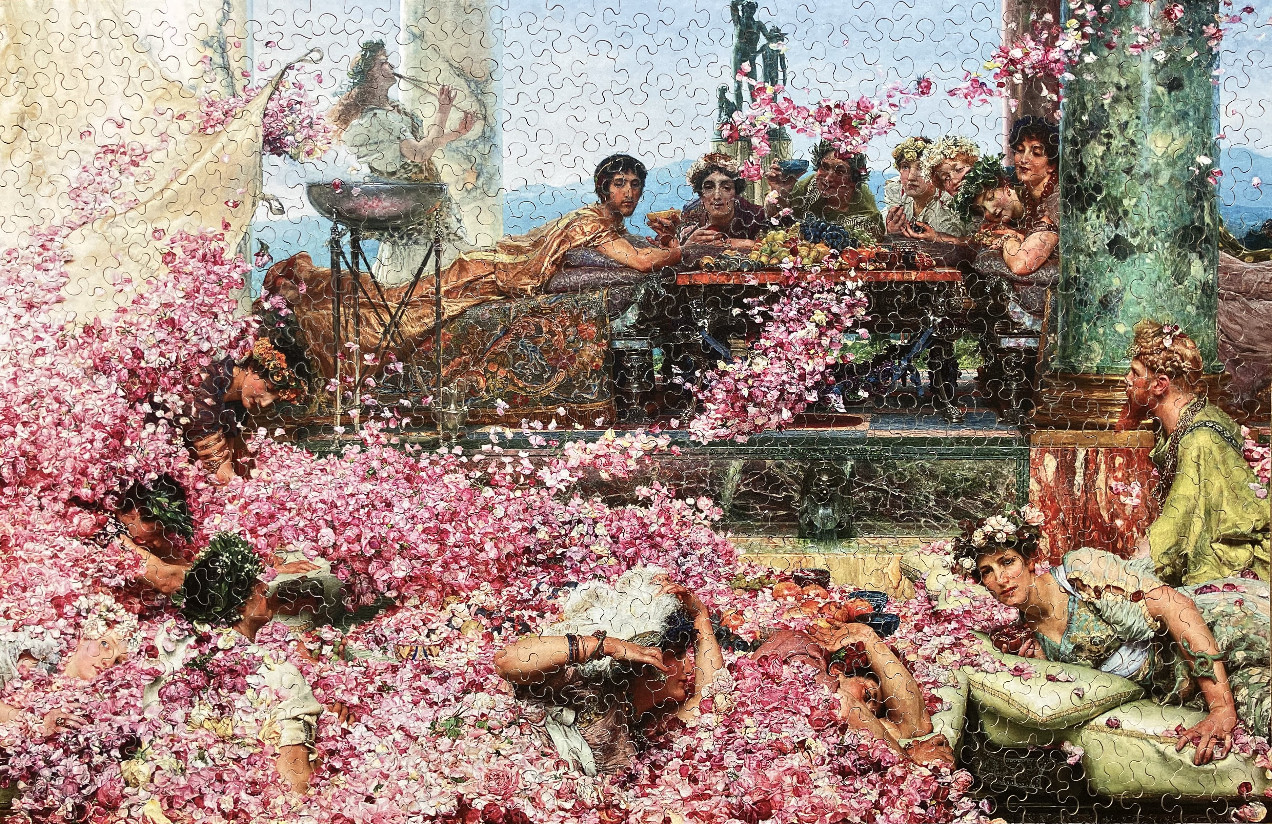
This classical academic painting depicts a lavish Roman banquet, famously known as The Roses of Heliogabalus. A large group of guests is reclining on couches and pillows, but they are being overwhelmed by a massive, falling torrent of pink rose petals that covers the foreground and obscures much of the floor. The subjects are dressed in period-appropriate tunics and togas, many adorned with laurel wreaths or floral crowns. A woman stands to the left playing a double pipe, while a stone fountain and ornate marble columns frame the opulent interior setting.
In the distance, the scene opens to a bright, sun-drenched landscape with hills and a clear blue sky, visible behind the guests at the long table. The composition is structured around the contrast between the rigid, architectural elements of the Roman villa and the fluid, chaotic cascade of flowers. The scene is imbued with a sense of decadence, indulgence, and excess, highlighted by the rich textures of the fabrics and the vibrant, overwhelming mass of the petals.
The colour palette is dominated by an explosion of soft pinks, mauves, and magentas from the flowers, which sharply contrast against the cooler grey-blues of the distant sky and the deep, earthy tones of the marble columns and antique furniture. The lighting is bright and airy, suggesting a clear Mediterranean day, and the style is highly realistic, typical of nineteenth-century historical genre painting, focusing on intricate detail and a dramatic narrative moment.