Village in Winter
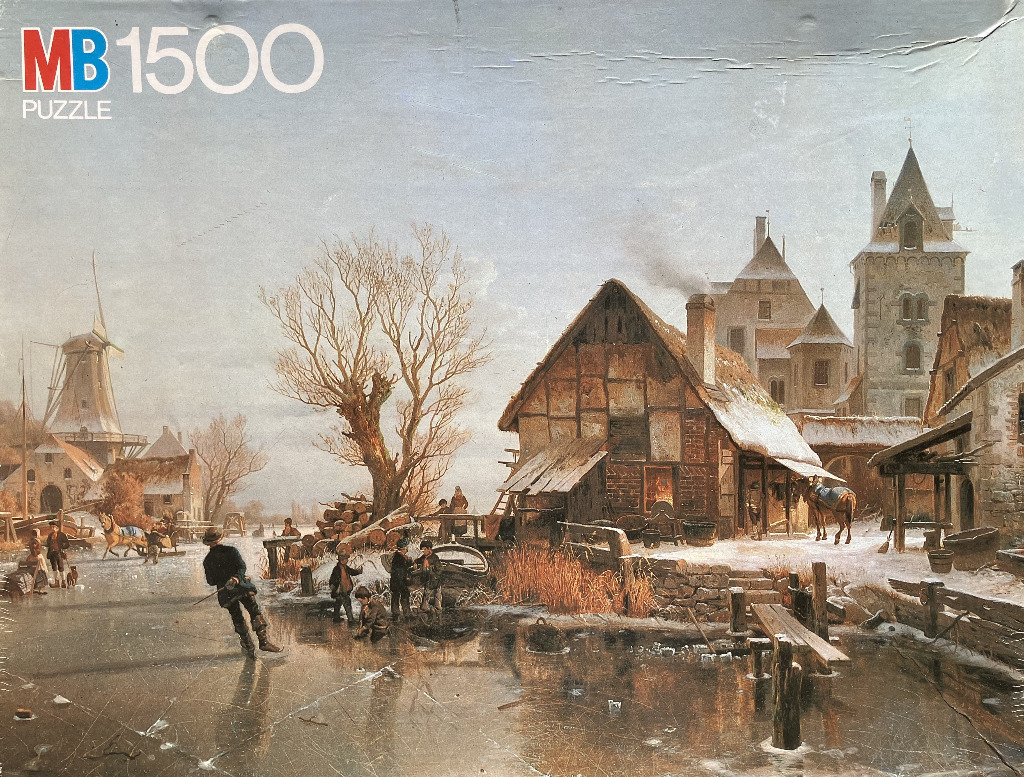
This classical oil painting depicts a serene winter village scene centered around a frozen canal. In the foreground, figures are actively enjoying the ice; one man skates gracefully across the foreground, while a group of children gathers near the frozen bank. To the right, a traditional timber-framed house with a smoking chimney serves as a focal point, its interior glowing with a warm hearth fire. A horse stands tethered near an open shed, and stone buildings with steeply pitched roofs rise in the background, suggesting a medieval or early modern European setting.
Compositionally, the scene is balanced by a towering, bare-branched tree in the middle ground, which creates a vertical anchor against the vast, pale sky. To the left, a traditional windmill stands on the bank, further defining the rural, historic character of the landscape. The layout guides the eye from the bustling activity on the ice toward the quieter architectural details of the village, creating a sense of depth and atmospheric perspective.
The colour palette is dominated by muted, earthy tones of brown, ochre, and cool grey, reflecting the crisp, overcast winter light. The warmth from the interior fire provides a subtle but significant contrast, drawing the viewer's attention to the heart of the village. The painting style is highly detailed and realistic, capturing the intricate textures of the ice, the weathered wood of the structures, and the soft, diffuse quality of a winter day.

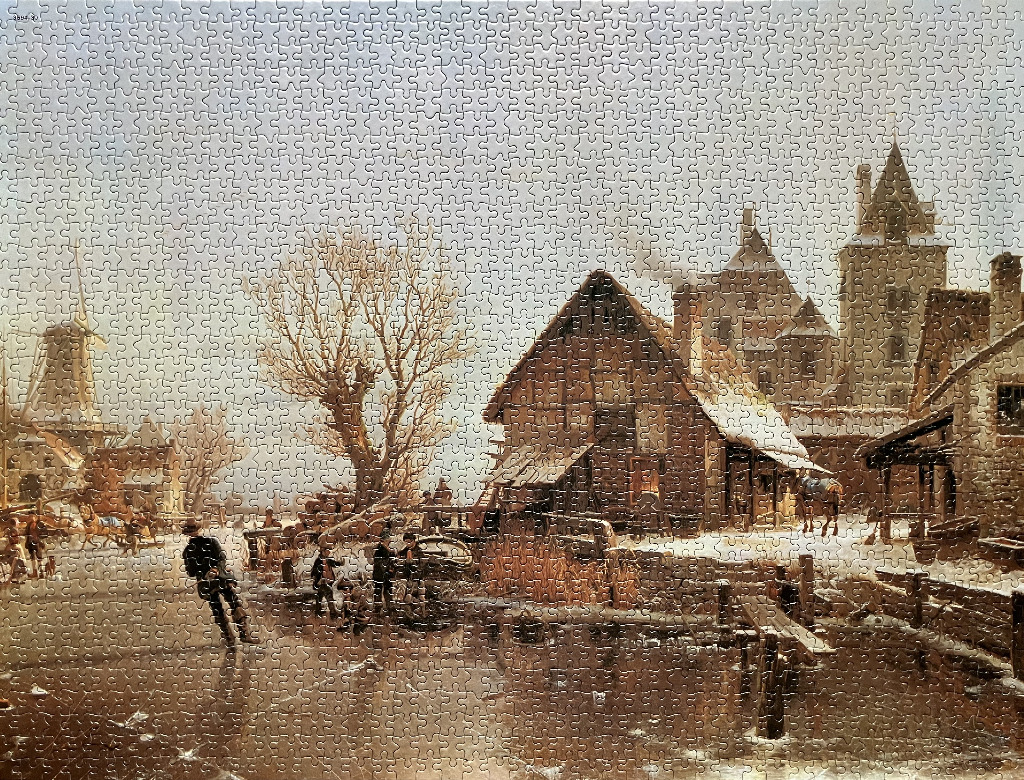
This detailed scene depicts a quiet winter day in a 19th-century European village. In the foreground, a frozen canal stretches across the view, with figures gathered on the ice and walking along the snowy banks. A man dressed in dark winter attire is positioned prominently on the left side of the ice, while others, including children, cluster near a stone bridge or landing area. The composition draws the eye toward a cluster of rustic, half-timbered stone houses and a distant, towering stone building, likely a manor or castle, that looms over the water.
To the left, a traditional windmill rises into the pale, misty sky, emphasizing the rural, historic setting. The landscape is dominated by a sense of deep winter, with a large, leafless tree standing as a central focal point between the buildings and the frozen waterway. Snow lightly dusts the roofs and the ground, suggesting a cold, overcast day where light is diffuse and muted.
The colour palette is composed of warm earth tones, soft grays, and whites, reflecting the somber, chilly atmosphere of a winter afternoon. The painting style is highly realistic and detailed, characteristic of 19th-century Dutch or Flemish-style landscape art. The light is soft and hazy, common to a snowy day, casting gentle shadows and creating a peaceful, nostalgic mood that invites the viewer to look closer at the daily activities of the villagers.