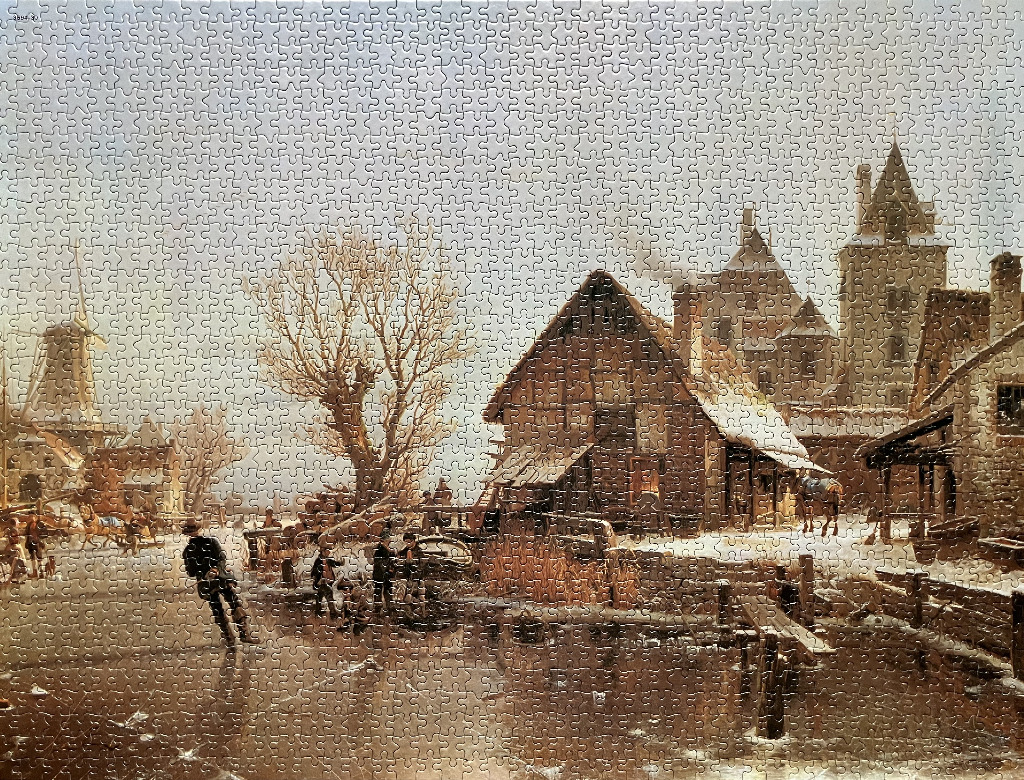
This detailed scene depicts a quiet winter day in a 19th-century European village. In the foreground, a frozen canal stretches across the view, with figures gathered on the ice and walking along the snowy banks. A man dressed in dark winter attire is positioned prominently on the left side of the ice, while others, including children, cluster near a stone bridge or landing area. The composition draws the eye toward a cluster of rustic, half-timbered stone houses and a distant, towering stone building, likely a manor or castle, that looms over the water.
To the left, a traditional windmill rises into the pale, misty sky, emphasizing the rural, historic setting. The landscape is dominated by a sense of deep winter, with a large, leafless tree standing as a central focal point between the buildings and the frozen waterway. Snow lightly dusts the roofs and the ground, suggesting a cold, overcast day where light is diffuse and muted.
The colour palette is composed of warm earth tones, soft grays, and whites, reflecting the somber, chilly atmosphere of a winter afternoon. The painting style is highly realistic and detailed, characteristic of 19th-century Dutch or Flemish-style landscape art. The light is soft and hazy, common to a snowy day, casting gentle shadows and creating a peaceful, nostalgic mood that invites the viewer to look closer at the daily activities of the villagers.