Great Discoveries World Map
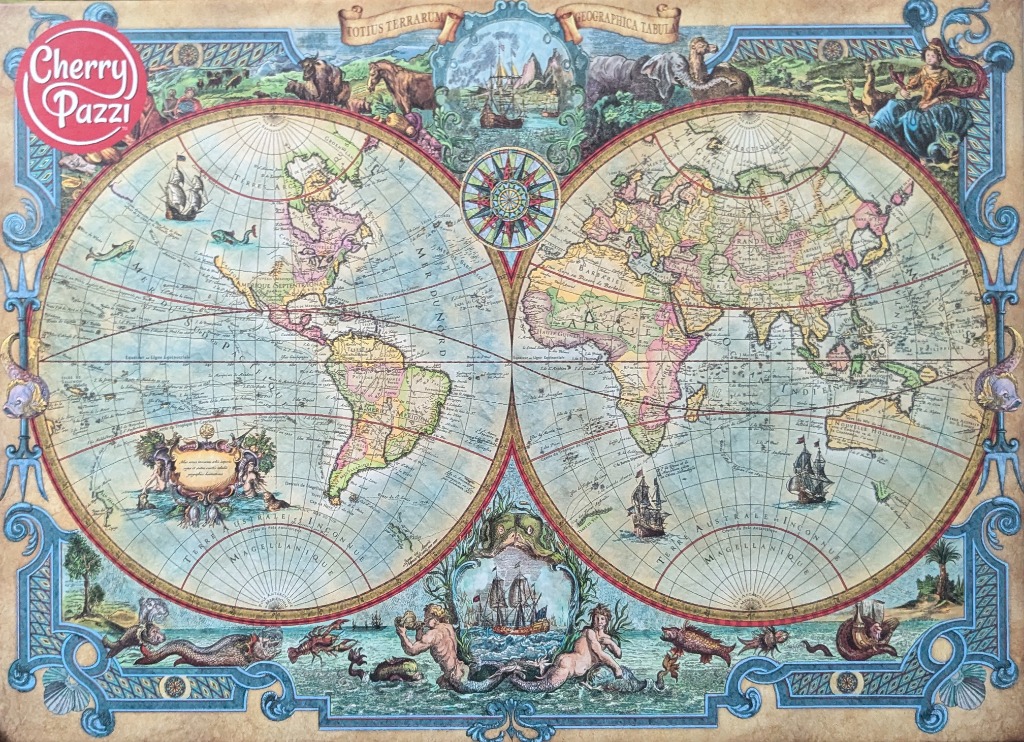
This illustration depicts a classic double-hemisphere world map in an antique cartographic style. The two circular hemispheres dominate the composition, showcasing the continents with vintage naming conventions and subtle pastel color-coding for different regions. Faint grid lines span the blue oceans, which are punctuated by illustrations of sailing ships, sea monsters, and geographic details typical of 17th-century maps.
The map is framed by an elaborate, decorative border featuring scrolling blue ornamentation, golden accents, and ornate cartouches. At the top, a banner reads "TOTIUS TERRARUM GEOGRAPHICA TABULA." The central space between the hemispheres holds a detailed compass rose. Decorative scenes are tucked into the corners and edges, including depictions of land animals, maritime navigation, and mythological figures such as merpeople entwined with sea creatures at the bottom.
The overall aesthetic mimics aged parchment, utilizing a palette of sepia, muted blues, and soft faded greens and pinks. The lighting is flat and uniform, typical of historical engravings or maps, emphasizing the intricate line work and calligraphic text labels throughout the continents and oceans. The mood is scholarly and adventurous, evoking the spirit of the Age of Discovery.
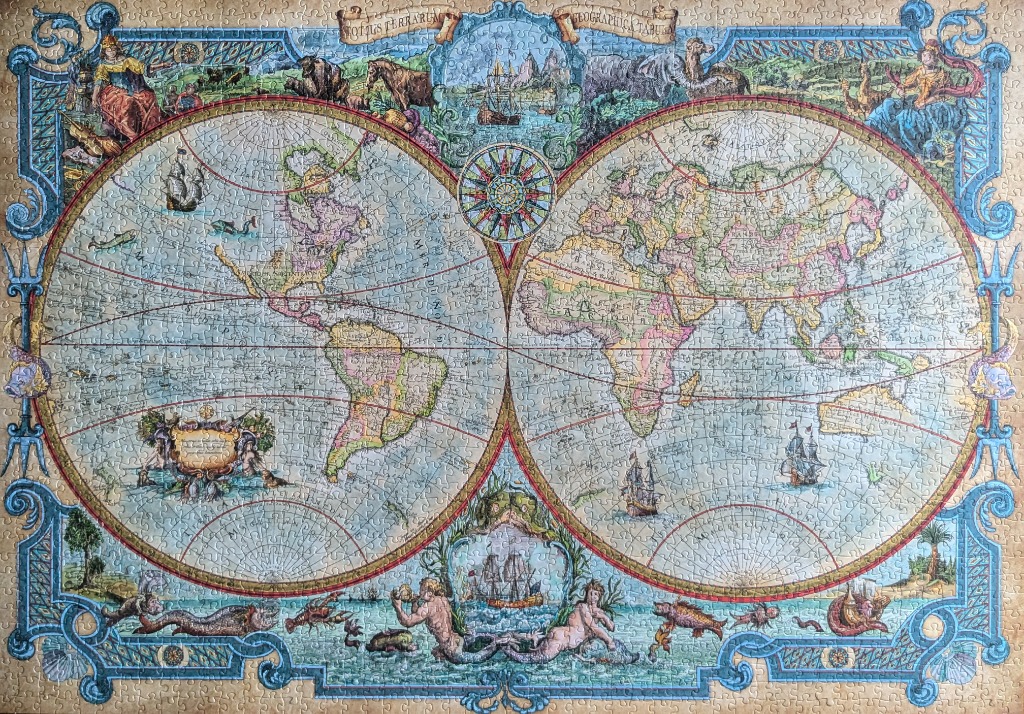
This illustration depicts a classic 17th-century style world map rendered in two circular hemispheres. The central focus is the geographical layout of the earth, featuring stylized landmasses and intricate lines of latitude and longitude. A large, decorative compass rose sits prominently between the two hemispheres, acting as a centerpiece for the composition.
The map is framed by an elaborate, highly detailed border filled with mythological and allegorical figures. At the top, scrollwork banners contain Latin text, flanked by figures representing different continents or elements. The bottom section features sea creatures, mermen, and mermaids surrounding a small vignette of a ship at sea. The style is reminiscent of copperplate engraving, characterized by fine hatching and an antique, muted colour palette consisting of soft creams, faded teals, pale yellows, and muted terracotta tones.
Various illustrations of sailing vessels are positioned within the oceans, alongside depictions of sea monsters and marine life. The overall aesthetic is one of exploration and classical cartography, capturing the historical fascination with global discovery and maritime travel. Light and shadow are applied through subtle stippling, giving the map a weathered, parchment-like appearance that emphasizes its historical, decorative intent.