Historical Map of the World
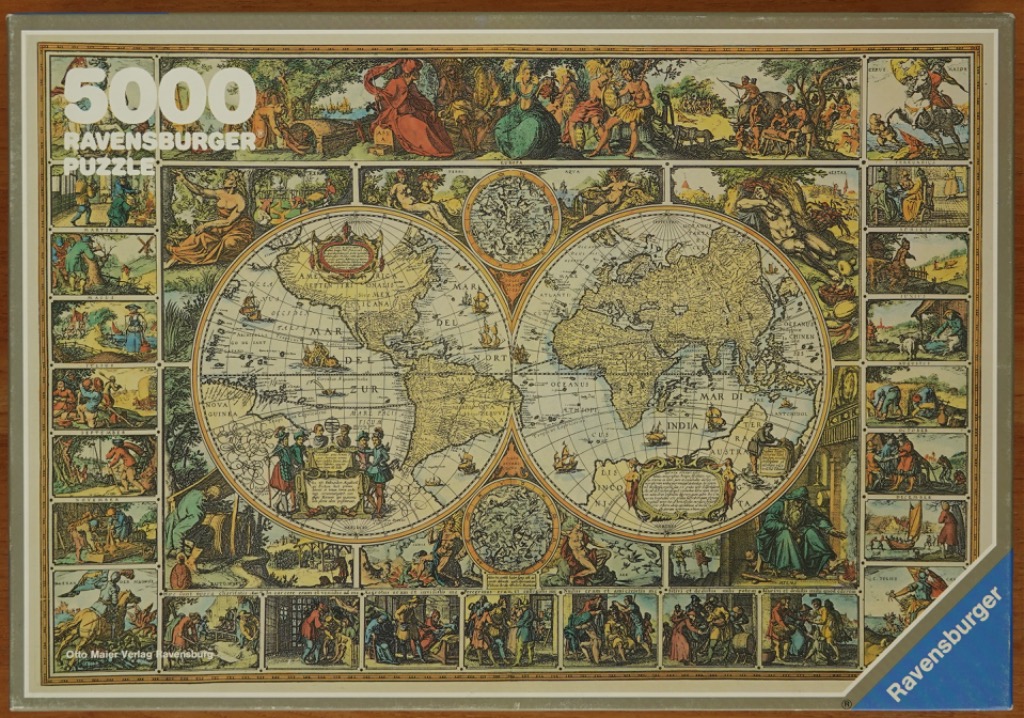
This antique-style, hand-coloured map features a dual-hemisphere projection of the Earth as it was known in the 17th century. The two large circular maps dominate the center, filled with detailed cartographic linework, sailing ships, and sea monsters. Between the hemispheres, smaller circular inserts depict celestial observations and star charts. The entire central area is framed by ornate, mythological, and allegorical figures that represent the classical elements and seasons.
Surrounding the central world map is a decorative border divided into individual rectangular panels. Each panel illustrates activities, landscapes, and daily life associated with specific months of the year, alongside depictions of the four elements. The artistic style is reminiscent of copperplate engravings, characterized by delicate cross-hatching and fine linework. The figures are rendered with expressive posture and historical attire.
The colour palette consists of muted, earthy tones including parchment yellow, aged greens, faded reds, and deep blues, giving the image the authentic look of a historical document. The lighting is flat and even, characteristic of an illustrative print, highlighting the intricate details of the geography and the busy scenes of human activity in the border frames. The composition is highly structured, balancing scientific geographical representation with elaborate, classicist decorative art.


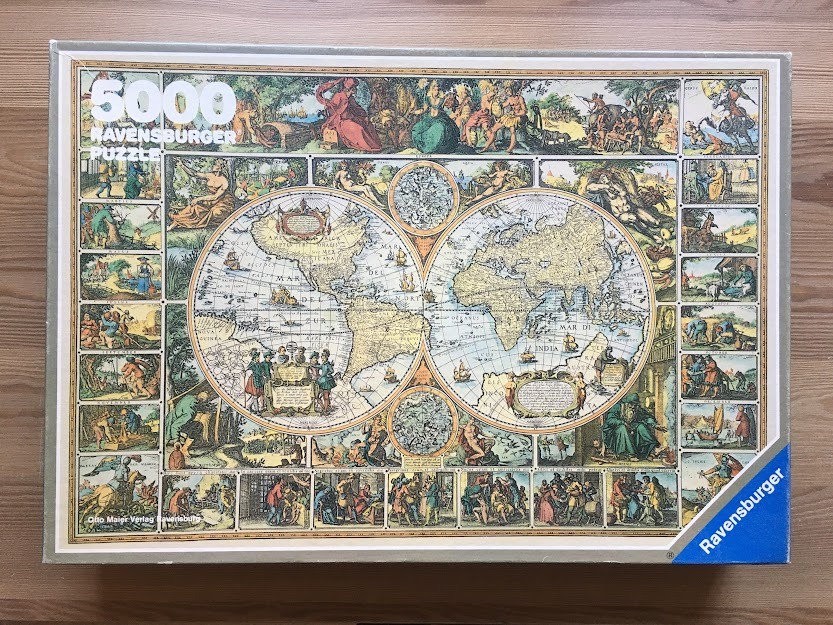
The central focus of this artwork is an antique, double-hemisphere world map. The map displays the continents in a stylized, historical fashion with delicate line work detailing coastlines and landmasses, surrounded by expansive, pale blue oceans populated with tiny sailing ships and sea monsters. Decorative cartouches containing text are placed in empty ocean spaces.
Surrounding the central spheres is an intricate border composed of rectangular panels. These smaller illustrations depict a variety of scenes, including allegorical representations of the seasons, the four elements, and cultural groups in period attire. The top and bottom borders show horizontal vignettes of people engaged in activities like agriculture, feasting, and navigation. To the left and right, smaller panels showcase landscape scenes and mythological figures.
The overall style resembles a hand-coloured copperplate engraving from the seventeenth century, utilizing a muted, classical palette of earthy ochres, soft greens, deep reds, and dusky blues. The composition is highly symmetrical and densely packed, designed to evoke the aesthetic of a historical atlas or scientific diagram. The aged, cream-coloured parchment background gives the piece an authentic, vintage appearance, with finely detailed line work defining every character, building, and geographical feature.