Vintage Map
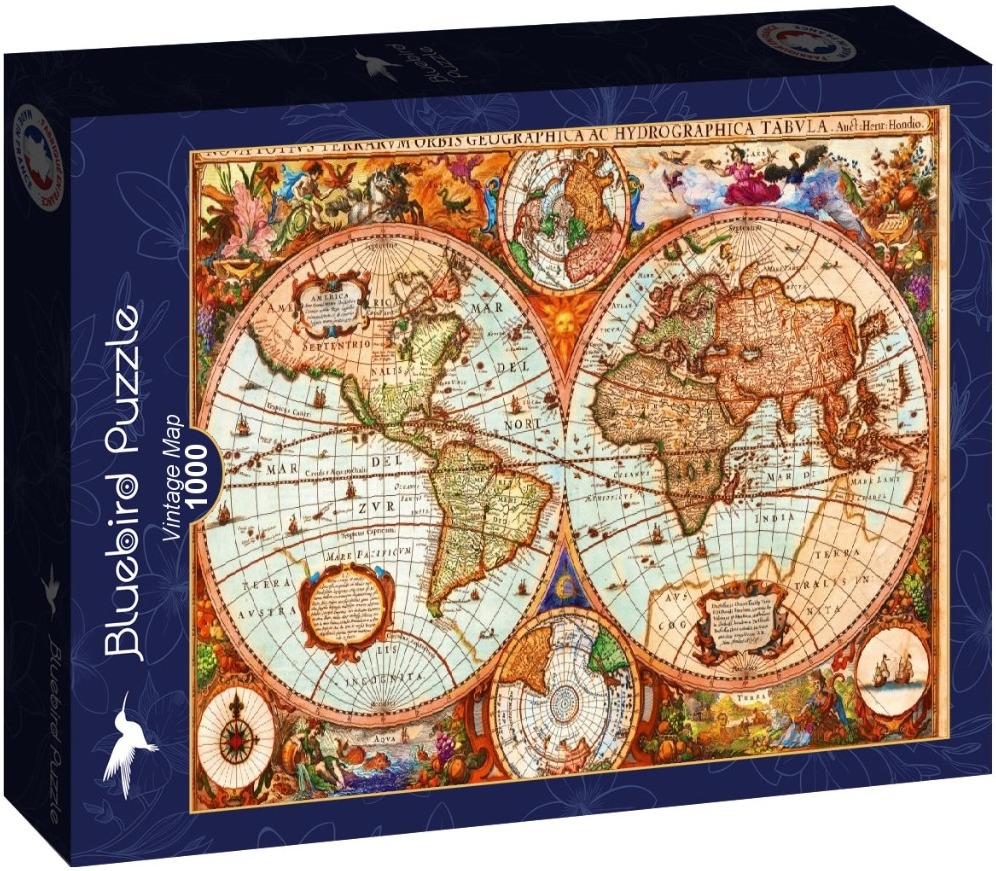
This artwork features a reproduction of a 17th-century double-hemisphere world map, presented in a warm, aged aesthetic. The map depicts the continents as they were known during that era, with Latin labels and flowing calligraphy. The two large circular hemispheres dominate the center, set against a background of cream-colored parchment that suggests historical authenticity.
Surrounding the map are dense, colorful illustrations that fill the corners and frame the spheres. These include allegorical figures, mythical sea creatures, depictions of the sun and moon, and elaborate floral motifs. Rich, earthy tones of burnt orange, deep brown, and faded sage green predominate, balanced by splashes of vibrant primary colors within the decorative borders. The overall composition is dense and highly detailed, conveying a sense of exploration and artistic craftsmanship.
The style is clearly an artistic map illustration, characteristic of classical cartography. At the top of the frame, the title "NOVA TOTIUS TERRARUM ORBIS GEOGRAPHICA AC HYDROGRAPHICA TABULA" is elegantly inscribed, attributing the work to Henricus Hondius. The layout is meticulously structured, with the spherical projections acting as the primary focal point while the ornate periphery invites close inspection of the numerous vignettes and decorative elements.
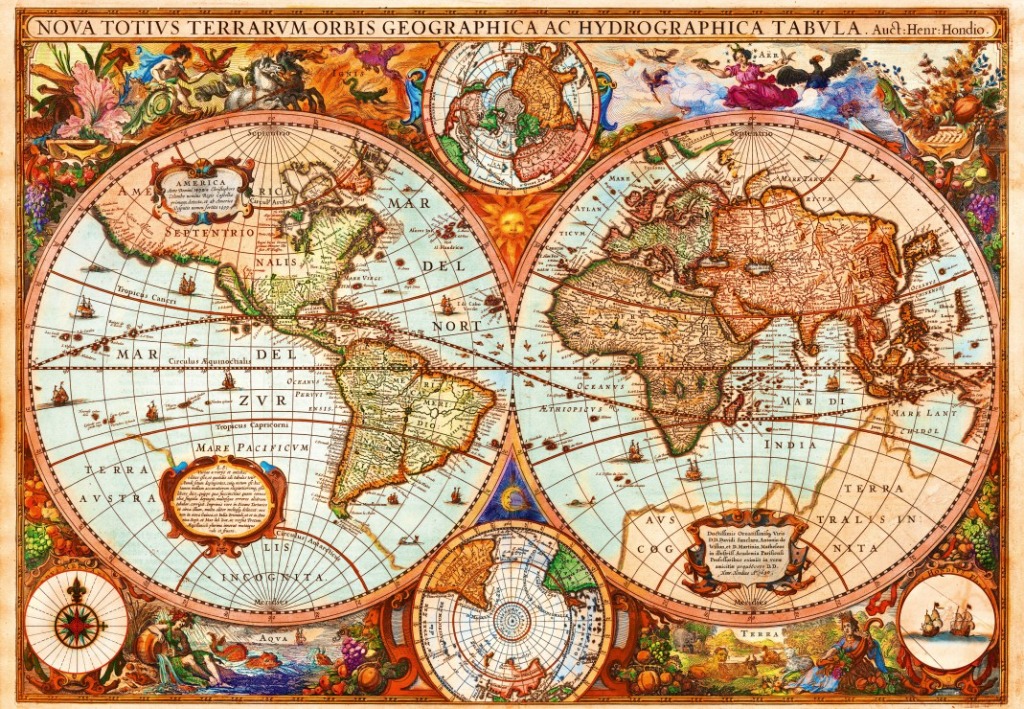
This antique-style world map is dominated by two large, circular projections representing the Western and Eastern Hemispheres. The landmasses are rendered with sepia and muted green tones, set against a cream-colored background marked by a delicate grid of longitude and latitude. Between the two main spheres, a small sun face glows, while smaller circular projections of the Arctic and Antarctic regions are nestled at the top and bottom center, respectively.
Surrounding the central maps is a vibrant array of classical artwork. Elaborate figures represent the four elements: fire, air, water, and earth, depicted through mythical scenes featuring figures, animals, and bountiful fruit arrangements in the corners. A detailed compass rose sits in the bottom left corner, while small, intricate illustrations of sailing ships are scattered across the vast, pale blue oceans.
The composition is framed by a decorative header containing the Latin title "NOVA TOTIVS TERRARVM ORBIS GEOGRAPHICA AC HYDROGRAPHICA TABVLA." The overall mood is academic and grandiose, evoking the golden age of cartography. The style uses rich, warm colors, including deep crimsons, ochres, and verdant greens, which contrast beautifully against the aged parchment texture, creating a sense of history and discovery.