The Wedding Register
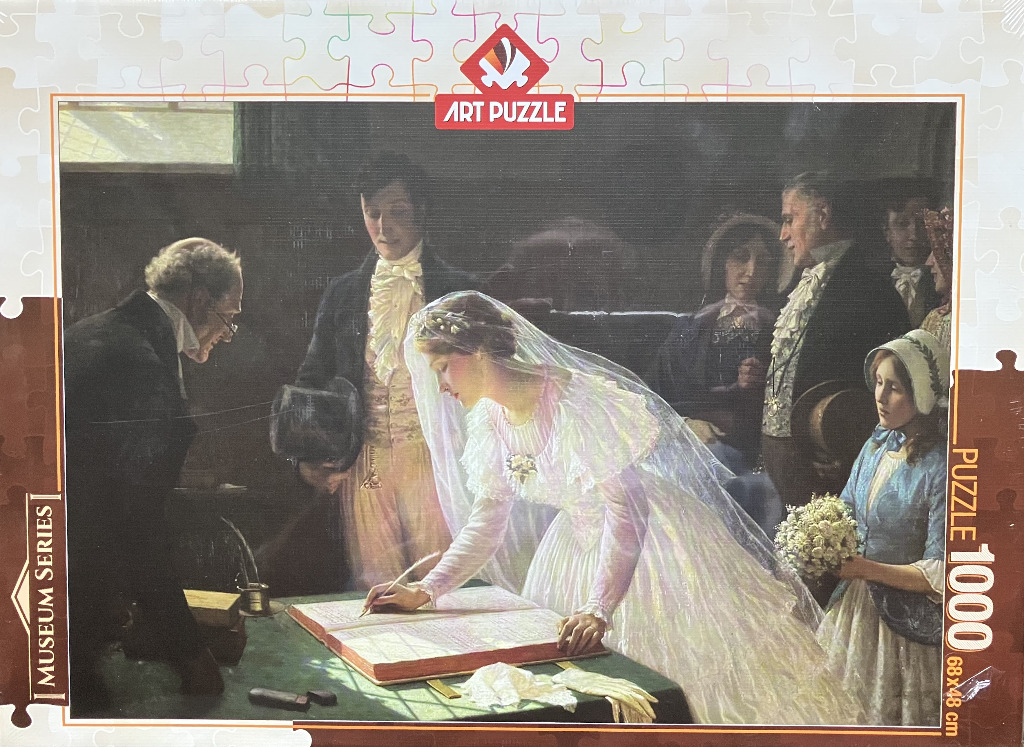
This classical oil painting depicts a 19th-century wedding scene, focusing on a bride in a white gown and veil as she leans over a large register to sign it. Beside her stands the groom, dressed in a formal black coat and light waistcoat with a ruffled cravat. An elderly man, presumably the clergyman or official, stands on the opposite side of a green-covered table, observing the bride with a stoic expression while holding a pen. To the right, a young bridesmaid in a light blue bodice and a bonnet holds a small bouquet of white flowers, watching the proceedings intently.
The composition is intimate and quiet, set within a dimly lit interior with soft, directional light highlighting the bride and the register. The dark, shadowed background recedes into the gloom, emphasizing the figures in the foreground. The bride’s veil is rendered with a translucent, ethereal quality, catching the light as it drapes over her shoulders. Additional figures—a man and a woman—are partially visible in the shadows behind the bridal pair, serving as subtle witnesses to the ceremony.
The style is highly realistic, typical of Victorian-era academic painting, characterized by precise brushwork and a muted, earthy colour palette punctuated by the stark white of the bride's clothing. The mood is solemn and reverent, capturing a moment of life-changing legal and personal significance. Details like the small inkstand on the table, the gloves laid out, and the textured fabric of the garments contribute to the historical atmosphere of the scene.

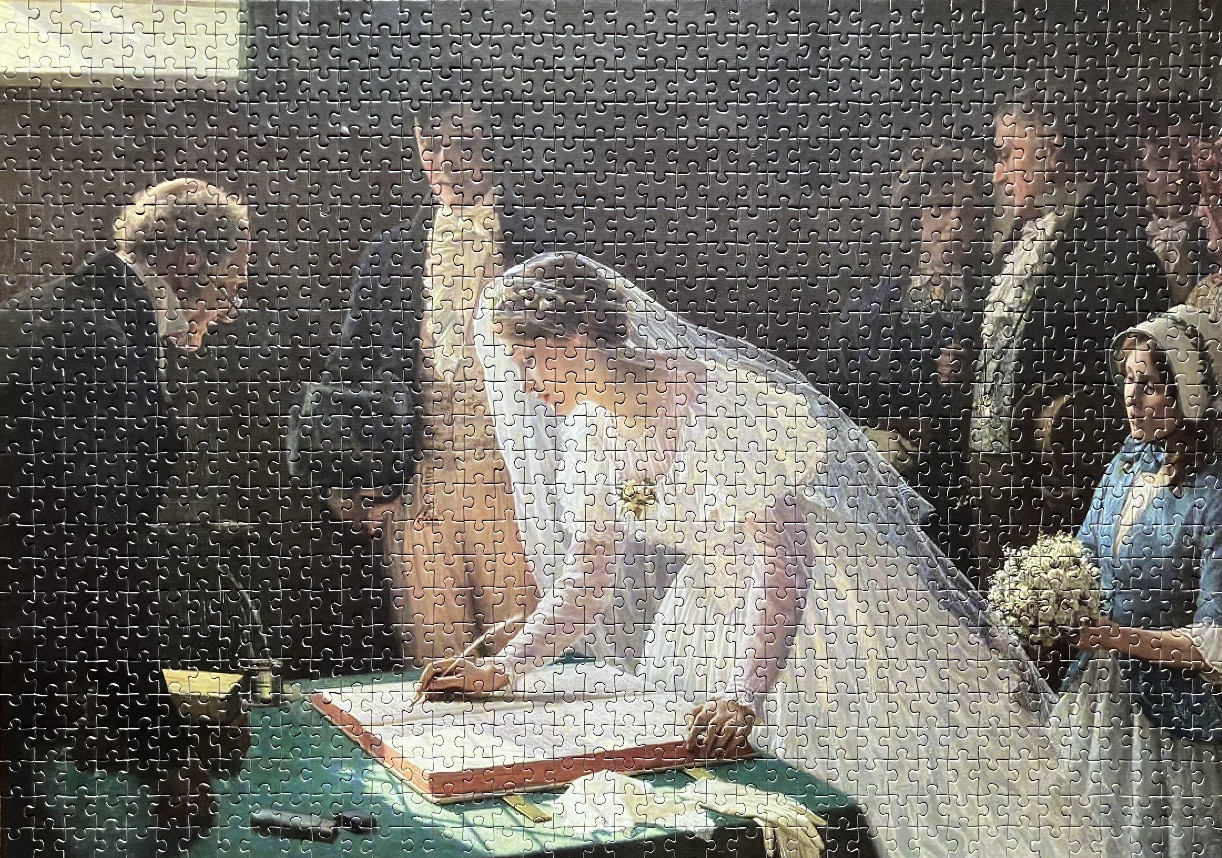
This historical genre painting captures a solemn wedding moment, likely from the 19th century. The central figure is a young bride in a white gown and veil, leaning over a table to sign a large register. Beside her, a young girl in a blue jacket and white skirt holds a small bouquet of flowers. To the left, an older gentleman, presumably the officiant, leans in to watch the process, while several men in formal dark suits and cravats stand as observers in the background, their faces partially obscured by the dim lighting.
The composition is focused on the table, which is covered with a dark green cloth holding the oversized registry book, a quill, and a pair of discarded white gloves. The setting appears to be a dimly lit, wood-paneled room. The lighting is chiaroscuro-inspired, with a primary light source illuminating the bride, the book, and the young girl, while the rest of the figures recede into deep, moody shadows. The painting uses a muted, naturalistic palette of dark earth tones, deep greens, and crisp whites, conveying a sense of historical reverence and quiet formality typical of realist Victorian-era art.
by Nick 2025-11-17