The Cardsharps (I Bari) (1595)
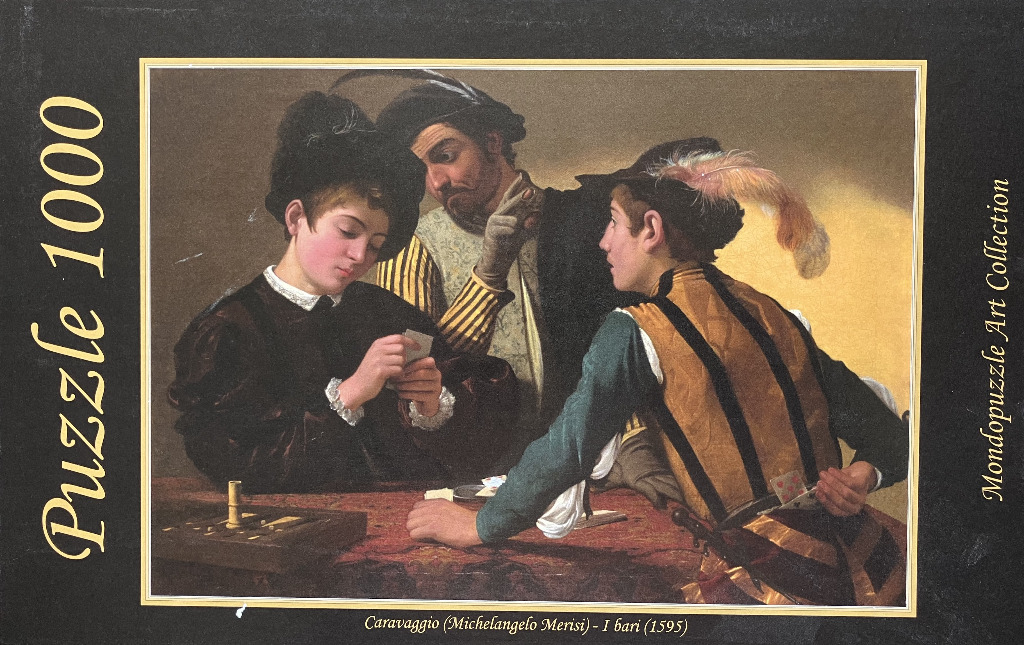
This classical oil painting features three figures gathered around a card table. At the center is a naive-looking youth dressed in a brown velvet doublet, intently studying his cards. To his right, an older, more sinister man looks over the youth's shoulder and signals to an accomplice. The accomplice, a younger man wearing a feathered cap and a golden yellow tunic, sits opposite the youth, surreptitiously pulling extra playing cards from his waistband behind his back.
The composition uses a tight, triangular arrangement that emphasizes the dramatic tension and narrative of the deception. The scene is set against a dark, neutral background that directs all focus to the participants. The figures are positioned around a table covered with an ornate, dark red patterned cloth, upon which sit a few cards and a small wooden game piece.
The work is characteristic of the Baroque style, employing dramatic chiaroscuro to illuminate the faces and hands of the cheaters while keeping the environment in shadow. The colour palette is rich and earthy, dominated by warm ochre, dark brown, and deep red tones, punctuated by the soft light reflecting off the subjects' skin. The detailed costumes, complete with ruffs, textured fabrics, and feathered headgear, ground the painting in a late 16th-century aesthetic.


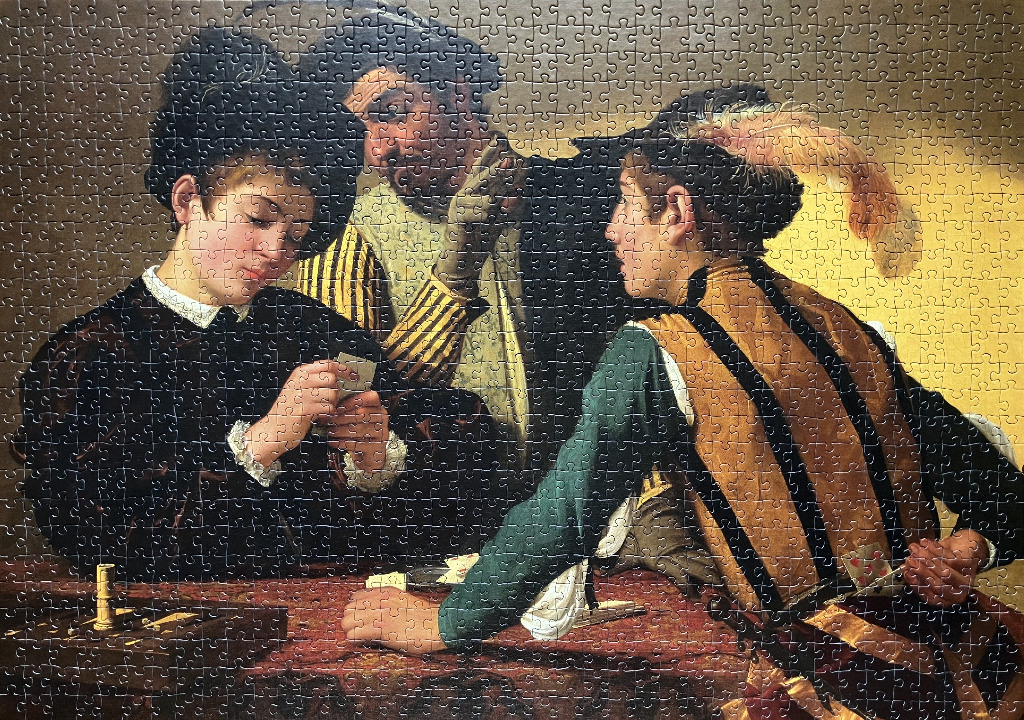
This oil painting depicts three men engaged in a card game around a table covered by a rich, patterned red cloth. On the left, a young man wearing a dark velvet doublet and a large feathered hat focuses intently on the cards held in his hands. Opposite him on the right, another young man is seen from behind, dressed in a golden-brown doublet with black stripes and a hat adorned with a prominent pinkish-tan plume. Between them, slightly behind, an older man with a mustache and a shadowed face observes the game closely, his expression conveying concentration or perhaps a subtle warning.
The scene is rendered in a classical, dramatic style characterized by chiaroscuro lighting, which emphasizes the figures against a muted, indistinct background. The artist focuses on the tactile details of the clothing, from the puffed sleeves and white lace collars to the intricate textures of the velvet and silk. The composition creates a tense, narrative atmosphere, heightened by the fact that the player on the right is subtly tucking an extra card behind his back, suggesting a scene of deception or cheating.
Warm tones dominate the palette, with deep browns, golds, and blacks contrasting against the vibrant red of the tablecloth and the pale accents of the lace. The light source appears to come from the side, casting soft shadows that model the faces of the two younger men while leaving the central figure partially obscured. The work captures a candid, theatrical moment typical of the Baroque tradition,