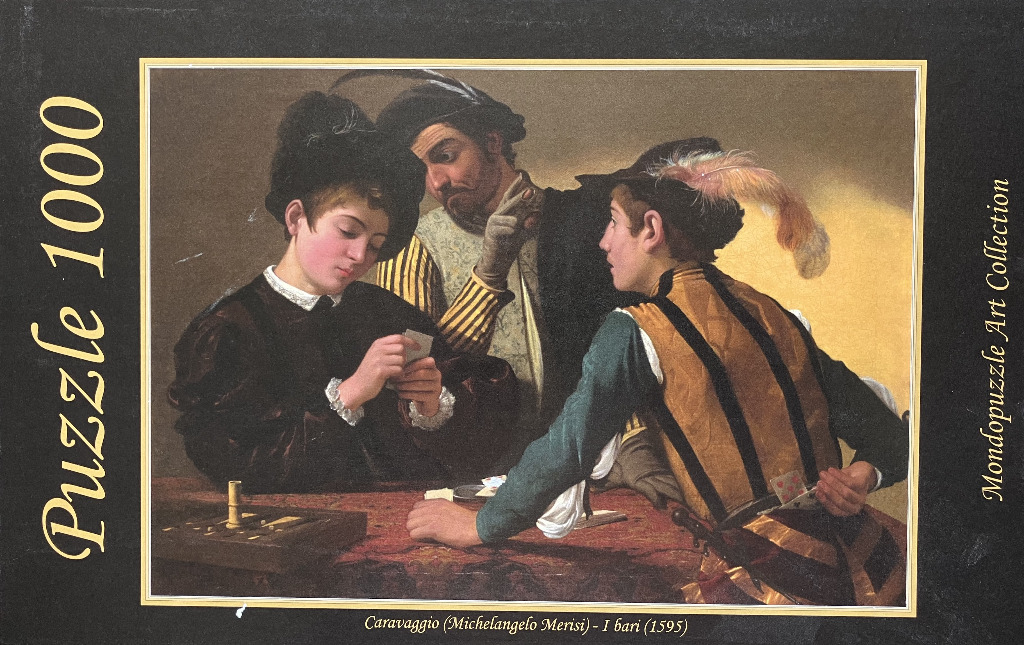
This classical oil painting features three figures gathered around a card table. At the center is a naive-looking youth dressed in a brown velvet doublet, intently studying his cards. To his right, an older, more sinister man looks over the youth's shoulder and signals to an accomplice. The accomplice, a younger man wearing a feathered cap and a golden yellow tunic, sits opposite the youth, surreptitiously pulling extra playing cards from his waistband behind his back.
The composition uses a tight, triangular arrangement that emphasizes the dramatic tension and narrative of the deception. The scene is set against a dark, neutral background that directs all focus to the participants. The figures are positioned around a table covered with an ornate, dark red patterned cloth, upon which sit a few cards and a small wooden game piece.
The work is characteristic of the Baroque style, employing dramatic chiaroscuro to illuminate the faces and hands of the cheaters while keeping the environment in shadow. The colour palette is rich and earthy, dominated by warm ochre, dark brown, and deep red tones, punctuated by the soft light reflecting off the subjects' skin. The detailed costumes, complete with ruffs, textured fabrics, and feathered headgear, ground the painting in a late 16th-century aesthetic.