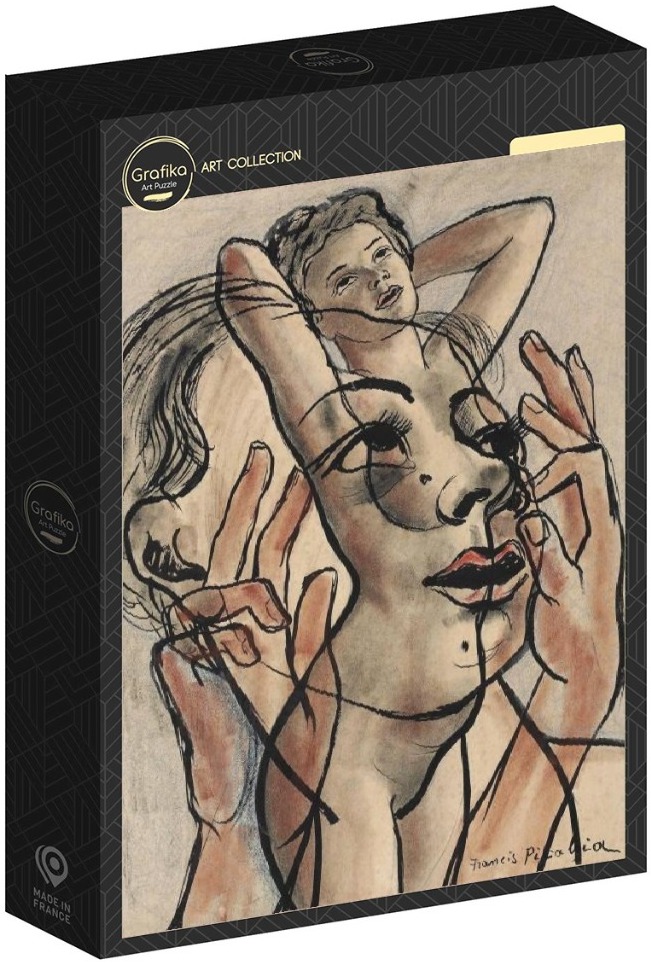
This surrealist artwork features a complex, dreamlike composition centered on overlapping human faces and hands. A large, prominent face dominates the foreground, with heavy, expressive black lines defining the eyes, nose, and lips. Behind this primary visage, a smaller face appears nestled within the upper portion, framed by raised arms. The entire scene is interconnected by loose, sweeping black ink lines that suggest limbs and anatomical forms, creating a fluid and slightly disjointed appearance.
Set against a neutral, beige-toned paper background, the composition feels sparse and intentional. The style is reminiscent of 20th-century avant-garde sketches, prioritizing raw emotion and abstraction over anatomical precision. The spatial layout is layered, pushing the figures forward and creating a sense of psychological depth rather than physical space.
The colour palette is intentionally muted, relying on the contrast between bold black outlines and soft, flesh-toned washes of peach and pink. The dark strokes provide a dramatic, graphic quality, while the subtle shading of the skin adds a tactile, human softness. The mood is introspective and enigmatic, characteristic of surrealist portraiture. The artist’s signature, "Francis Picabia," is visible in the bottom right corner, rendered in a simple, cursive script.