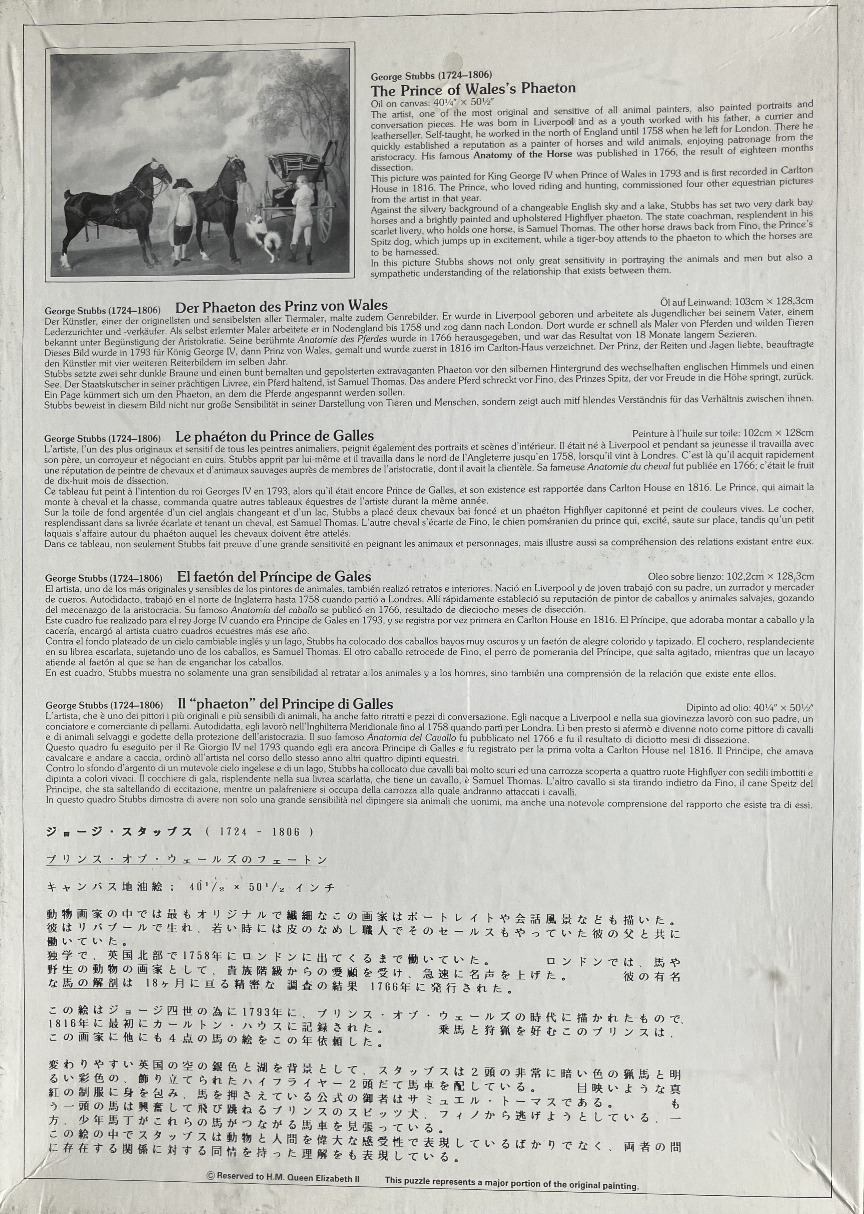
The central focus of this painting is a bright, ornate carriage, known as a phaeton, hitched to two dark-coated horses. A coachman, dressed in a vibrant red livery, stands beside them, firmly gripping one of the horses' bridles. To the right, a second horse recoils slightly, while a small, spirited dog jumps excitedly nearby, looking toward the carriage. A young attendant stands slightly behind the vehicle, overseeing the preparations for the horses to be harnessed.
The scene is set against a serene, expansive landscape featuring a pale, silvery sky and a calm, reflective lake in the distance. The composition is horizontally balanced, with the figures and the carriage occupying the foreground, while the open terrain stretches into the background. The lighting is soft and naturalistic, casting subtle shadows that define the musculature of the horses and the textures of the carriage upholstery.
Executed as an oil painting, the artwork exhibits the characteristic precision and anatomical accuracy associated with the artist George Stubbs. The palette consists of muted, earthy tones for the landscape and horses, contrasted sharply by the bright crimson of the coachman’s attire and the decorative flourishes of the phaeton. The overall mood is one of quiet activity and refined grace, capturing a moment of preparation in a rural estate setting.