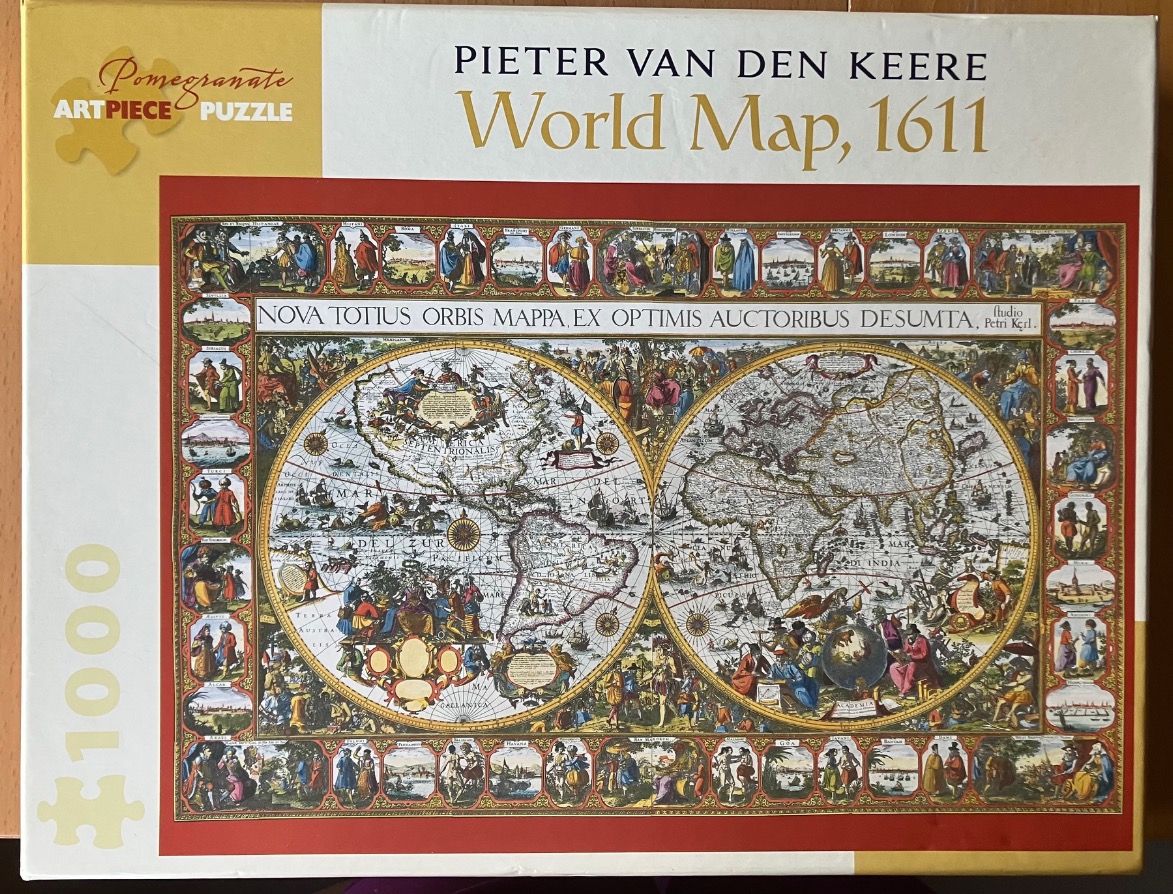
This historical cartographic artwork presents a 1611 world map featuring two large, detailed circular projections of the Eastern and Western Hemispheres. The map is filled with intricate topographical details, sailing ships navigating the oceans, and mythological sea creatures. Large text in Latin spans the top border, identifying the work as "NOVA TOTIUS ORBIS MAPPA, EX OPTIMIS AUCTORIBUS DESUMTA."
The composition is framed by a decorative border consisting of numerous small, rectangular vignettes. These panels depict diverse human figures in period attire, representative of various cultures and regions of the world, interspersed with small, scenic illustrations of major cities and landscapes. The central area between the two hemispheres and in the lower corners is adorned with ornate, gold-toned cartouches and mythological allegories.
The colour palette is rich and muted, dominated by parchment yellows, deep indigos, and weathered earthy tones. The illustration style is characteristic of early 17th-century copperplate engraving, showcasing precise, dense lines and sophisticated hatching techniques. The overall aesthetic is one of scholarly exploration and historical discovery, reflecting the artistic and geographical knowledge of the early seventeenth century.