Stained Glass Songbirds
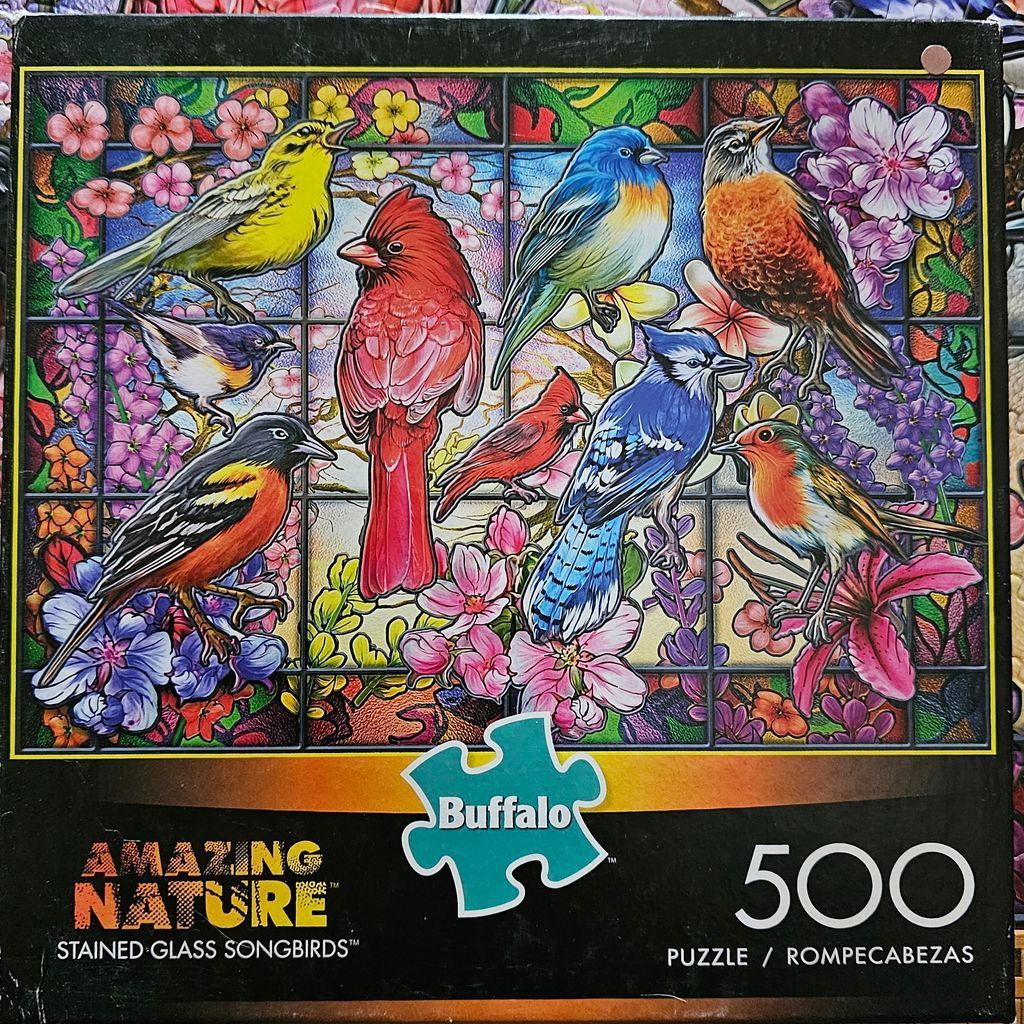
This illustration depicts a collection of nine songbirds arranged against a simulated stained glass grid. The composition is filled with vibrant floral motifs, including pink cherry blossoms, purple lilacs, and yellow clusters that weave through the black leaded glass lines. The birds vary in species and posture, showcasing a diverse array of colors from the brilliant crimson of a cardinal to the bright yellow of a warbler, the deep orange of an oriole, and the cool blues of a blue jay and indigo bunting.
The style mimics the texture and light of traditional stained glass, using bold black outlines and segmented areas of color to create depth. The background panes vary in tone, ranging from soft peach and cream to deep jewel tones, giving the image a luminous, backlit appearance. Each bird is rendered with fine detail, highlighting their feathers, beaks, and eyes, which stand out against the more abstract, decorative floral backdrop.
The overall mood is celebratory and naturalistic, despite the stylized medium. The color palette is exceptionally broad and saturated, utilizing almost every shade of the rainbow to create a harmonious but high-contrast scene. The grid structure provides a sense of organized order, while the overlapping flowers and birds add a layer of organic complexity to the artwork.
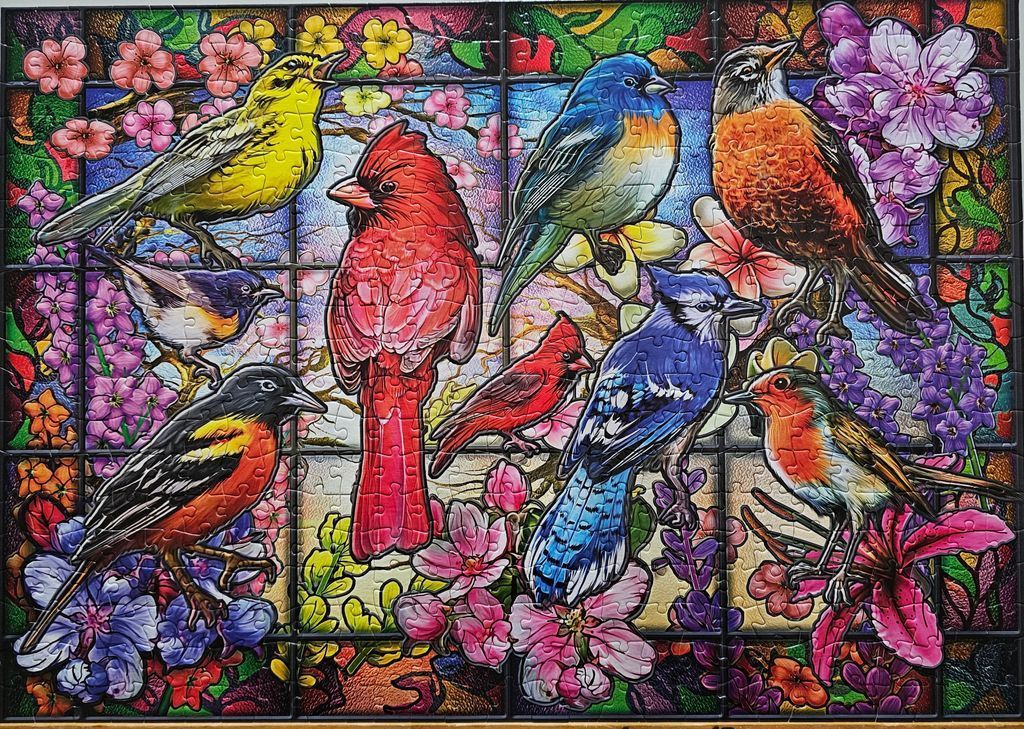
This illustration depicts a collection of colorful songbirds perched amidst a dense, floral landscape. The composition is structured by dark, grid-like outlines that mimic the leaded frame of a stained glass window. A bright yellow warbler, a red cardinal, a bluebird, and a robin are prominent, complemented by a smaller dark-winged bird, a smaller cardinal, a blue jay, and a reddish-breasted songbird. They occupy various positions across the grid, creating a balanced but busy natural scene.
The background is saturated with an array of botanical details, including cherry blossoms, pink and purple clusters of flowers, and leafy stems. The colors are highly vivid and intense, ranging from deep indigos and rich crimsons to golden yellows and soft pinks. Each section of the scene is rendered with textures that resemble textured cathedral glass, featuring swirling patterns and light-refractive effects that suggest glowing, translucent material.
The style is graphic and artistic, leaning into the aesthetic of stained glass art. Each bird is outlined with bold strokes, emphasizing their individual plumage patterns and colors. The lighting appears to radiate from within the scene, giving the entire image a jewel-toned, luminescent quality that highlights the depth of the floral and avian subjects. The interplay of dark grid lines and bright, multifaceted colors creates a high-contrast visual display of nature.
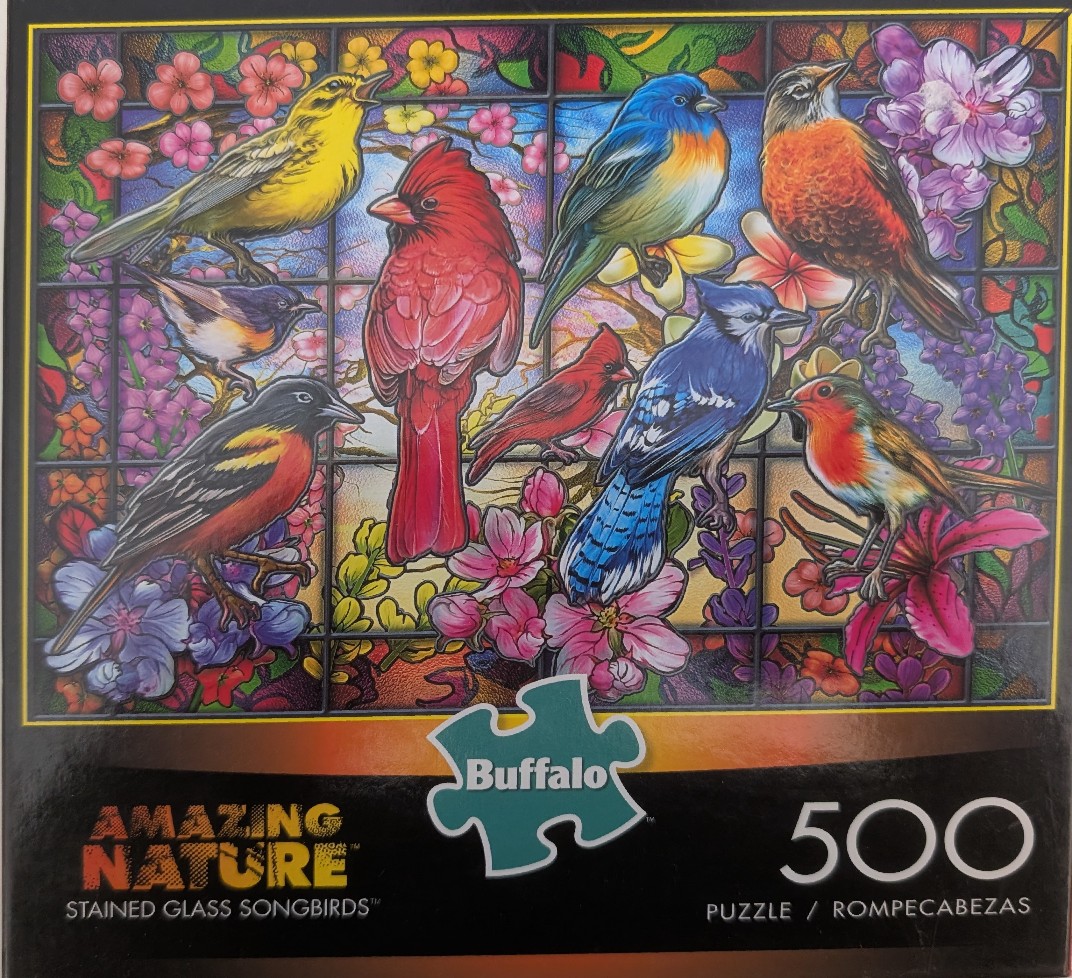
This illustration features a collection of vibrant songbirds positioned against a backdrop that mimics a stained glass window. The composition is structured by a dark, grid-like framework that segments the image into rectangular panes. Within these panes, various species of birds—including a bright yellow warbler, a brilliant red cardinal, a blue jay, and a robin—are depicted in realistic detail, perched among clusters of blooming flowers.
The artwork uses a rich, saturated color palette, with deep reds, vibrant blues, sunny yellows, and soft pinks standing out against the simulated glass textures. The background panes transition between muted gradients of sky blue, sunset orange, and warm golden hues, creating the appearance of light filtering through colored glass. The flowers, ranging from cherry blossoms to purple lilacs, are intertwined with the birds, creating a lush and dense natural scene.
The style is reminiscent of traditional stained glass artistry, utilizing bold black outlines and textured patterns to define each shape. The overall mood is serene and celebratory of nature, with the birds appearing lively and poised. The contrast between the dark structural lines and the vivid, glowing colors of the flora and fauna gives the piece a decorative, mosaic-like quality.
This vibrant illustration features a collection of eight songbirds arranged as if perched upon a decorative stained glass window. The birds are rendered in rich, saturated colours, including a bright yellow warbler, a brilliant red cardinal, a bluebird with striking azure plumage, and a blue jay with its characteristic crested head. An oriole with bold black and orange markings, a small robin-like bird, and two additional smaller red birds complete the avian assembly.
The background depicts a network of black leaded-glass outlines framing sections of textured, translucent-looking glass in various shades of blue, green, and gold. Interspersed among the birds are abundant clusters of pink and white cherry blossoms, which provide a delicate, organic counterpoint to the rigid grid of the window panes.
The overall style is illustrative and highly decorative, mimicking the effect of a traditional stained glass art piece. The lighting appears to glow from behind, emphasizing the depth and variation in the glass textures. The composition is balanced and crowded, with the birds filling the frame to create a tapestry of color and nature.
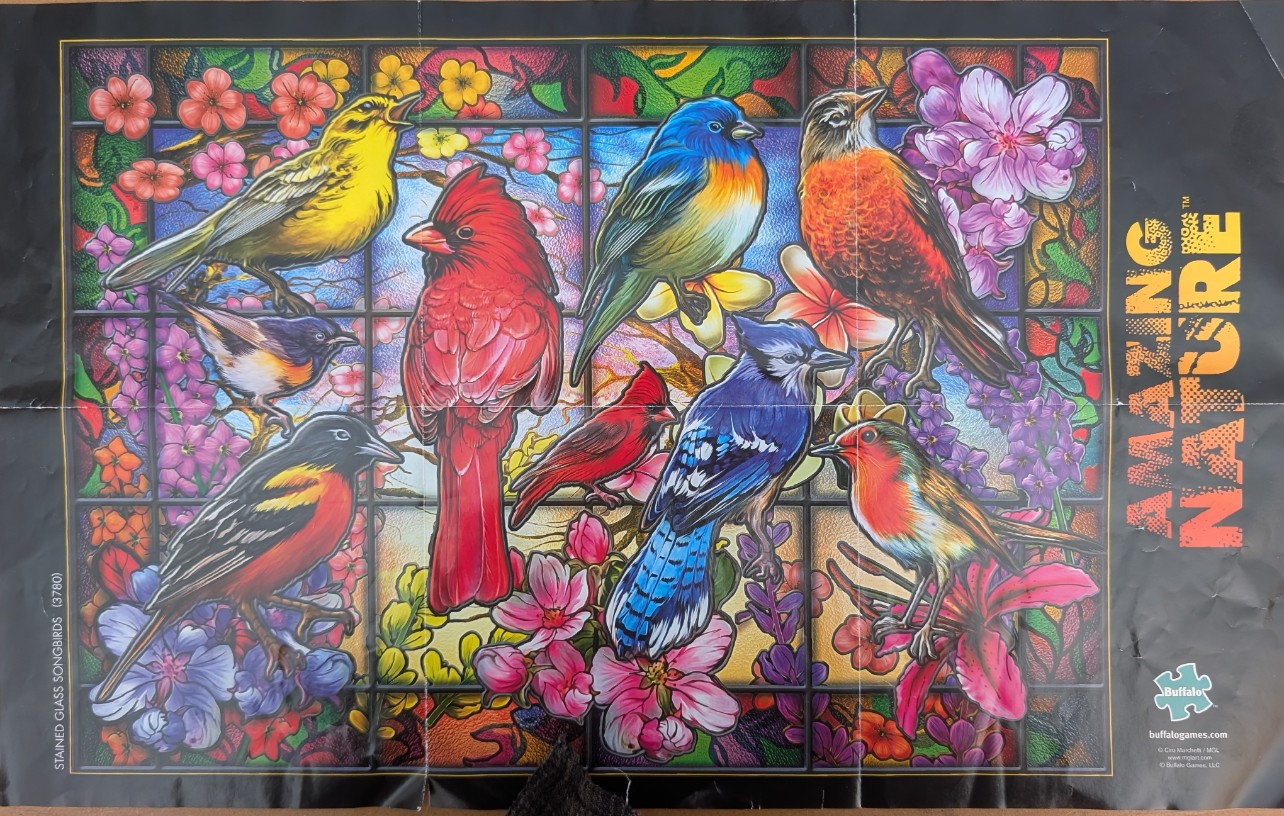
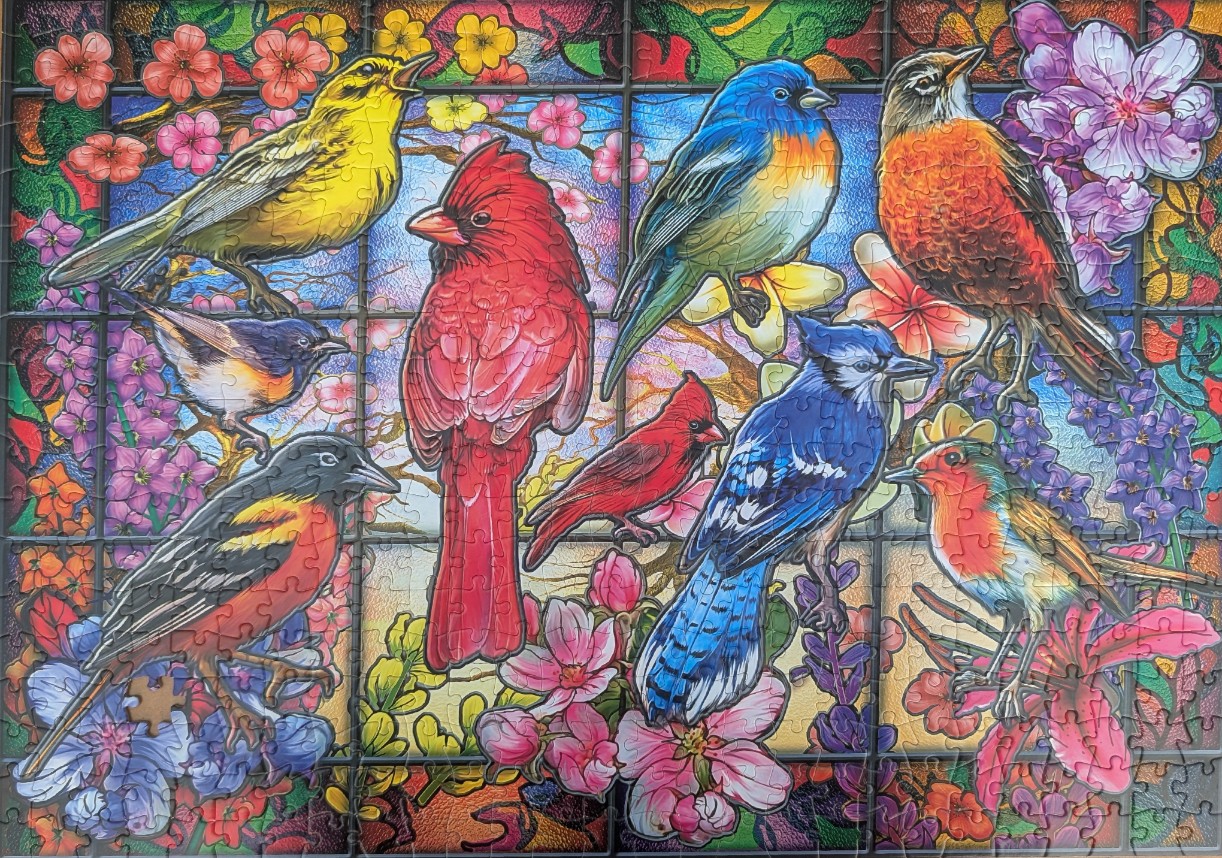
This illustration features a group of colorful songbirds arranged against a grid that mimics the leaded structure of a stained-glass window. Prominent birds include a vibrant yellow warbler, a bright red cardinal, a blue jay, and an American robin, along with several smaller, similarly colorful species. Each bird is rendered with high detail, showcasing distinct plumage and alert postures, while they are surrounded by lush, flowing clusters of flowers in shades of pink, purple, and orange.
The overall composition is dense and balanced, with the birds and flora filling each pane of the grid to create a lush, garden-like atmosphere. The background within the grid suggests a soft, light-filled sky, giving the appearance that the viewer is looking through a window into a natural landscape. Dark, thick lines define the grid, separating sections of the foliage and bird figures to emphasize the stained-glass aesthetic.
The color palette is vivid and saturated, relying on high-contrast tones to make the birds pop against the botanical elements. The light appears to radiate from behind the scene, highlighting the translucent quality of the petals and leaves. The illustration style is crisp and illustrative, with careful attention paid to shading and texture on the birds' feathers and the varied shapes of the surrounding blossoms.

by Sparkling Puzzler 2024-01-06