Waterfall
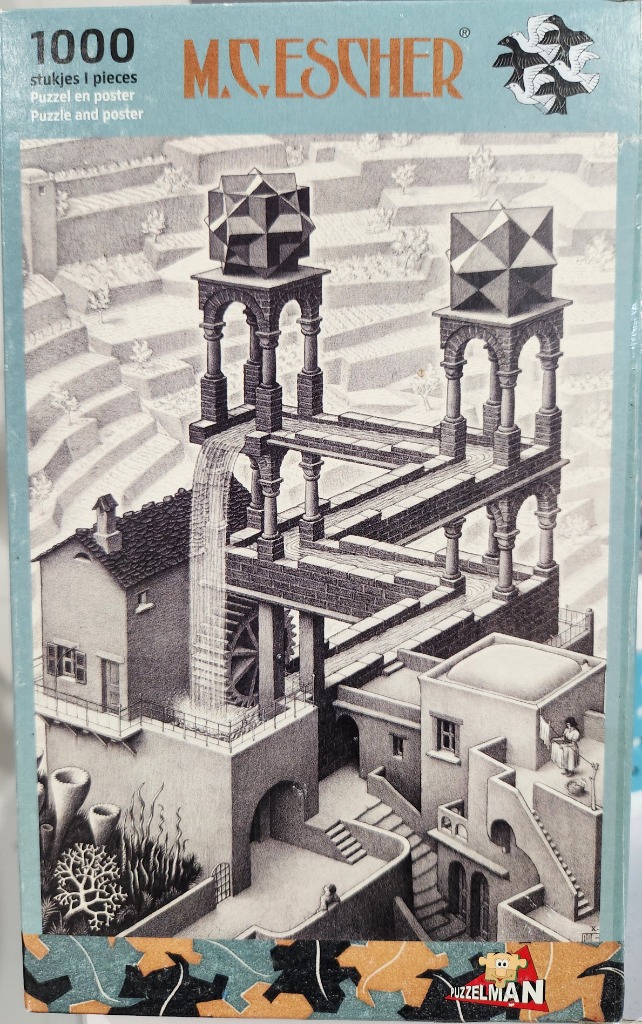
The artwork depicts a classic impossible structure where a stone aqueduct follows a zig-zag path, continuously sloping downward yet returning to its starting elevation. At the end of the aqueduct, water spills over in a waterfall to power a large water wheel attached to the side of a small house. The structure is capped by two prominent geometric towers, each topped with a complex, star-like polyhedral shape.
The entire scene is rendered in a detailed, monochromatic lithographic style, utilizing fine cross-hatching and stippling to create texture and depth. The setting appears to be a Mediterranean village with terraced fields visible in the background, providing a sense of scale to the surreal architecture. The lighting is soft and consistent, emphasizing the clean lines of the stone walls and the intricate, impossible geometry of the plumbing and building.
Beneath the architectural elements, smaller details emerge, including a small house structure in the foreground with a figure hanging laundry on a balcony. Below the waterfall, lush, stylized vegetation and coral-like forms grow in the shadows, contrasting with the rigid geometry of the buildings above. The composition is masterfully balanced, using the repeating patterns of the stonework and the optical illusion of the cascading water to lead the viewer's eye through the self-contradictory path of the aqueduct.