La Classe de Danse, 1871-1874
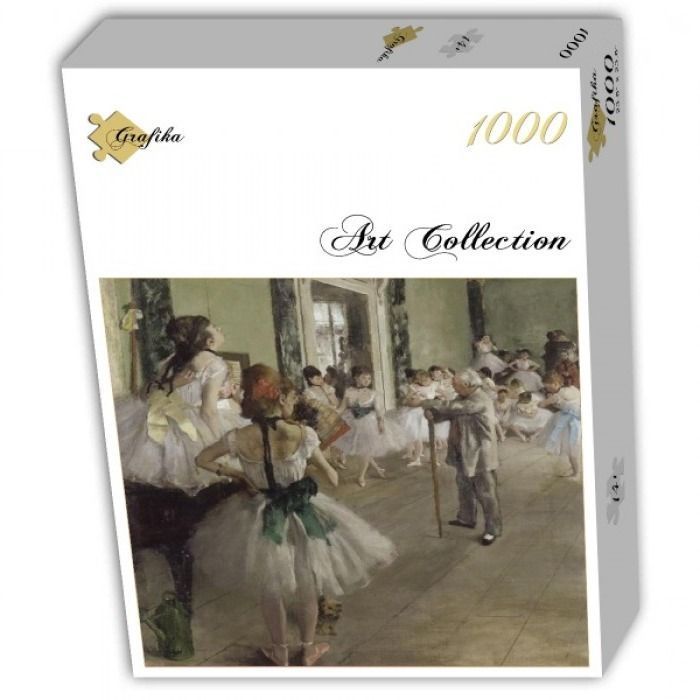
This impressionist-style oil painting depicts a bustling dance studio interior. In the foreground, two ballerinas in white tutus with prominent ribbons stand near the edge of the scene; one looks upward while the other stands with her back to the viewer, hands on her hips. Nearby, an elderly ballet master stands leaning on a cane, observing the students.
In the background, the room stretches out, filled with numerous other young dancers in various states of practice. Some are dancing in the center of the wooden floor, while others sit or congregate near the edges of the room. A large window or mirror is visible on the back wall, contributing to the airy, expansive feel of the practice space.
The colour palette is soft and muted, dominated by shades of sage green on the walls, warm beiges, and earthy browns. The light is diffused, creating a hazy, gentle atmosphere that softens the edges of the figures and the architecture. The brushwork is loose and painterly, characteristic of late 19th-century French Impressionism, capturing a candid, fleeting moment in a rigorous training environment.
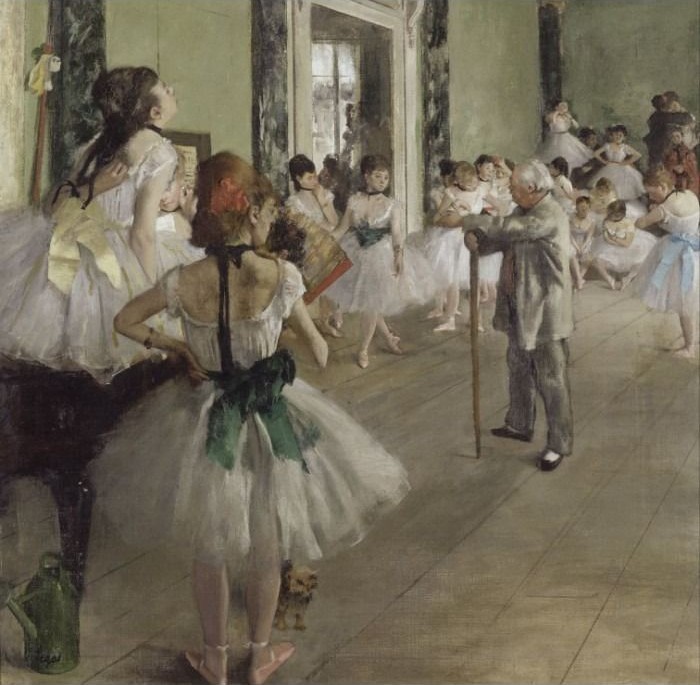
This scene captures a bustling ballet rehearsal in a spacious, high-ceilinged studio. In the foreground, a young ballerina stands with her back to the viewer, wearing a white tutu cinched with a dark green sash. Another dancer, seated on a piano to the left, gazes upward while adjusting her hair. A small, dark-haired dog sits patiently near the feet of the standing dancer.
The composition is anchored by an elderly man standing near the center, leaning heavily on a long wooden cane. He is dressed in a light-colored suit and appears to be observing a ballerina who is practicing a pose. Scattered across the background, a large group of young dancers in white tutus are engaged in various states of preparation, some standing in groups and others resting or stretching along the periphery of the room.
The lighting is soft and diffused, creating a serene, academic atmosphere within the studio. The walls are painted a muted, sage green, and the floors are constructed of wide, light-colored wooden planks that create strong diagonal perspective lines leading toward the back of the room. The paint application is impressionistic, favoring textured, visible brushstrokes that lend a sense of movement and fleeting light to the figures. Secondary details, such as a green watering can placed on the floor in the bottom left corner and the large, architectural doorway in the background, add depth and a sense of realism to the interior space.