Garden Orchard & Vine
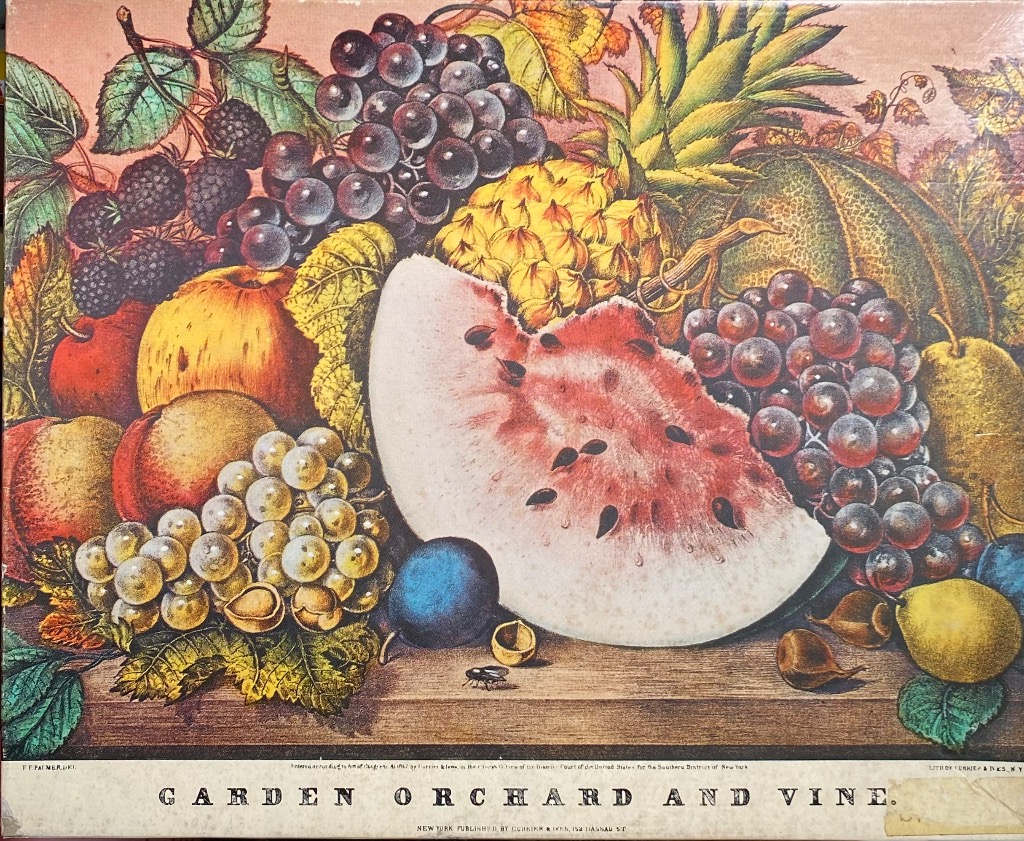
This vintage-style illustration depicts a lush, overflowing still life of various fruits arranged on a wooden table. A large, crescent-shaped slice of watermelon serves as the central focal point, its pink flesh punctuated by dark, scattered seeds. Surrounding this centerpiece are clusters of dark purple and white grapes, a ripe pineapple, several peaches and apples, and a solitary blue plum. A single fly is captured mid-detail on the table surface in the foreground, adding an element of naturalistic observation common to 19th-century academic art.
The composition is dense and tightly packed, with an abundance of green leaves tucked into the gaps between the fruits to fill the frame. The style mimics a classic lithograph, characterized by fine hatching and stippled texture rather than smooth gradients. The colour palette is rich and warm, dominated by deep purples, golden yellows, and the vibrant coral-pink of the watermelon, all set against a soft, muted background that evokes the aesthetic of historical print media.
Beneath the central image, a printed border identifies the work as "GARDEN ORCHARD AND VINE." The lighting is soft and diffused, creating a balanced appearance across the arrangement that highlights the textures of the fruit skins and the rough grain of the wooden table. The piece captures a bountiful harvest, emphasizing the idealized abundance of a traditional orchard setting through a nostalgic, painterly lens.


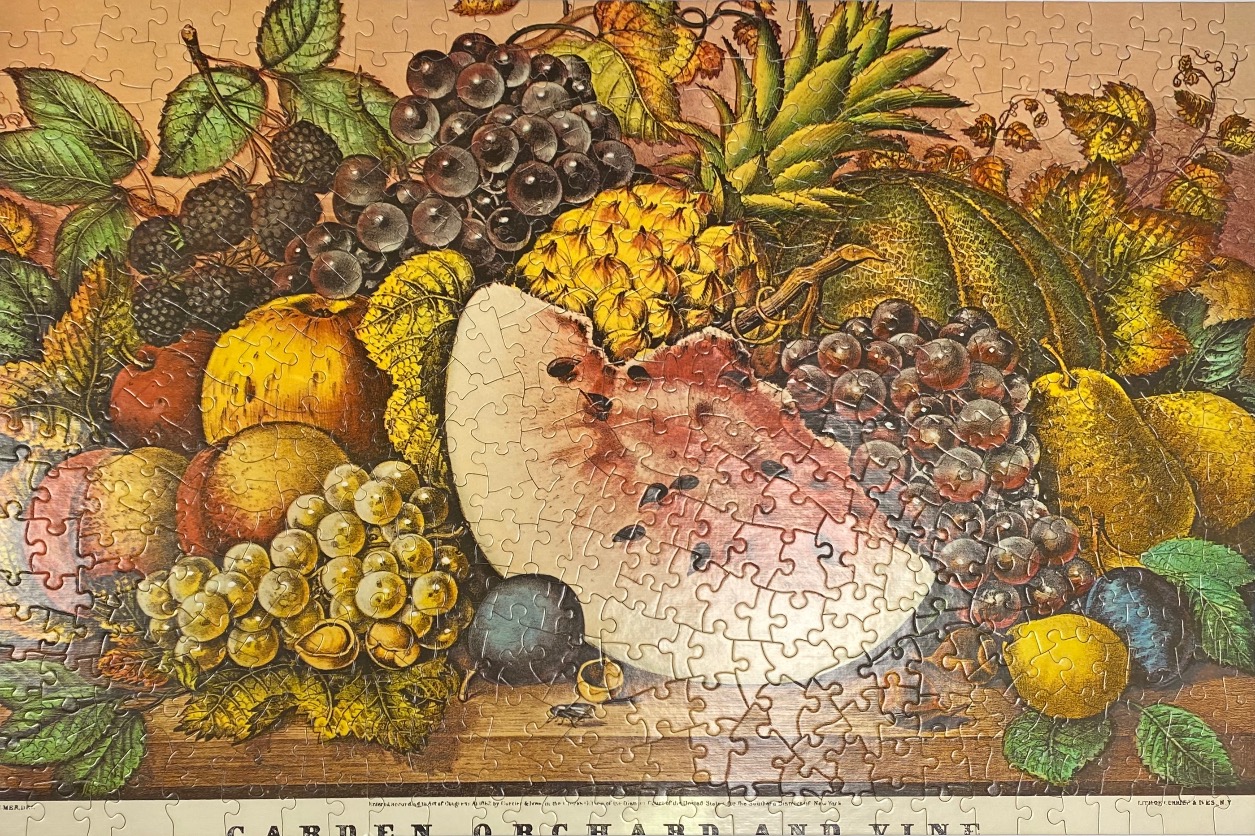
This vintage-style illustration depicts an abundant harvest of various fruits and berries, artfully arranged on a wooden table. The central focal point is a large, pale slice of watermelon, which draws the eye amidst a dense cluster of other produce. Surrounding this are dark purple grapes, green grapes, a golden pineapple, a cantaloupe, several peaches, plums, and a textured pear. The composition is overflowing, creating a rich and textured landscape of nature's bounty.
The arrangement is set against a warm, muted background that evokes a classic, traditional botanical print. The color palette is composed of earthy tones, including deep purples, rich golds, vibrant greens, and the soft, creamy hue of the watermelon flesh. The lighting is soft and even, highlighting the varied textures of the fruit peels, the intricate leaves, and the wood grain of the surface beneath.
The style is reminiscent of 19th-century lithographic fruit studies, characterized by fine detail and a somewhat stylized, decorative approach. The illustration captures a sense of seasonal plenty, with every inch of the frame filled with organic forms. A small inscription is visible at the very bottom edge of the wooden surface, adding to the antique aesthetic of this classic still life composition.