World War II Tanks
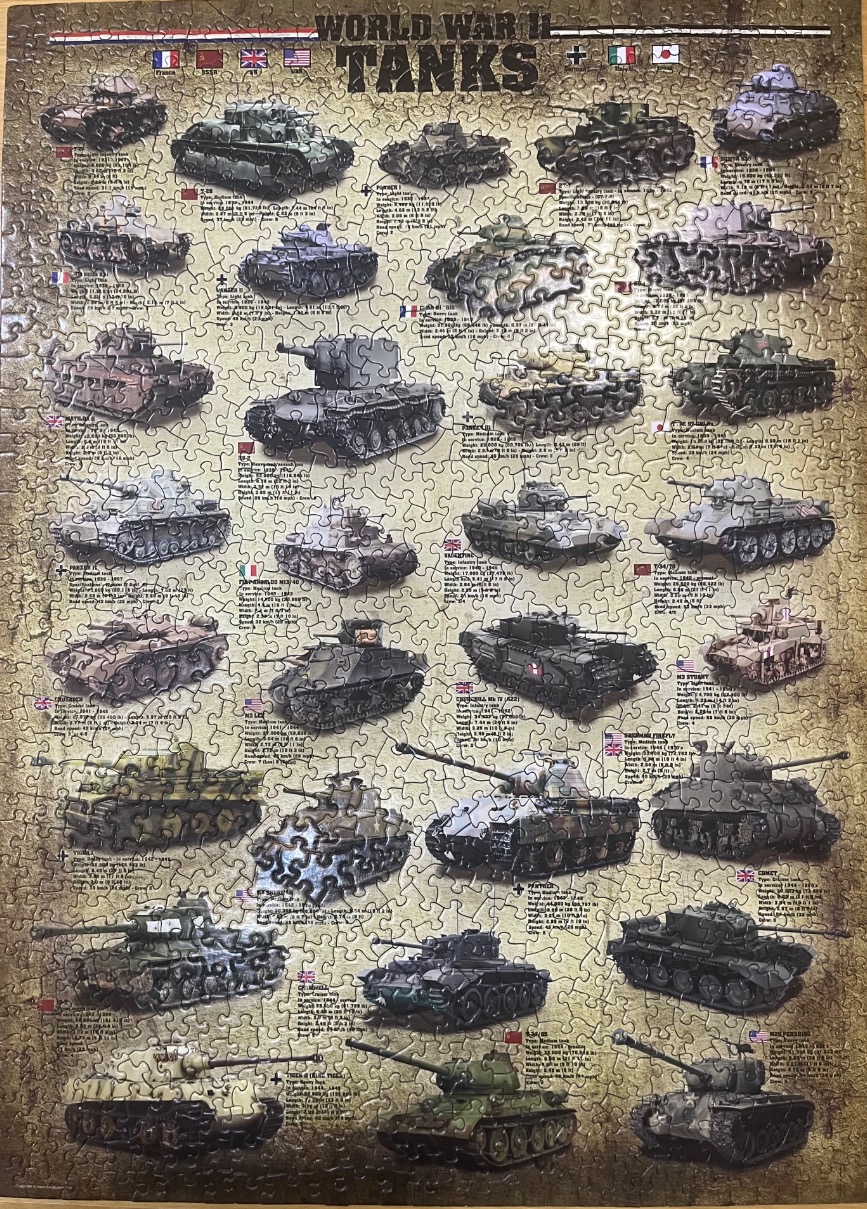
This educational chart showcases a collection of armored combat vehicles from World War II, presented in an organized grid layout. At the top, the bold, stenciled title "WORLD WAR II TANKS" is flanked by small national flags representing the various countries that deployed these vehicles. Each individual tank is illustrated with technical precision, showing distinct models from different nations including light, medium, and heavy variants.
The composition is structured like a reference poster, with each tank illustration accompanied by a small block of text detailing its specific model name, type, and operational specifications. The tanks are rendered in a realistic, slightly muted art style, with varying camouflage patterns and metallic shades of olive drab, grey, and brown. The background features a subtle, aged, and weathered parchment-like texture, giving the entire display the appearance of a historical document or military manual.
The colour palette is dominated by earthy tones, including sepia, dark greens, charcoal greys, and muted browns, which reinforces the industrial and historical theme. The lighting is uniform across the page, ensuring clarity for each tank illustration and the associated text blocks. The overall aesthetic is one of a vintage technical guide, appealing to military history enthusiasts through its focus on accurate depiction and informative documentation of mid-20th-century warfare machinery.
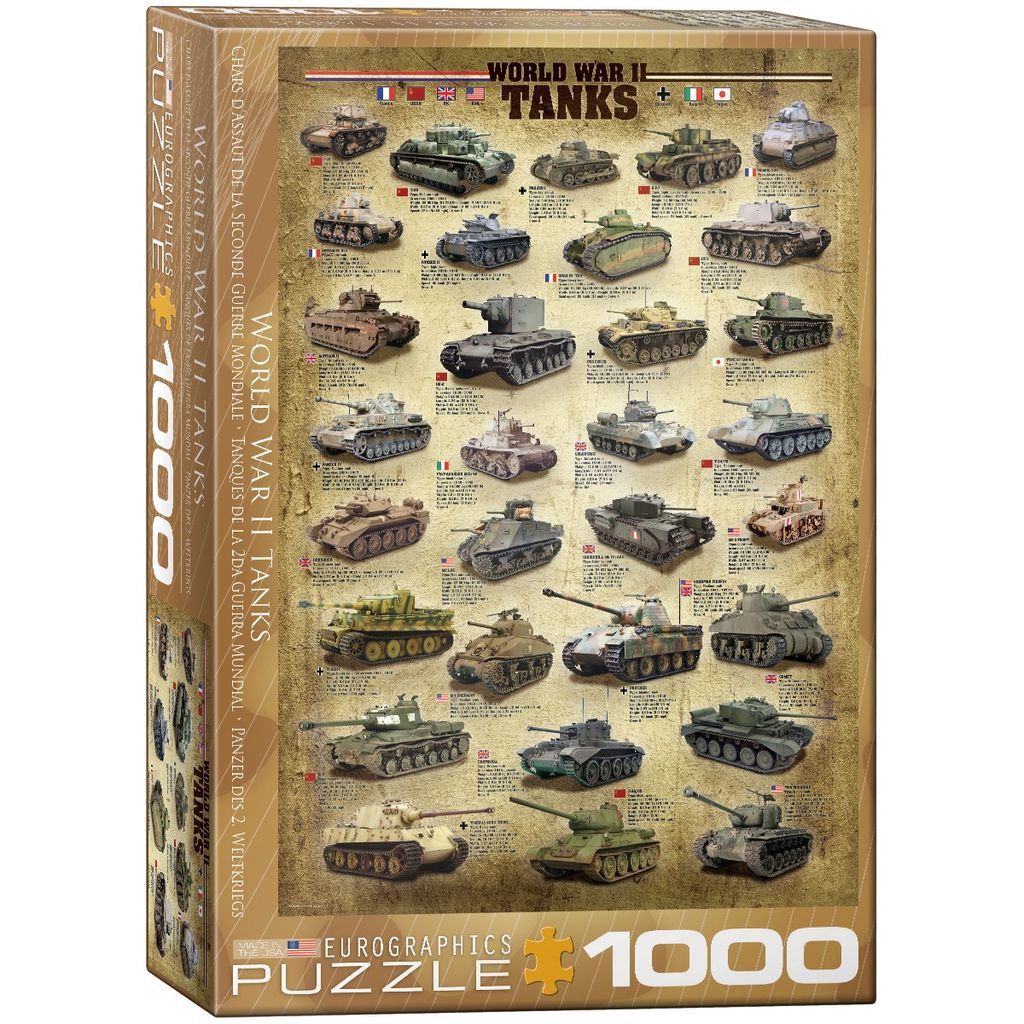
This visual collection features twenty-five detailed illustrations of various tanks used during the Second World War. The tanks are arranged in a loose grid formation across a textured, distressed tan background that mimics the look of aged parchment or weathered paper. Each vehicle is depicted in profile or three-quarter view, showcasing distinct mechanical features like turret shapes, barrel lengths, and tread patterns.
Beside each tank is a small national flag representing the country of origin, along with a block of descriptive text providing specifications for each model. The header prominently displays the text "WORLD WAR II TANKS" in a bold, military-style typeface. The overall composition is clean and organized, functioning much like an educational chart or technical reference sheet for historical armored combat vehicles.
The colour palette is muted, relying on earth tones—olive drabs, sandy beiges, dark greys, and slate blues—typical of military camouflage. The lighting is uniform across the page, providing clear visibility of the fine details of each tank, from the rivets on the hulls to the heavy steel tracks. The artistic style is reminiscent of realistic technical illustrations or model kit box art, prioritizing clarity and historical accuracy over dramatic flair.
by Cas 2025-08-04