Circe as an Animal Queen
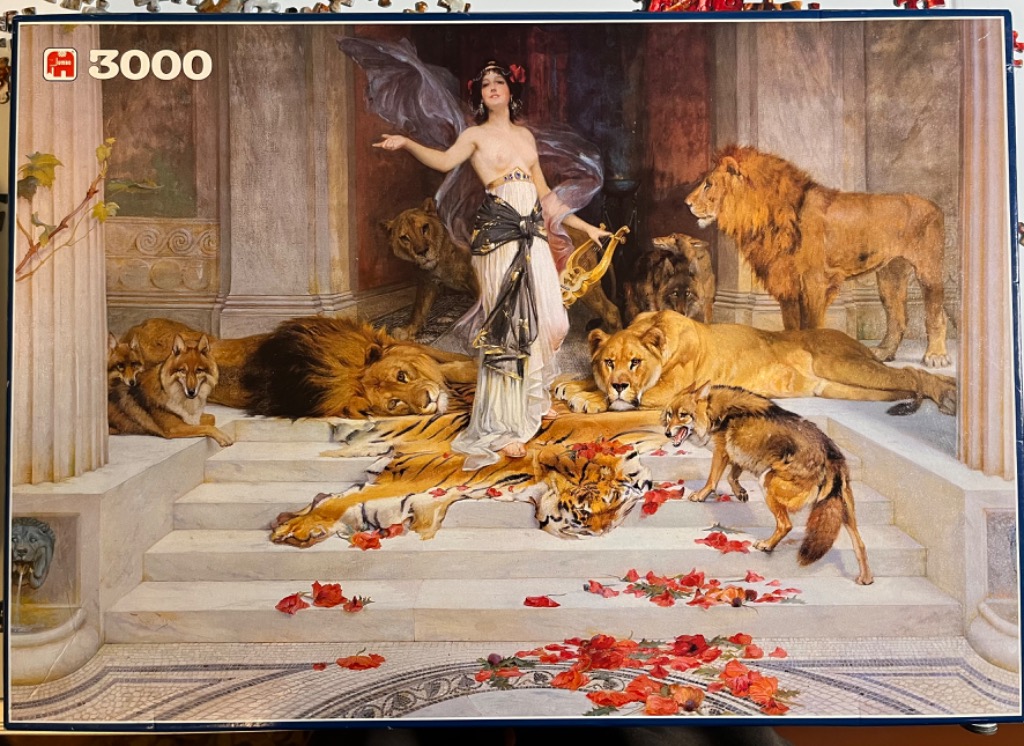
This classical oil painting depicts a central female figure, styled in the fashion of a muse or goddess, standing gracefully atop a set of wide marble stairs. She is dressed in a flowing, partially translucent white and black gown, and she holds a golden lyre in one hand while gesturing with the other. Her expression is serene as she stands surrounded by a menagerie of wild animals, including several large lions, a lioness, and various wolves, all of which appear peaceful and domesticated in her presence. A large, flattened tiger skin rug lies at her feet, serving as a focal point on the steps.
The setting is an opulent, neoclassical hall framed by grand stone columns and intricate floor mosaics. The architectural elements provide a rigid, structured backdrop that contrasts with the fluid movement of the woman’s drapery and the relaxed postures of the animals. The stairs lead down toward the foreground, where a vibrant scattering of fallen red poppy petals creates a stark contrast against the pale grey stone, drawing the viewer's eye across the lower portion of the composition.
The colour palette is warm and earthy, dominated by the golden-brown tones of the lion fur, the cool grey and white of the marble architecture, and the deep, rich reds of the petals. The lighting is soft and cinematic, highlighting the woman and the central animals while casting subtle shadows that add depth to the scene. The overall style is reminiscent of late 19th-century academic art, characterized by fine
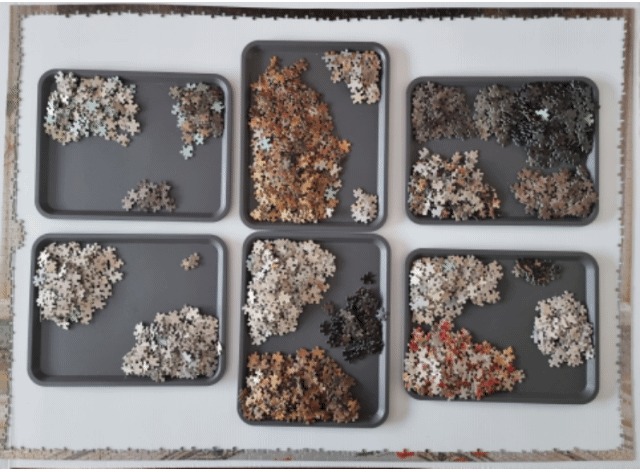
This image features an organized collection of small, irregular fragments arranged across six rectangular grey trays set upon a white surface. The trays serve as a sorting system, with each containing distinct clusters of material. The contents of the trays consist of a vast spectrum of colors and patterns, ranging from dark, monochromatic blacks and greys to lighter, neutral tones, and vibrant accents of rust, brown, and ochre.
The layout is strictly functional, with five trays aligned in a grid-like pattern and one central tray oriented vertically. The visual focus is on the variety of textures and color gradients present within the scattered fragments. Each tray holds a different concentration of these tiny items, some appearing grouped by color similarity while others are mixed. The composition emphasizes organization and the potential for a larger, complex image to be reconstructed from these varied components.
The overall lighting is bright and even, highlighting the physical depth and irregular shapes of the materials. The atmosphere is quiet and methodical, suggestive of a deliberate creative process. The medium is a high-resolution photograph capturing the distinct contrast between the smooth, uniform grey of the trays and the chaotic, colorful detail of the contents scattered within.
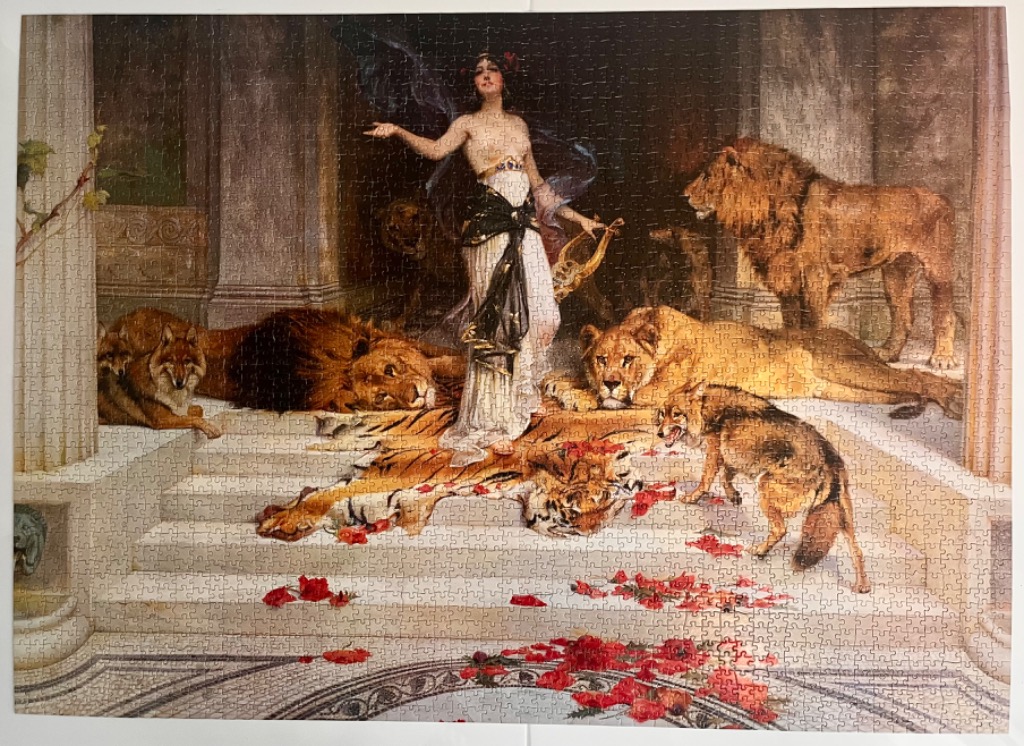
The central figure is a serene woman dressed in an elegant white classical gown with dark drapery and a decorative headpiece, holding a small lyre. She stands upon a stone staircase that leads into a grand, classical hall flanked by tall pillars. Her outstretched hand and poised posture give the scene an ethereal, goddess-like quality, as she remains undisturbed by the wild animals surrounding her.
She is encircled by a majestic group of animals, including several lions lounging on the steps and a alert wolf near the foreground. A large tiger hide is spread out beneath her feet, and the stone stairs are scattered with vibrant, fallen red rose petals that extend toward the foreground. The composition is reminiscent of a romanticized classical oil painting, with deep shadows and soft, dramatic lighting that highlights the textures of the animals' fur and the folds of the woman's fabric.
The colour palette is dominated by warm, earthy tones of tan, brown, and ochre, contrasted by the sharp, intense red of the roses and the woman's pristine white garment. The architecture suggests a Roman or Greek setting, featuring smooth stone floors with intricate patterns and high-ceilinged marble walls that provide a sense of scale and timelessness. The overall mood is one of mythical calm and quiet power, capturing a harmonious, surreal encounter between civilization and the natural world.
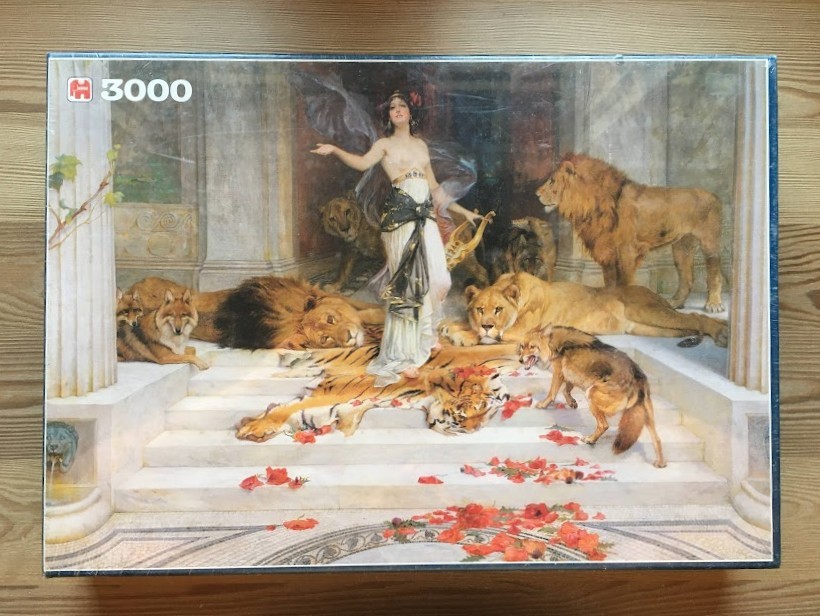
The central figure of this neoclassical painting is a woman standing regally upon a set of marble stairs. She is dressed in a flowing, white, semi-sheer gown draped with dark fabric. Her arms are outstretched, and she appears to be conducting or taming the wild animals gathered around her. A large tiger skin rug lies flat on the steps at her feet, providing a dramatic focal point at the center of the composition.
Surrounding the woman is a variety of predators, including several lions and wolves. To the left, a wolf rests on the steps near a lion, while another lion lies comfortably further back. On the right, a large male lion stands watchfully, and a lioness reclines near the front, while a wolf prowls forward on the lower steps. The setting is a grand, pillared marble hall or portico that suggests an ancient Roman or classical architectural style. The scene is scattered with vibrant red flower petals, adding a striking splash of color against the pale white stone.
The painting is rendered in a realistic, academic style with soft, diffused lighting that highlights the textures of the animals' fur and the woman's drapery. The palette is dominated by neutral tones—creams, beiges, and grays of the stone and animal coats—which creates a sophisticated contrast with the deep black accents of the woman's sash and the intense, recurring crimson of the fallen flower petals.
by Larry Hostetter 2024-07-27