A City on the Wing
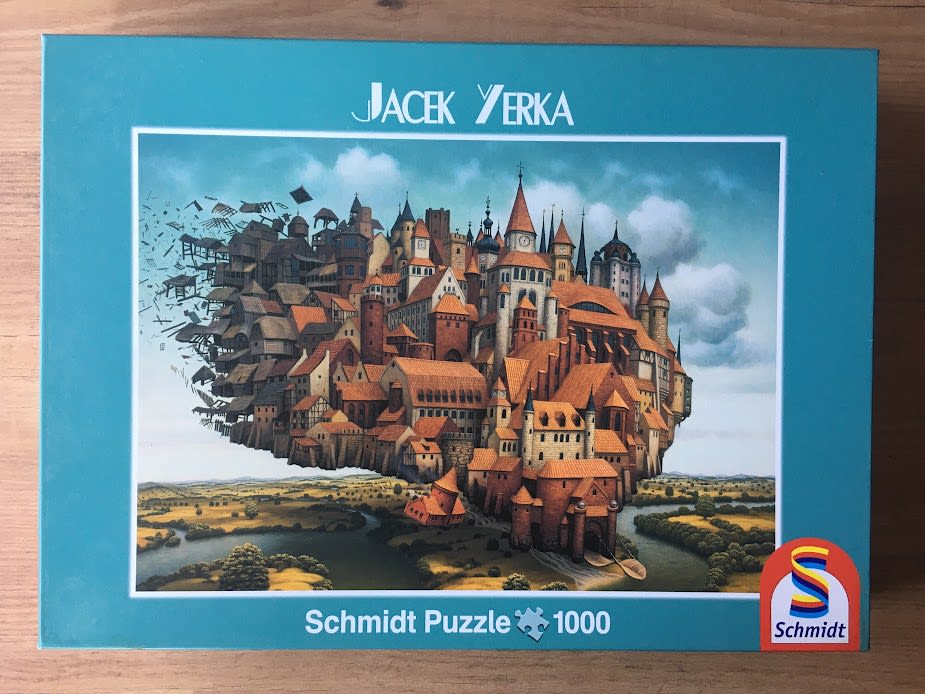
This surrealist painting features a densely packed medieval European city that appears to be floating in mid-air. The architecture is a complex blend of Gothic spires, timber-framed houses, and terracotta-roofed buildings, all huddled together in an improbable, multi-layered cluster. The most striking element is the left side of the city, which is literally dissolving; the wooden structures and rooftops are breaking apart into floating debris and scattered architectural fragments that drift into the empty sky like falling leaves.
The city hovers above a serene, sweeping landscape of rolling green hills, winding rivers, and patches of forest. The perspective is wide and slightly elevated, emphasizing the isolation of the floating metropolis. While the city itself is intricately detailed and tightly grouped, the landscape beneath is depicted with softer, more atmospheric brushstrokes, grounding the scene in a sense of vast, quiet space.
The colour palette is dominated by warm, earthy terracotta tones, deep ochres, and brownish greys of the stone and brick architecture. These warm colours contrast beautifully against the cool, soft blues of the sky, which is filled with gentle, wispy white clouds. The overall lighting suggests a mild, overcast day, casting soft shadows that highlight the textures of the buildings and the depth of the floating mass. The artwork exhibits a precise, classical illustrative style, characteristic of Jacek Yerka, blending fantastical concepts with realistic, meticulous detail.
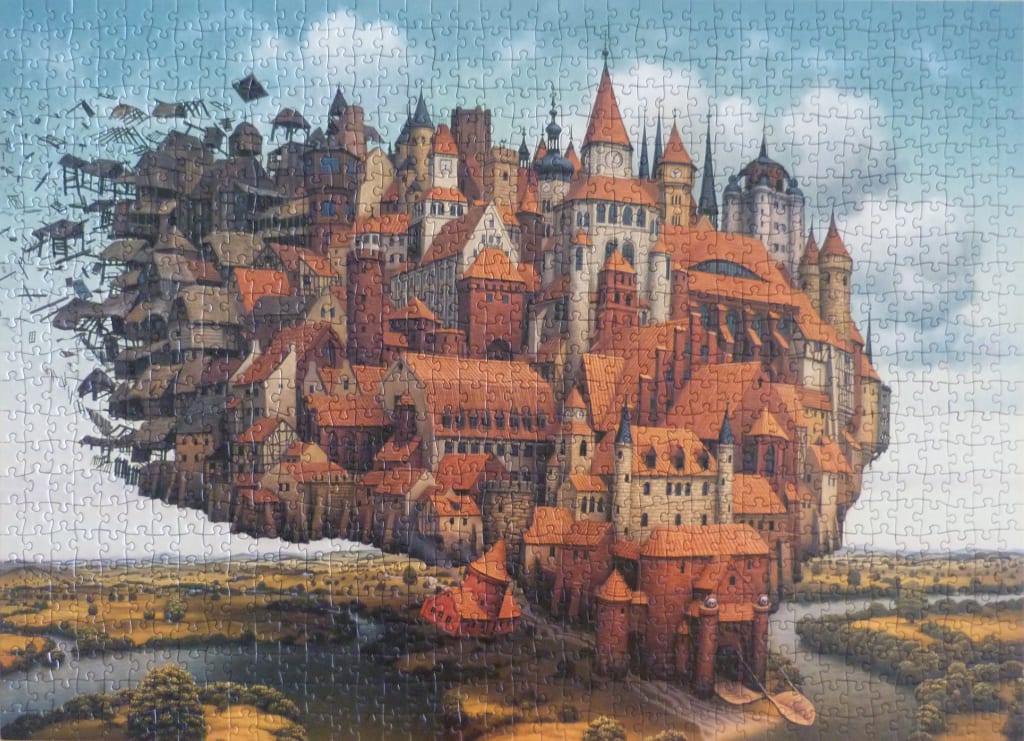
This illustration depicts a massive, fantastical city cluster floating in the sky. The city is a dense, interconnected maze of European-style stone and timber-framed buildings, featuring numerous pointed towers, steep gabled roofs, and winding staircases. On the left side of the structure, the architecture appears to be breaking apart, with bits of wood and debris scattering into the air, while the main body remains a tightly packed, imposing silhouette against the sky.
Beneath the floating city lies a sprawling, muted landscape of rolling hills, fields, and winding waterways in shades of ochre, green, and brown. The city itself is rendered in warm, earthy tones, predominantly terracotta oranges, sandy beiges, and deep browns, which contrast against the bright, pale blue sky filled with soft, white clouds. The lighting is diffuse and gentle, casting subtle shadows that highlight the three-dimensional complexity of the architectural labyrinth.
The style is detailed and painterly, reminiscent of traditional fantasy concept art. The overall composition balances the heavy, textured complexity of the floating metropolis against the vast, serene emptiness of the atmosphere, creating a sense of wonder and motion. Small details like turret windows, chimneys, and arched entrances add to the depth of the city, which seems suspended in a dreamlike, timeless state.