Kannon Mandala
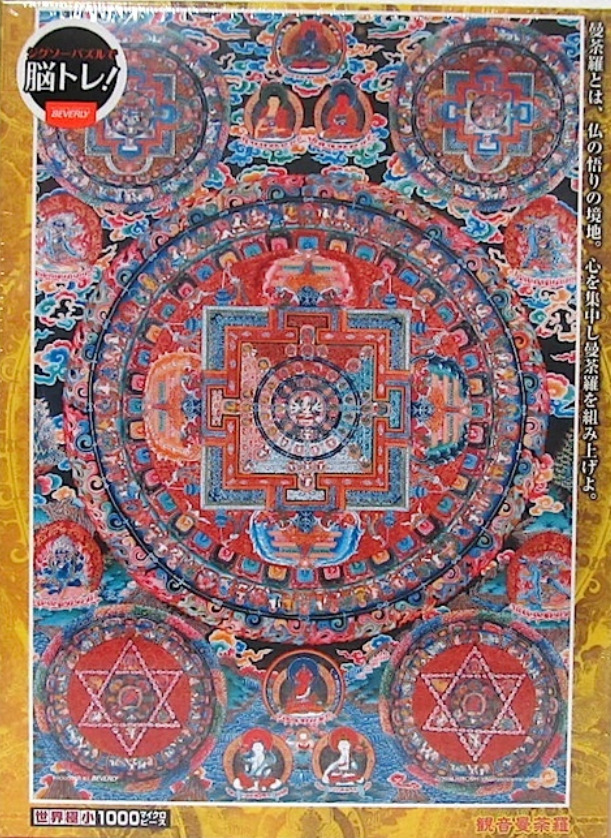
This intricate artwork is a traditional Tibetan-style mandala, defined by its extreme symmetry, sacred geometry, and highly detailed iconographic imagery. The composition is anchored by a large central square palace, rendered in vibrant red and blue hues, containing a central deity figure. This core is surrounded by several concentric, circular layers filled with repeating patterns, smaller figures, and ritualistic symbols. The central mandala is flanked by four smaller, distinct circular mandala patterns located in each corner of the composition, maintaining the overall balance of the piece.
Surrounding the main circular motifs are numerous smaller, individual vignettes depicting various deities in meditative or dynamic poses. These figures are set against a backdrop of swirling clouds, stylized mountains, and floral elements that fill every available space. The imagery is densely layered, using a traditional thangka painting style where every stroke carries symbolic weight. The colour palette is rich and saturated, dominated by deep vermilion reds, sky blues, bright golds, and white, contrasted against dark, atmospheric backgrounds.
The entire composition reflects a spiritual landscape, conveying a sense of profound order and cosmic hierarchy. The aesthetic is ornate and highly stylized, typical of historical religious scrolls. The meticulous linework and the precision of the geometric layout draw the viewer inward toward the central deity, creating a visual meditation through complex detail and harmonious color interaction.