Snowball Fight
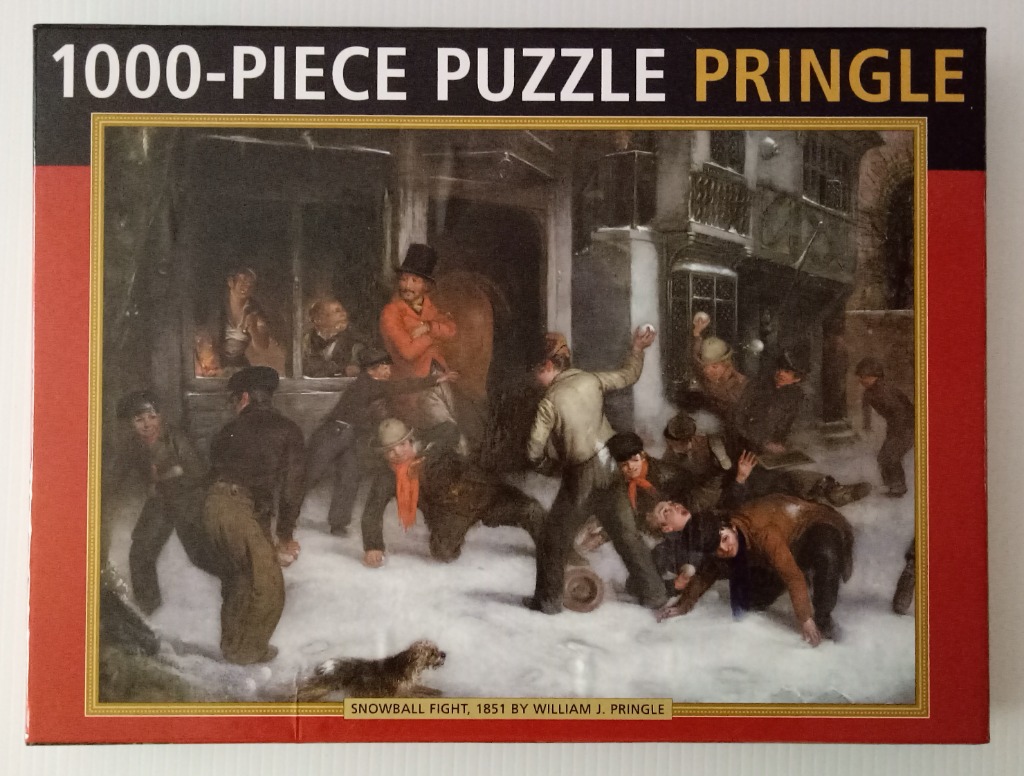
The central scene depicts a spirited, chaotic snowball fight unfolding in a snow-covered alleyway during the 19th century. A group of youths in period clothing, including flat caps and waistcoats, are scattered across the foreground and middle ground, some crouching to pack snowballs and others in the act of throwing them. Standing among the group is a man wearing a dark top hat and a vibrant orange-red coat, his arms crossed as he observes the energetic melee with a calm, amused expression.
In the background, a dark, aged stone building with large, multi-paned windows frames the action. Figures watch the activity from an open doorway and window, illuminated by a faint, warm glow from within the structure. To the left of the fray, a small, shaggy dog trots through the snow, adding a touch of life to the chilly, grey landscape. The composition is dynamic, drawing the eye toward the center where the motion of the snowball fight is most intense.
The painting style is traditional and realistic, characterized by muted, earthy tones of brown, grey, and deep black, which emphasize the wintry, overcast atmosphere. The pop of orange in the man's coat and several of the children's scarves provides a necessary contrast to the otherwise monochromatic surroundings. Soft, diffused lighting suggests a cold, cloudy winter afternoon, while the brushwork captures the textured appearance of the snow and the rough, weathered surfaces of the historic architecture.
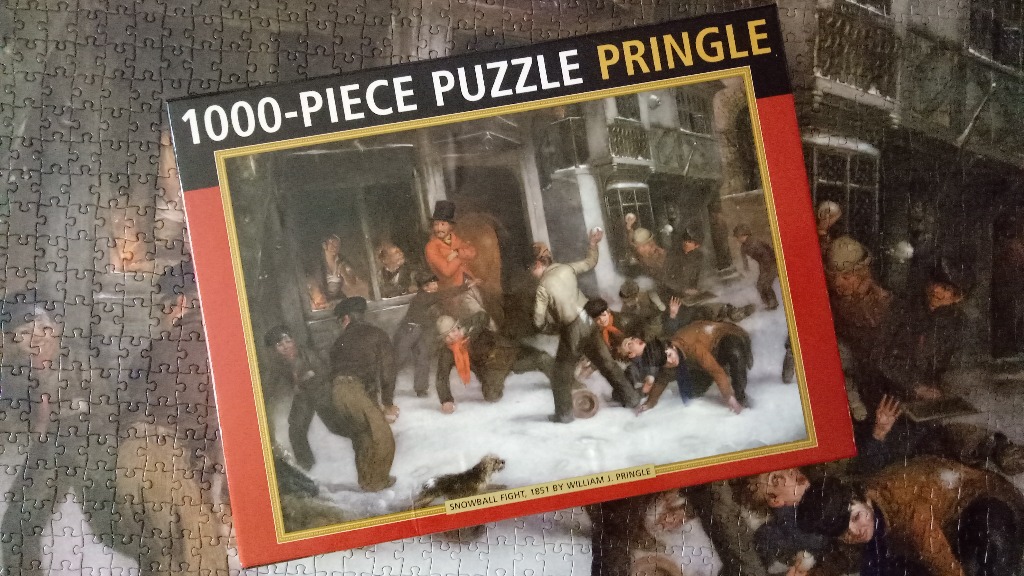
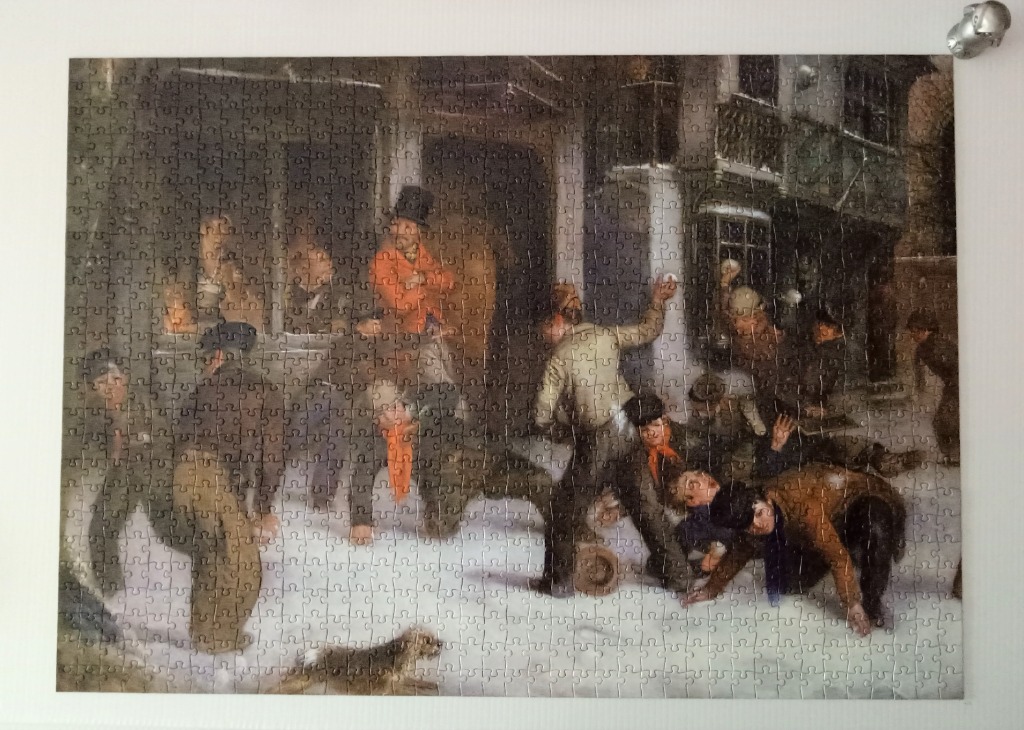
This atmospheric scene depicts a chaotic and energetic snowball fight taking place in a snow-covered town square. A large group of people, including young boys and several adults in period clothing, are scattered across the foreground and mid-ground. Many figures are captured in mid-action, crouching to scoop up snow, throwing projectiles, or scurrying for cover. To the left, a man wearing a top hat and a bright orange coat stands watching the fray, while a small dog runs across the foreground.
The setting is a dense, historical village street lined with dark, stone-built buildings. The architecture features heavy wooden beams, overhanging balconies, and dark doorways that create deep shadows, contrasting sharply with the bright white snow covering the ground. The composition is bustling, with figures layered in varying depths, conveying a sense of immersive activity and cold winter weather.
The colour palette is dominated by muted, earthy tones—browns, greys, and deep ochres—which reflect the historical setting and overcast winter light. The bright orange scarf and coat provide vibrant focal points that draw the eye toward the center of the action. The style is that of a classic 19th-century oil painting, characterized by realistic proportions, dramatic lighting, and a narrative focus on daily life and festive play.