Snail Mail
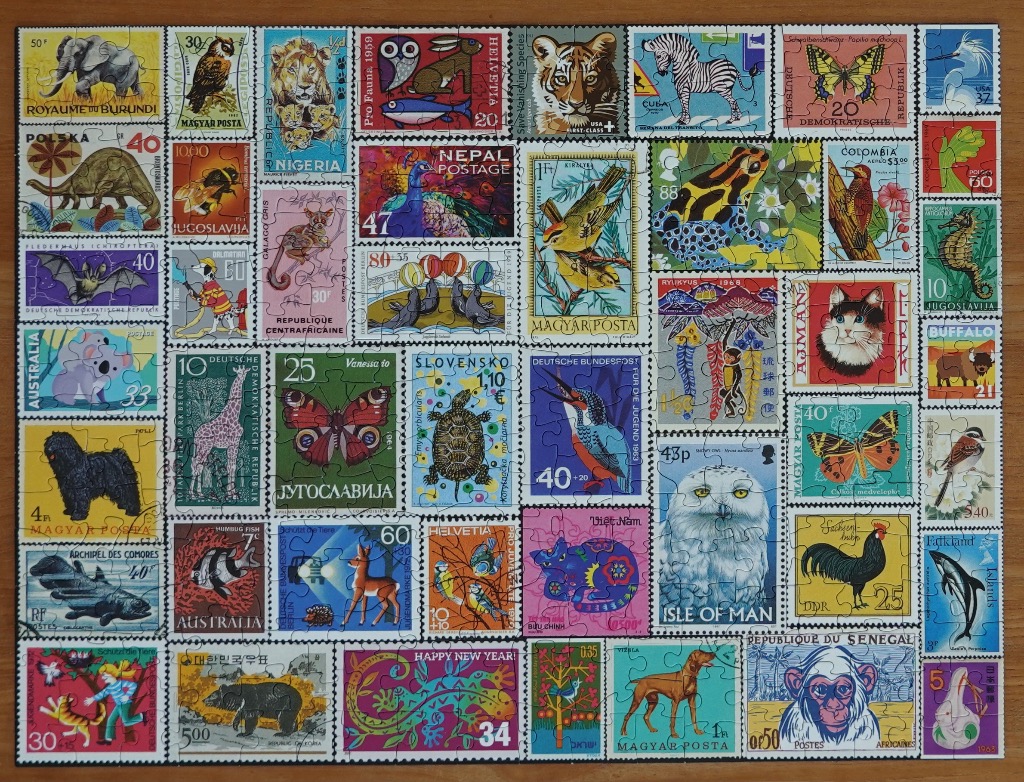
This image presents a dense collage of vintage postage stamps, each featuring unique wildlife illustrations from various countries. The stamps showcase a wide variety of creatures, including large mammals like elephants, tigers, zebras, and giraffes, alongside smaller fauna such as insects, birds, reptiles, fish, and domesticated animals. Each stamp includes official country names, currency denominations, and ornate typography, reflecting the distinct graphic design styles of international philatelic art.
The layout is an irregular grid, with stamps varying in size and orientation to fill the space. The composition is vibrant and crowded, creating a mosaic effect that draws the eye across the diverse subjects. Some stamps depict single animals in realistic, scientific styles, while others feature stylized or illustrative artistic interpretations. The borders of the stamps, often serrated or decorative, frame each individual scene, contributing to the historical and collectible aesthetic of the collection.
The colour palette is exceptionally broad, spanning the entire spectrum. Bright yellows, deep blues, soft pinks, and earthy greens are balanced by bold reds and monochromatic accents. The lighting within the individual stamps varies, with some showing crisp, detailed illustrations and others using soft gradients or flat, block colours. Overall, the image captures the charm of global wildlife stamps, serving as a colourful tribute to biodiversity and the art of miniature illustration.
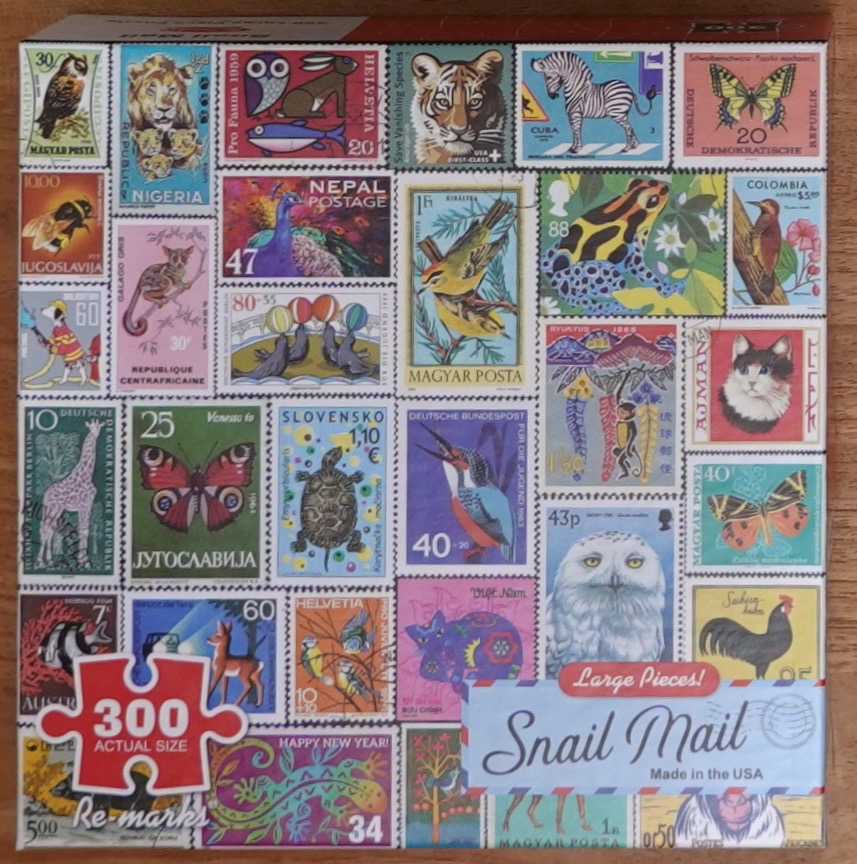
This image features a dense, multi-colored collage of vintage-style postage stamps arranged in a grid-like pattern. Each rectangular stamp depicts a different animal subject, ranging from domestic cats and a rooster to exotic wildlife such as a giraffe, tiger, zebra, parrot, and various insects. The stamps vary in denomination, country of origin text, and artistic style, including illustrative, painterly, and graphic design approaches.
The layout creates a rhythmic, busy composition where the edges of the stamps are clearly defined by their characteristic serrated perforations. The palette is broad and vibrant, utilizing saturated primary and secondary colours across the different stamps, which helps distinguish each small vignette from its neighbors. Some stamps feature intricate background foliage or landscape elements, while others are set against solid, bright-coloured blocks.
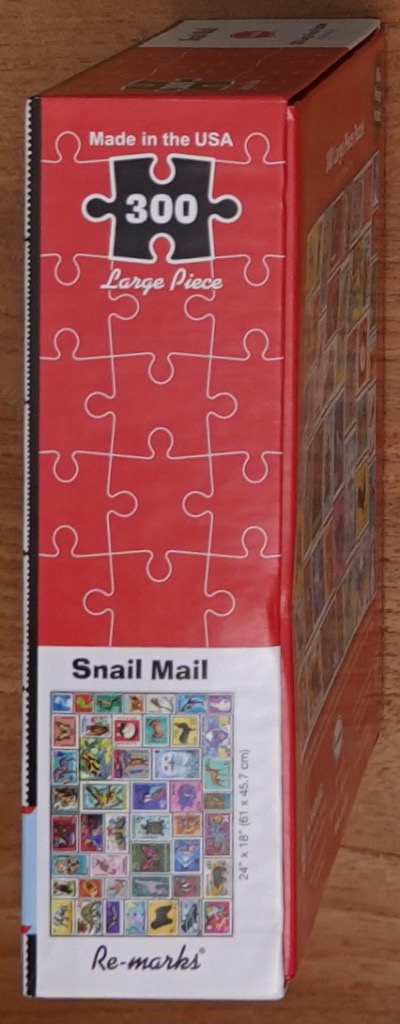
The artwork appears to be a digital or printed compilation meant to evoke the nostalgia of philately. A large red, puzzle-shaped graphic sits in the bottom left corner, while a simulated envelope-style postal label, complete with a blue-and-red striped border, is overlaid in the lower right, grounding the collection in a mail-themed concept. The overall impression is one of educational, illustrative diversity, celebrating natural history through the lens of international postal design.
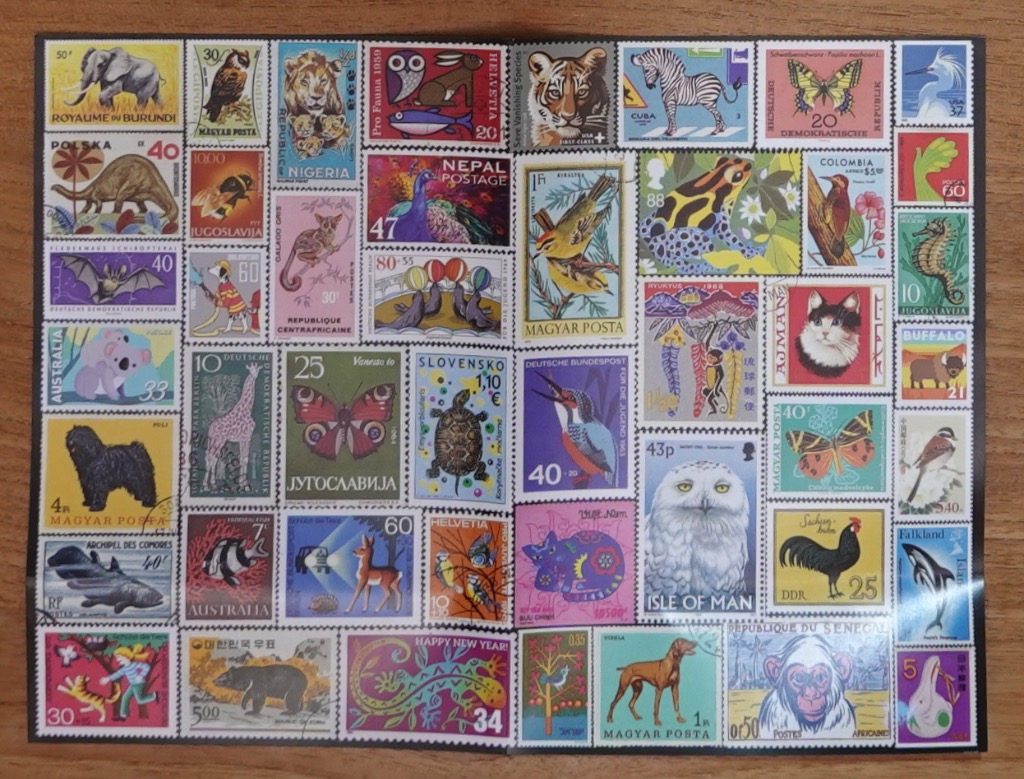
This image presents an extensive grid of colorful, vintage postage stamps featuring a wide variety of wildlife illustrations. The collection includes a diverse array of creatures such as mammals, birds, insects, fish, and amphibians from various countries. The composition is structured as a dense collage, filling the entire frame with rectangular postage stamps of differing orientations and sizes, creating a mosaic effect.
The stamps feature a wide spectrum of artistic styles, ranging from realistic, detailed scientific renderings to stylized, vibrant illustrations. Some stamps focus on single subjects like a majestic elephant, a tiger, or a snowy owl, while others depict animals in their natural habitats or stylized artistic compositions. The colors are equally varied, spanning from muted, earthy tones to bright, saturated primaries, lending a dynamic and lively quality to the overall collection.
The layout is tightly packed, with many stamps featuring serrated edges characteristic of traditional postal markers. Interspersed throughout the grid are various languages, denominations, and geographical identifiers, reflecting the global reach of the subjects. The lighting is even across the collection, ensuring that each individual stamp remains legible and distinct, highlighting the rich history and aesthetic variety of wildlife-themed philately.