Illustrated Periodic Table of the Elements
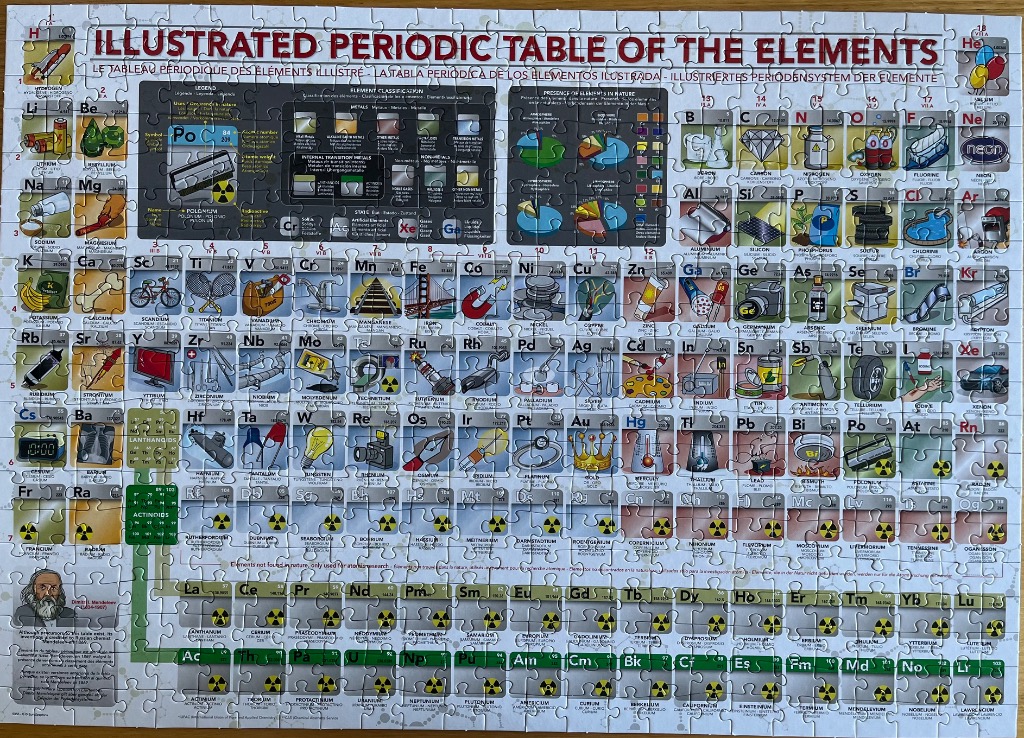
This image displays a highly detailed, educational illustration of the periodic table of the elements. Across the top, the title reads "Illustrated Periodic Table of the Elements" in bold red capital letters, followed by subtitles in multiple languages. The layout follows the standard scientific grid, with each square dedicated to a specific chemical element. Each box contains the element's atomic number, chemical symbol, and a small, colorful cartoon drawing that represents a common use, source, or property of that element, such as a banana for potassium, a diamond for carbon, or a lightbulb for tungsten.
At the top center, there are two informational panels explaining the legend, element classification, and the presence of these elements in nature, rendered in shades of blue and dark grey with pie charts and color-coded keys. The lower section features the lanthanoid and actinoid series, with many of these rare or synthetic elements marked with yellow radioactive warning symbols. A portrait of Dmitri Mendeleev appears in the bottom left corner, accompanied by a brief historical note about his contribution to chemistry.
The overall aesthetic is clean, clinical, and pedagogical, utilizing a professional color palette of soft greys, whites, and vibrant primary colors for the illustrative icons. The light is flat and even, characteristic of an educational poster or chart. The design is meticulously organized, with thin grid lines defining each element's cell, creating a cohesive and informative visual reference.
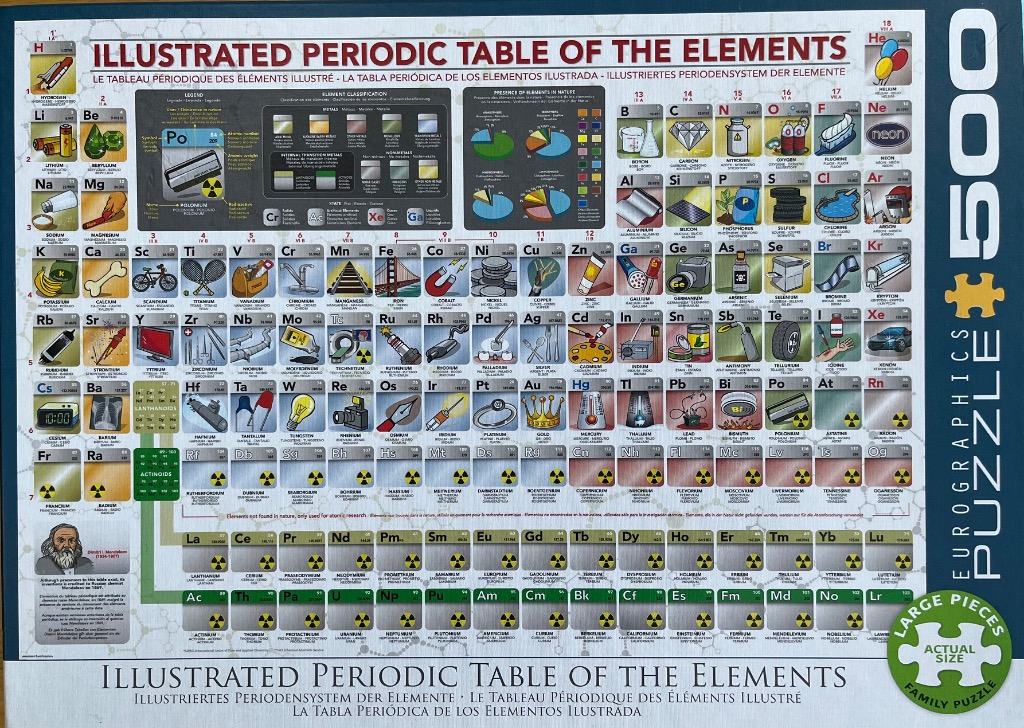
This illustration depicts a complete periodic table of the elements set against a light grey, metallic-textured background. The table is organized into the standard grid format, with each individual cell containing the atomic number, symbol, and name of an element, accompanied by a small, colorful cartoon illustration that relates to the real-world application or discovery of that specific element. For instance, carbon is represented by a diamond, neon by a neon sign, and gold by a crown.
The composition is highly structured and educational, featuring a central header that reads "Illustrated Periodic Table of the Elements" in bold black letters. The upper section of the chart includes technical legends and pie charts detailing element classification and their natural occurrence. The lower section includes a small portrait of Dmitri Mendeleev and a brief historical note about his contribution to the development of the periodic table.
The color palette is clean and professional, utilizing soft muted tones for the background and bright, vibrant primary and secondary colors for the small icons. Each element's box is clearly delineated by thin lines, creating a neat, grid-like appearance that is easy to navigate. The style is that of a modern scientific graphic, blending clear typography with accessible, friendly iconography to make complex chemistry information engaging and visual.