Wild Birds #2 - Garden Birds
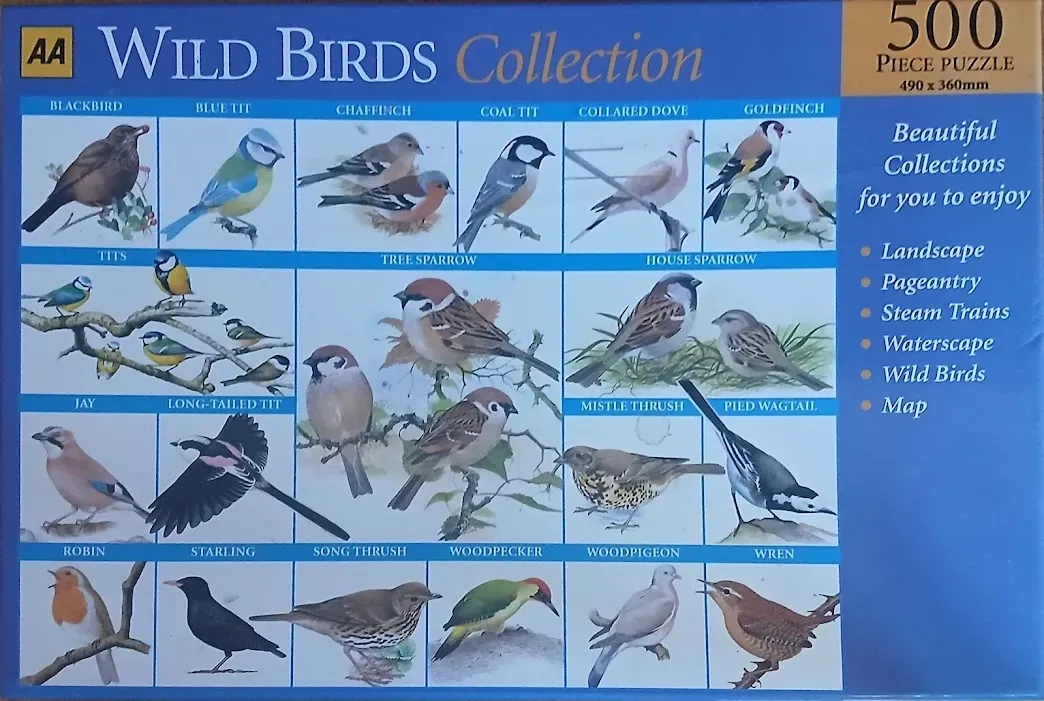
This illustration depicts a comprehensive collection of wild birds arranged in a grid format, creating a naturalist-style reference chart. The birds are showcased in individual squares, each labeled with its common name, such as Blackbird, Blue Tit, Chaffinch, Goldfinch, Jay, Tree Sparrow, Robin, and Woodpecker. The composition serves as an educational guide, highlighting the distinct physical characteristics, plumage colors, and postures of each species against a clean, white background.
The artwork consists of highly detailed, realistic paintings that capture the soft texture of feathers and the unique anatomical features of every bird. The color palette is diverse and true to nature, ranging from the vibrant yellows and blues of the Blue Tit and Goldfinch to the muted, earthy browns, greys, and mottled patterns of the thrushes and sparrows. The birds are positioned in various natural states, some perched on delicate branches, others mid-flight with wings spread, and some standing grounded.
The overall aesthetic is that of a classic botanical or ornithological field guide. The sharp focus and precise application of watercolor or gouache give the illustrations a clean, elegant look. The grid layout is framed by a soft blue border, which provides a professional and organized visual structure to the collection of individual portraits. The light is soft and uniform across all panels, ensuring each bird is clearly visible and easy to distinguish from its neighbor.
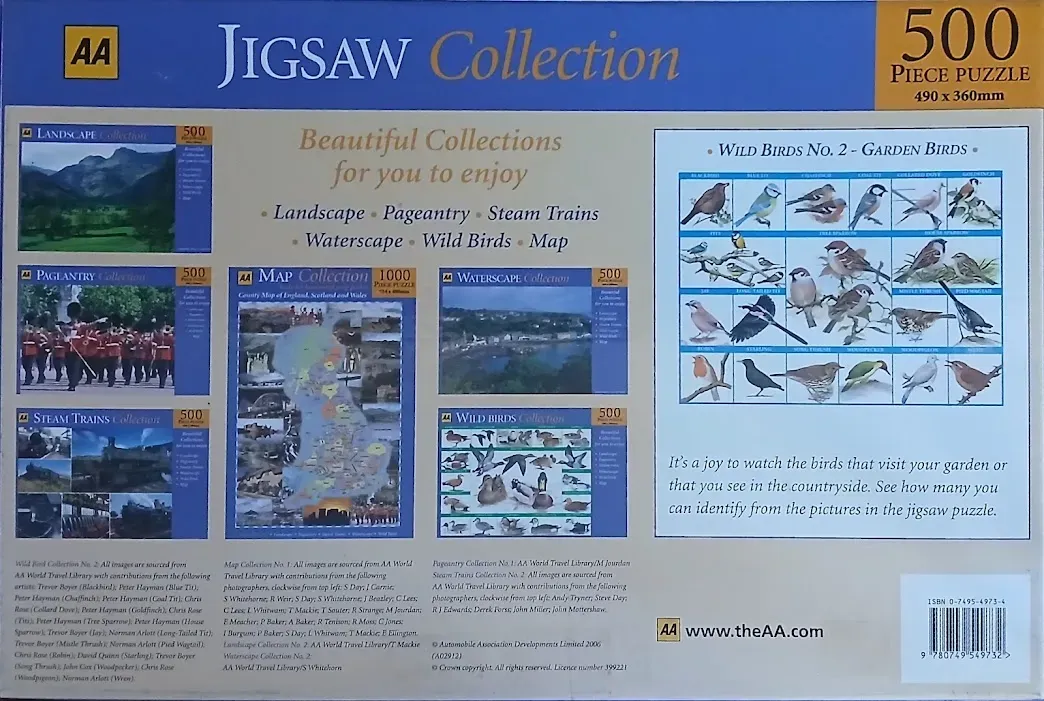
The central visual focus is a rectangular grid showcasing twenty-four detailed illustrations of various garden birds. Each bird is depicted in a naturalistic style against a plain white background, arranged in a structured four-by-six grid format. Above the grid, the text reads "Wild Birds No. 2 – Garden Birds," and each individual bird is identified by its common name printed in a small, clean sans-serif font directly above its corresponding image.
The collection features a diverse array of species commonly found in garden environments, including iconic birds like the robin, blue tit, goldfinch, and woodpecker. The illustrations use soft, lifelike colours, capturing the distinct plumage, markings, and posture of each species. Some birds are shown perched on branches, while others are depicted in mid-flight or resting on the ground, creating a sense of movement and variety across the grid.
Beneath the grid, a short caption encourages the viewer to observe and identify the birds present in their own gardens or the countryside. The overall aesthetic is educational and illustrative, reminiscent of a field guide or nature print. The composition is balanced and orderly, with plenty of white space around each bird to ensure clarity and easy identification.
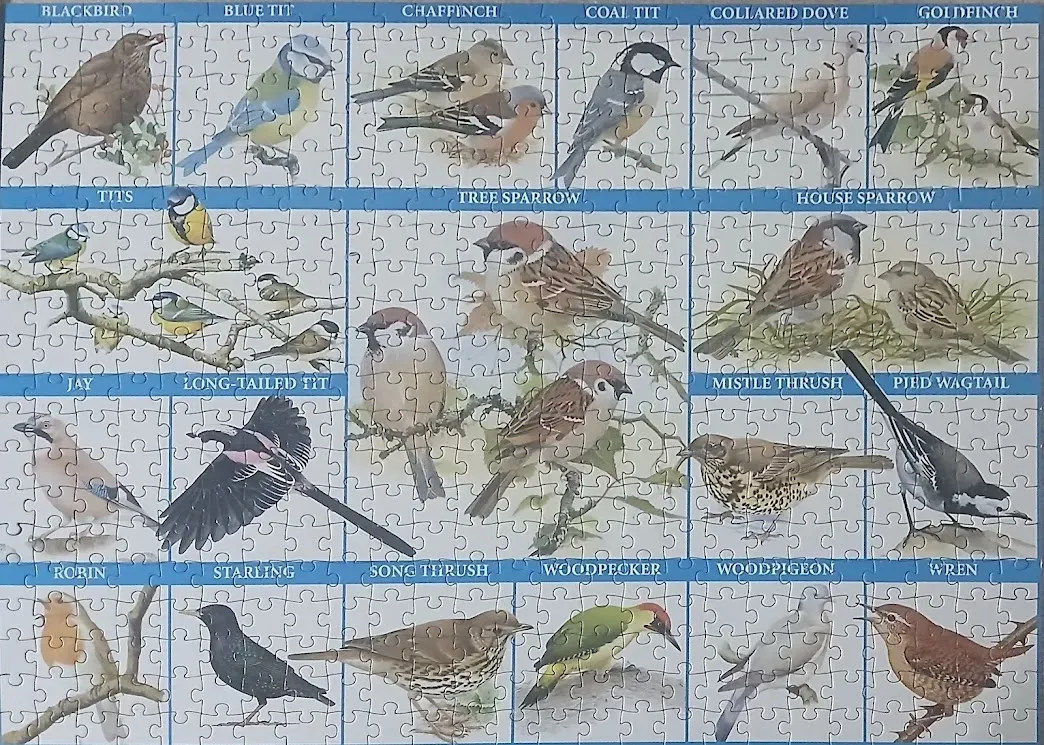
This illustration presents a structured grid displaying twenty-three different species of birds commonly found in gardens. The composition is divided into horizontal sections by thin blue lines, with the names of the birds printed in white text against a blue background above each respective image or group. The style is a realistic, detailed scientific illustration, appearing much like a reference chart or field guide intended for educational observation.
Several sections contain multiple smaller depictions of birds, such as the varied tits and sparrows, while other panels highlight a single species like the blackbird, collared dove, goldfinch, or woodpigeon. The birds are captured in diverse poses—some perched on branches, others in flight, and some standing on the ground. The subjects include familiar backyard visitors like the robin, starling, and wren, alongside more distinct species such as the green-headed woodpecker and the long-tailed tit with its wings outstretched.
The palette is largely naturalistic, featuring the earthy browns, greys, and blacks typical of these avian species, punctuated by specific vivid colors like the bright yellow of a tit, the orange chest of the robin, and the distinct green plumage of the woodpecker. The background is a clean, neutral white, which keeps the focus entirely on the anatomical details, plumage patterns, and identifying characteristics of each bird. The overall mood is informative and classic, reminiscent of vintage ornithological textbooks or decorative wildlife posters.
Although the pieces are quite thin, they do lock together very well. The colours are strong and the finish is glossy.
by Margaret York 2026-05-30