Heuwagen
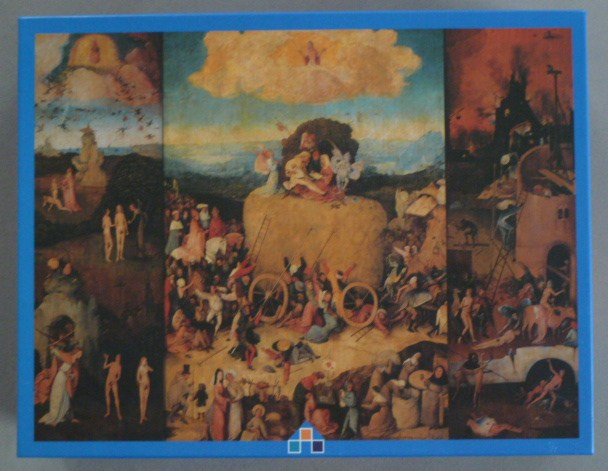
This is a reproduction of Hieronymus Bosch’s triptych, The Haywain. The composition is divided into three panels. The left panel depicts scenes from the Garden of Eden, including the creation of Eve, the temptation, and the expulsion of Adam and Eve. The central panel is dominated by a massive, golden-yellow hay wagon being pulled by demonic creatures and surrounded by a frenzied crowd of people from all walks of life, symbolizing greed and human folly. The right panel is a dark, fiery vision of Hell, filled with chaotic, grotesque imagery of torture and architectural ruin.
In the central panel, the figures surrounding the hay wagon are painted in vibrant hues of red, blue, and brown, contrasting sharply with the desolate, gloomy tones of the hellish right panel. The top of the central panel features a small figure of Christ appearing in a soft, golden cloud, looking down upon the worldly chaos below. The landscape transitions from lush, pale greens in the Eden scene to the dry, ochre fields of the central panel and finally into the deep oranges, blacks, and murky shadows of the afterlife.
As a classic Northern Renaissance oil painting, the work is dense with intricate, surreal detail. Small figures are scattered throughout the foreground, middle ground, and background, engaging in varied activities that range from religious piety to lewd or violent behavior. The style is highly narrative and symbolic, characterized by the artist's signature fantastical creatures and meticulously rendered, miniature-like figures.
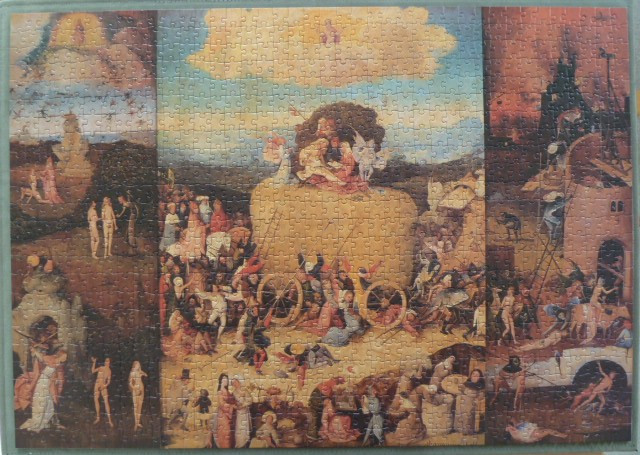
This triptych depicts a complex moral allegory focused on a massive hay cart moving through a landscape. In the central panel, a giant, yellow mound of hay is pulled by strange, demonic creatures, representing the transience of material wealth. A diverse crowd of people—kings, clergy, and commoners—fights, scrambles, and follows the cart in a chaotic display of greed and disorder. At the top of the hay, figures engage in romantic and musical pursuits, while a small, divine presence appears in a cloud above.
The left panel illustrates the biblical narrative of the Creation and the Fall of Man, showing scenes of Eden, the temptation of Eve, and the expulsion of Adam and Eve from paradise. In contrast, the right panel depicts a nightmarish, hellish landscape filled with monstrous constructions, strange creatures, and the suffering of sinners being punished in a fire-lit, industrial-looking underworld. The composition is highly detailed and surreal, characteristic of medieval northern Renaissance art.
The colour palette varies significantly across the three panels. The left side is lush with greens and soft natural tones, while the central panel is dominated by the golden-yellow hue of the hay, contrasted against a bright blue, cloudy sky. The right panel shifts dramatically into dark, smouldering oranges, deep browns, and ominous blacks, effectively conveying the oppressive heat and torment of the infernal scene. The style is detailed and symbolic, filled with miniaturized figures and fantastical creatures.