Afternoon Tea
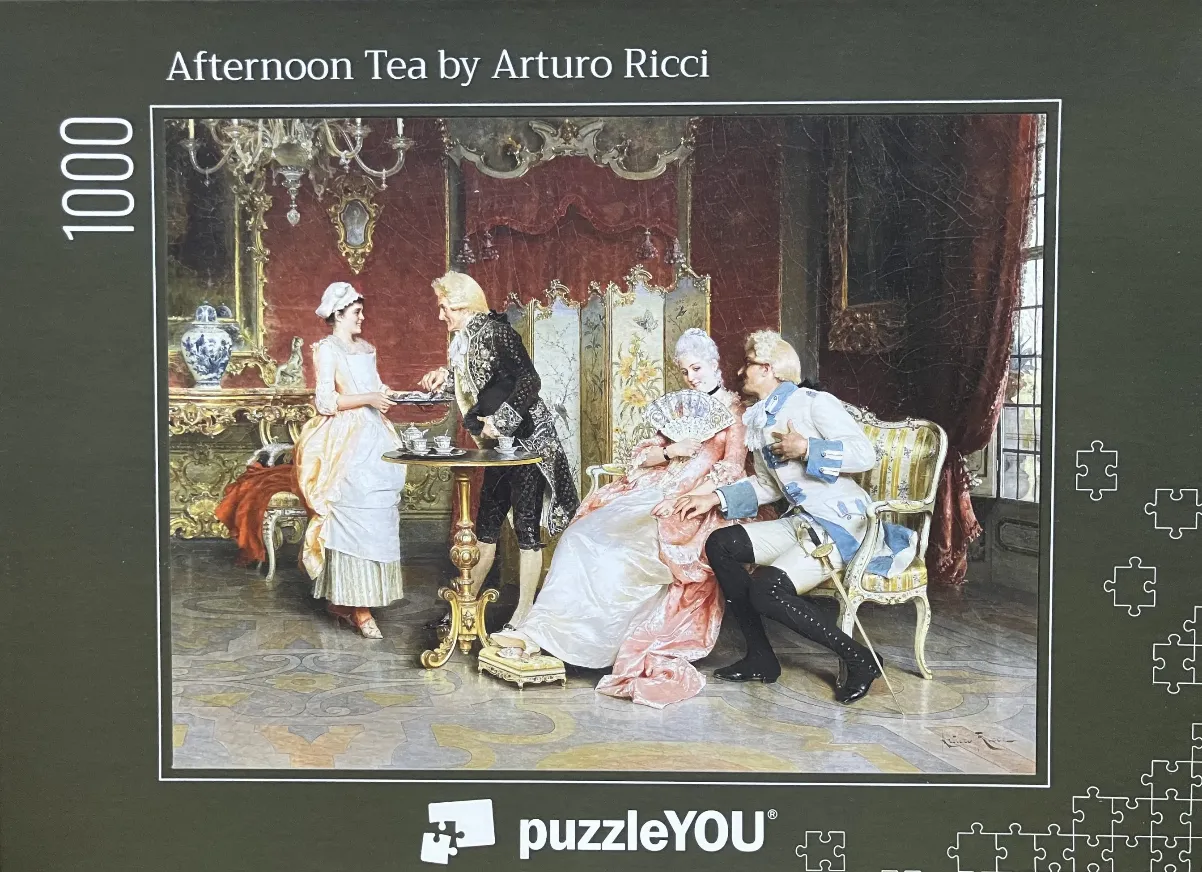
This classical oil painting depicts an elegant 18th-century social scene set within a lavish, ornate parlor. Four figures are arranged in the room: a woman in a white dress stands holding a tea tray, while a man in formal dark attire offers service. To the right, a woman in a sweeping pink gown sits on a golden chair, fanning herself, while a gentleman in a light blue and white suit sits beside her, leaning in as if in deep conversation. A decorative folding screen featuring painted floral patterns stands behind the seated couple.
The room is filled with indicators of wealth and grandeur. The background features deep red velvet curtains, intricate wall carvings, and a grand crystal chandelier visible near the ceiling. The flooring is polished marble with an elaborate geometric inlay pattern. A gilded table stands to the left with a blue and white decorative urn, while a delicate, smaller tea table sits between the standing and seated groups.
The color palette is rich and warm, dominated by the crimson of the walls and drapery, the muted gold of the furniture, and the soft pastels of the figures' period-accurate clothing. The lighting is soft and ambient, casting gentle shadows that emphasize the texture of the fabric and the fine details of the Rococo-style interior. The style is highly representational, capturing the refined manners and decadent lifestyle characteristic of 18th-century European courtly art.

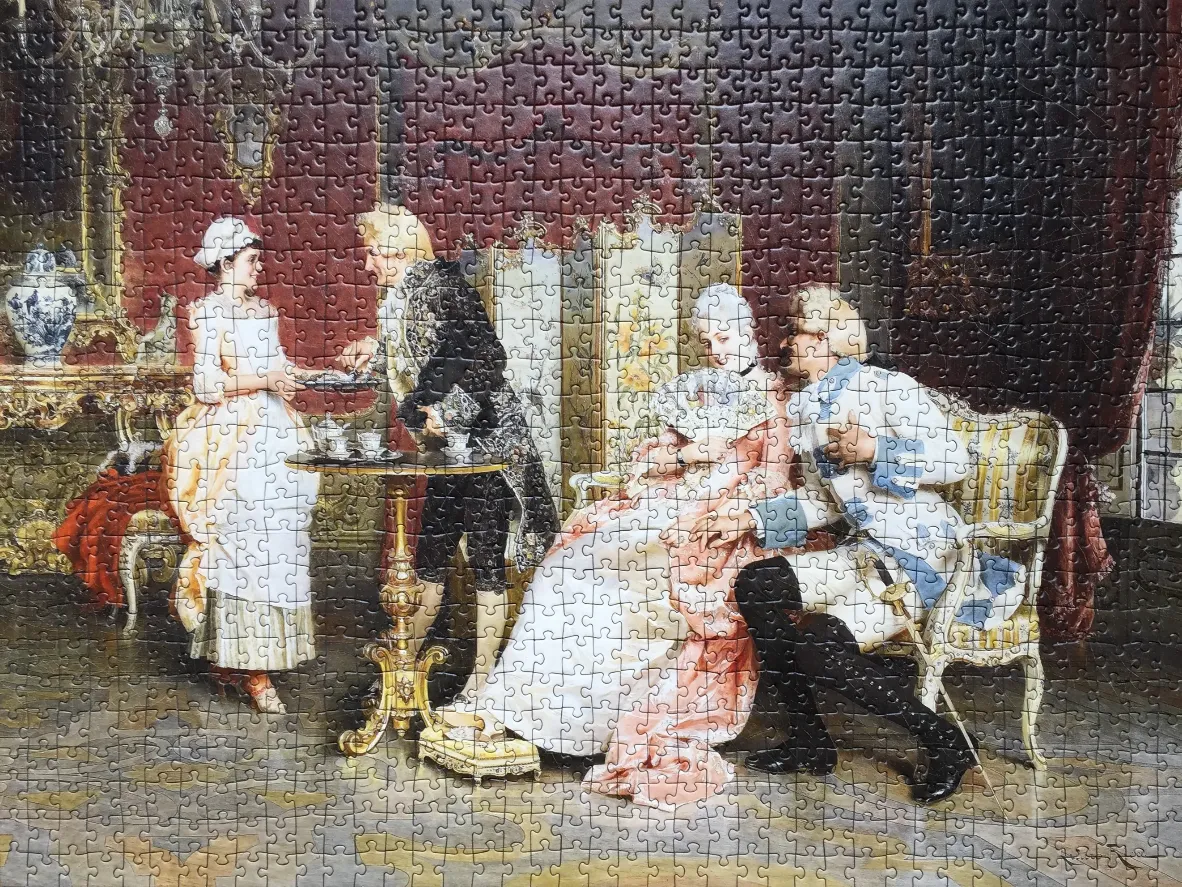
This rococo-era painting depicts an elegant 18th-century interior scene involving four figures. A young woman in a white servant's uniform stands on the left, offering a tray of refreshments to a gentleman wearing a dark, embroidered frock coat. To the right, a second woman in a voluminous, pale pink and cream gown sits in a carved gold chair, holding a delicate fan, while a gentleman in a light blue and white coat leans toward her, appearing to speak intimately. A decorative folding screen stands behind them, adding depth to the room.
The setting is opulently furnished, featuring a patterned parquet floor, a tall gilded mirror, and a blue and white porcelain vase perched on a ornate side table. The walls are covered in rich, dark red drapery that creates a dramatic backdrop for the lighter clothing of the subjects. The composition is balanced and theatrical, typical of historical genre painting.
The colour palette is a study in contrasts, pairing deep, moody burgundy and brown tones with the bright, airy pastels of the ladies' dresses and the soft glow of the room's lighting. The brushwork suggests a fine-art oil painting style, with intricate attention paid to the textures of silk, lace, velvet, and gold leaf. The lighting is soft and directional, highlighting the figures and drawing the viewer's eye to their expressive interactions.