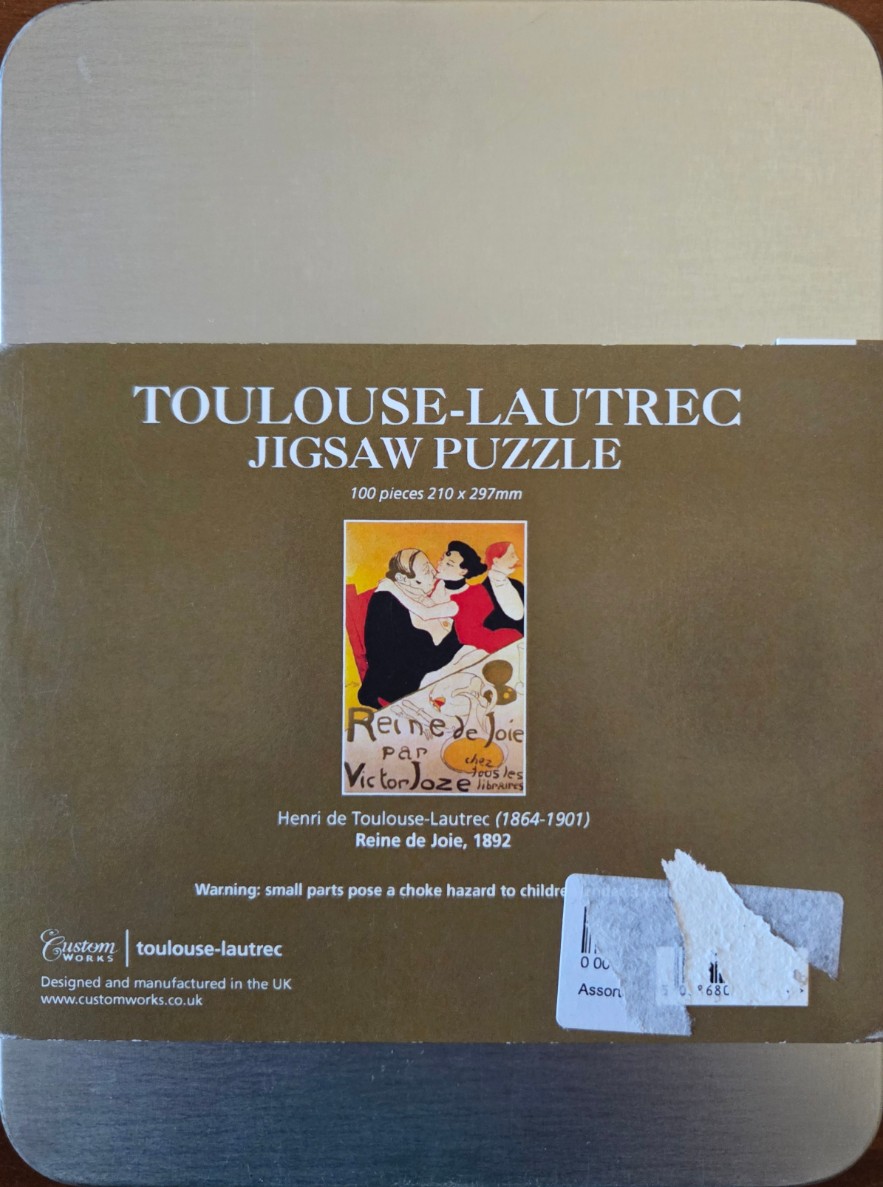
Reine De Joie, 1892
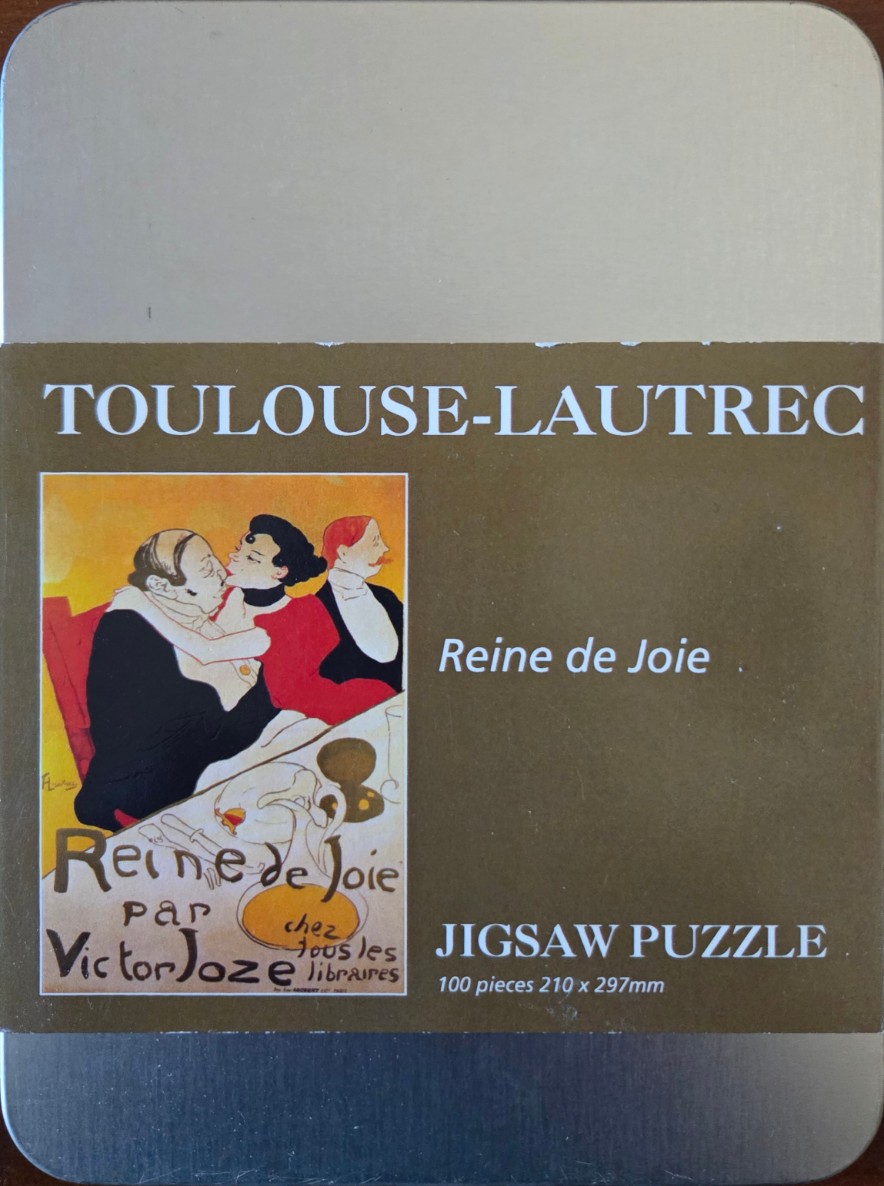
The central image is a classic poster-style illustration featuring three figures seated at a table. A man with a receding hairline and a black jacket is being kissed on the cheek by a woman with dark hair dressed in a bright red garment. To their right, a second man with reddish hair and a mustache observes from behind, completing the composition. The style is distinctly Art Nouveau, characterized by bold, flat areas of colour and strong, expressive silhouettes typical of fin-de-siècle graphic design.
Set against a warm, sun-drenched yellow background, the scene conveys an atmosphere of sophisticated Parisian nightlife. The foreground includes a simplified depiction of dining elements, such as a glass and a plate, rendered in minimal lines. Below the figures, decorative, hand-lettered text reads "Reine de Joie" and "par Victor Joze," anchoring the artwork in its historical context as a promotional poster for a novel.
The artwork uses a high-contrast palette of yellow, deep red, black, and white. The lines are deliberate and fluid, emphasizing the shapes of the subjects rather than intricate detail. This illustrative work captures a fleeting, private moment in a public setting, echoing the aesthetic sensibilities of late 19th-century French lithography.
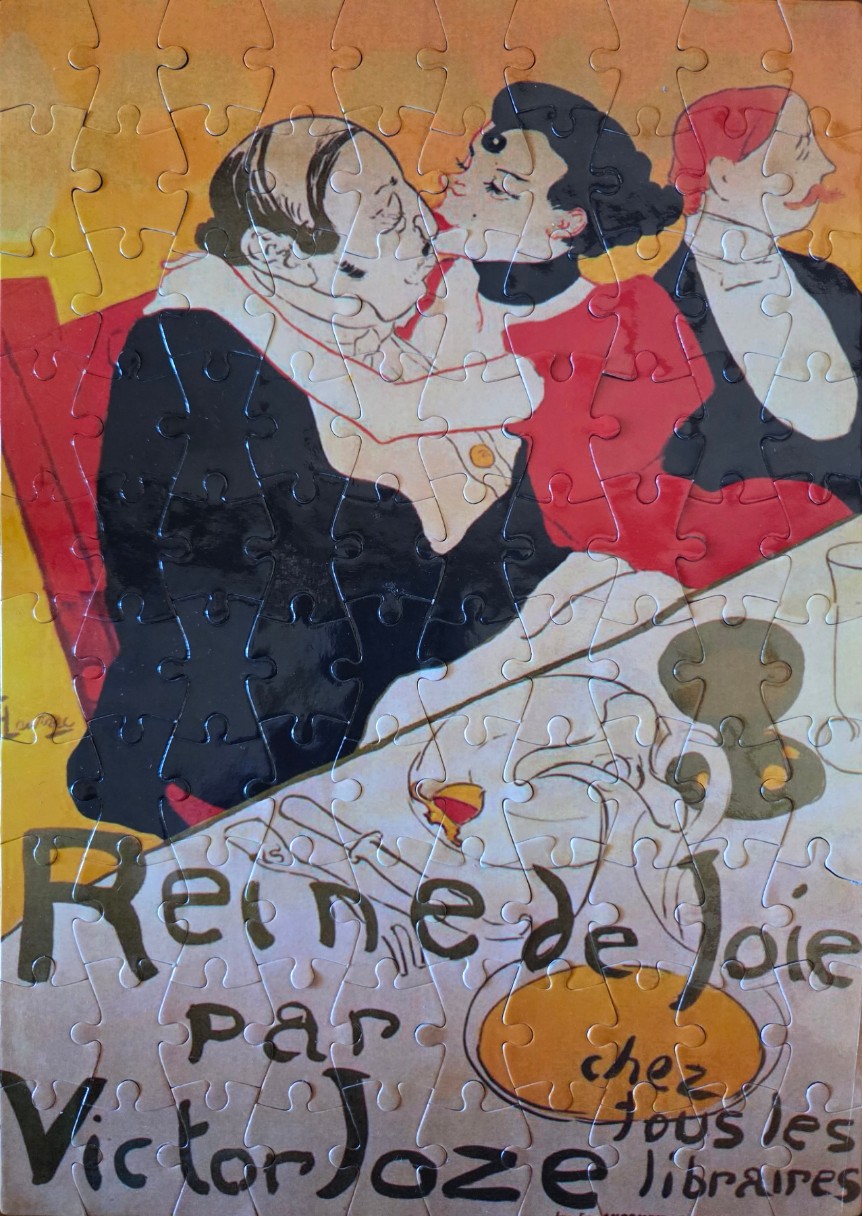
This illustration, in the classic Art Nouveau style of Henri de Toulouse-Lautrec, features an intimate, slightly caricatured scene of a couple dining. A woman with dark hair and a red dress leans over to kiss a stout, balding man in a formal dark suit. To their right, a partial figure of another man with a red mustache and formal attire looks on, creating a narrative of social interaction in a Parisian cabaret or cafe setting.
The composition is dominated by bold, flat areas of colour and expressive, simplified lines. The background is a soft, warm wash of ochre and yellow, which contrasts with the deep, saturated black of the man's suit and the vibrant red of the woman's dress. A white tablecloth occupies the foreground, upon which rests a stylized glass and a plate. The overall mood is bohemian and reminiscent of late 19th-century French poster art.
The bottom portion of the image contains bold, hand-lettered text that reads "Reine de Joie par Victor Joze chez tous les libraires." The artistic technique emphasizes graphic silhouettes rather than fine detail, capturing a fleeting moment of nightlife. The combination of warm tones and dramatic contrast provides a sense of history, framing the illustration as a classic advertisement or book cover from the belle époque era.
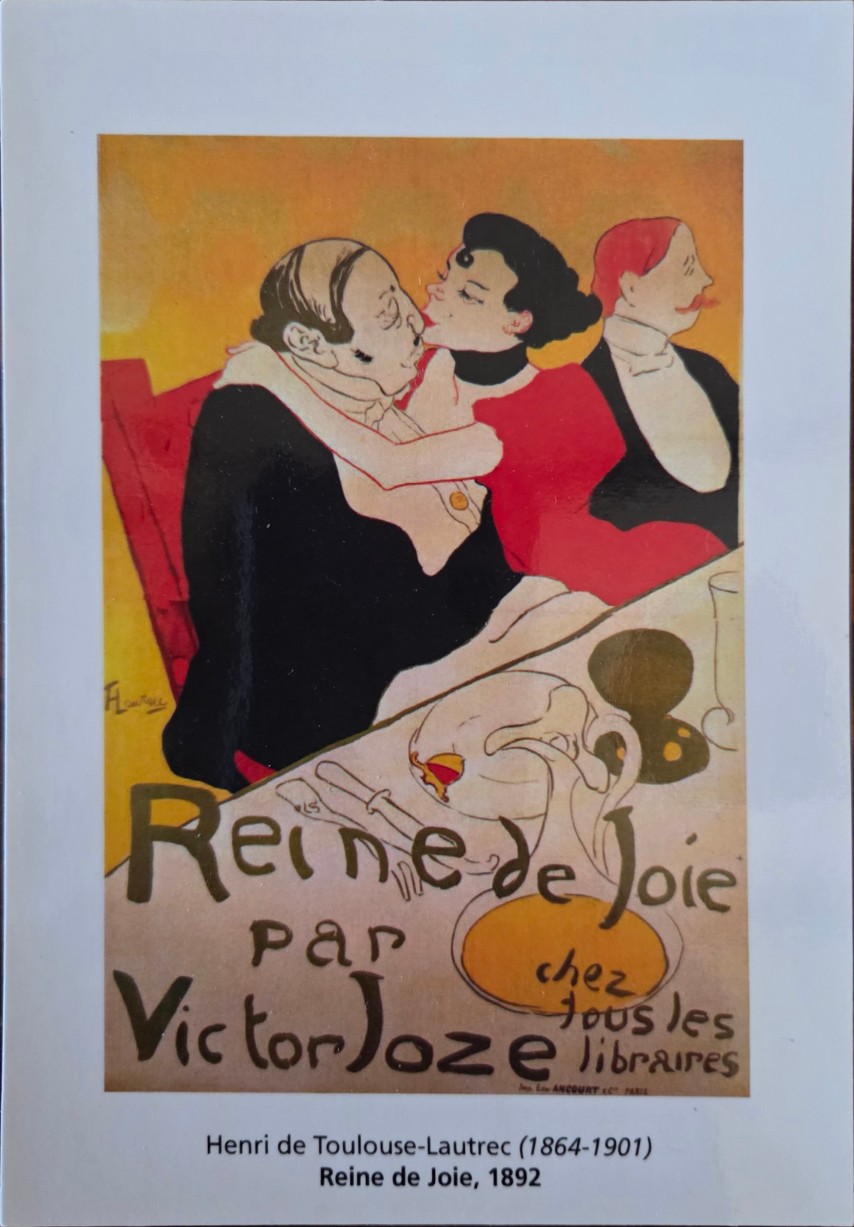
The illustration captures an intimate, stylized scene set in a dimly lit, bohemian interior. The primary focus is on a couple seated at a table: a man with a receding hairline, wearing a dark formal suit and light-colored scarf, is being kissed on the cheek by a woman with dark, curled hair wearing a bold red dress. Their embrace is tender and slightly illicit, set against the backdrop of a public space. A third figure, a man with reddish hair and a mustache, sits to their right, looking away with a sense of detached indifference.
The composition is anchored by a foreground table, which is sparsely set with a white plate, a dark serving vessel, and a glass. The color palette relies on high-contrast flat planes of ochre yellow, deep red, and black, creating a dramatic sense of depth despite the lack of realistic shading. The background is a solid, warm yellow, suggesting a hazy or smoke-filled room.
The style is quintessentially expressive, utilizing bold outlines and flat colors to emphasize the figures' facial features and gestures. The overall mood is one of Belle Époque indulgence, capturing the nightlife and social complexities of late 19th-century Paris. Prominent, fluid script text occupies the lower third of the frame, advertising the work and its author, contributing to the graphic, balanced aesthetic of the composition.