Fine Art by Frederick Morgan
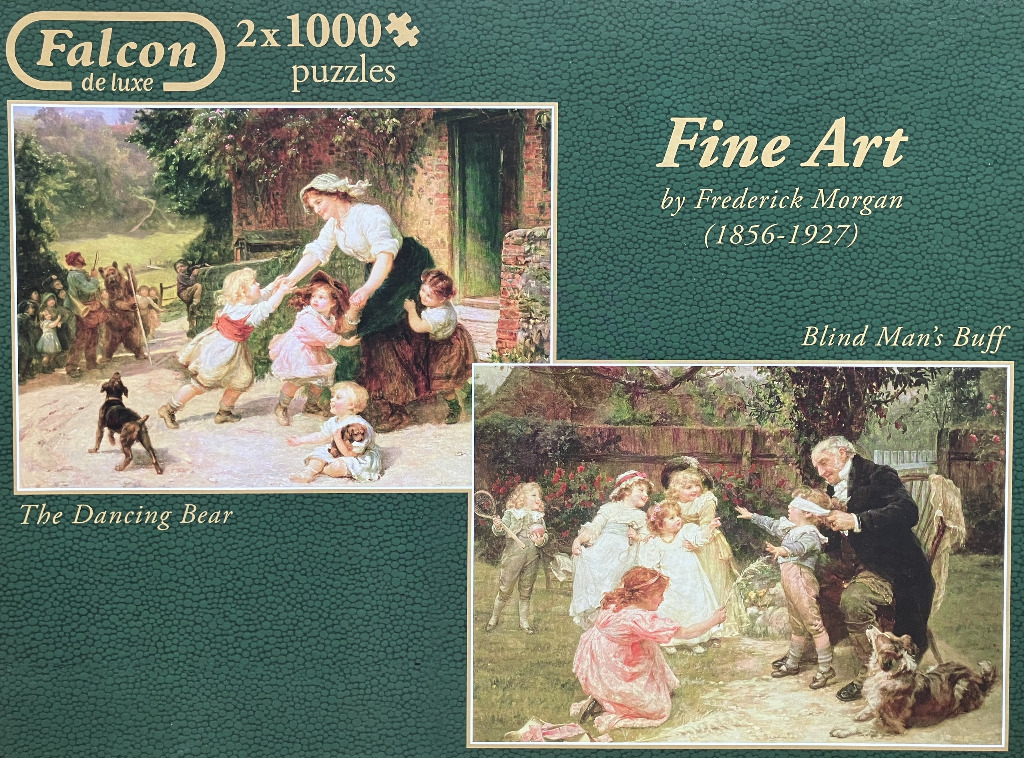
This collection features two separate oil paintings by Frederick Morgan depicting late 19th-century children engaged in play. The upper scene, titled "The Dancing Bear," shows a group of children and a woman watching an itinerant performer with a trained bear on a country lane near a brick cottage. The lower scene, "Blind Man's Buff," depicts a well-dressed man in a coat and top hat sitting on a garden chair while children circle him; a small boy in front of him is blindfolded as part of the game.
Both paintings utilize a soft, Impressionistic-influenced realist style typical of the Victorian era. The compositions are balanced and atmospheric, focusing on the joy of childhood innocence. The color palettes are warm and pastoral, featuring lush greens, earthy browns, and the soft pastels of the children’s clothing, contrasted against the dappled sunlight filtering through garden foliage. Each scene is framed by natural elements, such as climbing roses, tall hedges, and rustic wooden fences.
These artworks evoke a nostalgic, idyllic mood, emphasizing light, shadow, and detailed textures in the fabric of the children's dresses and the surrounding garden flora. Pets are integrated into both compositions, including a small dog standing on the lane in the upper image and another resting patiently at the feet of the players in the lower scene.

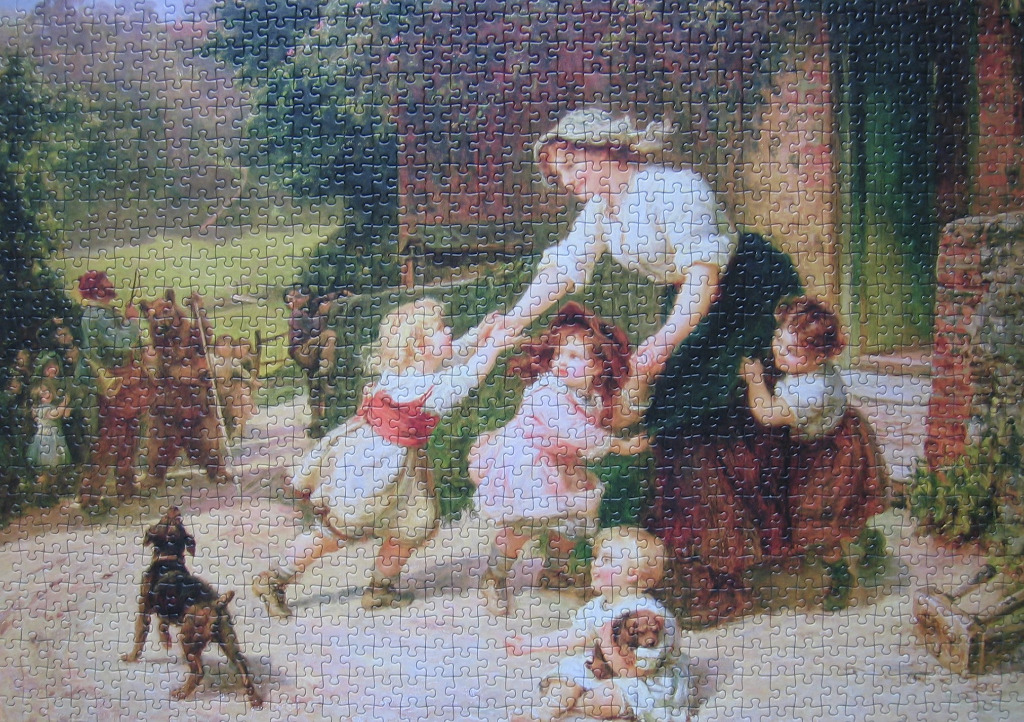
This pastoral illustration depicts a joyful outdoor scene featuring a woman in Victorian-style dress playing with four young children in a garden setting. The central group shows the mother holding hands with two young girls, while another toddler leans against her skirts and a baby sits in the foreground holding a small puppy. Their clothing is light and airy, suggesting a warm, sunny day in a rustic, leafy environment.
To the left of the central family, a man accompanied by a large brown bear stands near a brick building, seemingly performing or passing through the area. A small dark dog stands in the immediate foreground, looking toward the children. The background features lush green foliage, trees, and the textured brick wall of a cottage, creating a secluded and peaceful atmosphere.
The overall colour palette is rich and earthy, dominated by muted greens, browns, and soft white highlights on the children's dresses. The lighting is soft and natural, suggesting late afternoon sun filtering through the trees. The art style is traditional and realistic, evocative of late 19th-century genre painting, emphasizing domestic bliss and a narrative of family life in a historical setting.
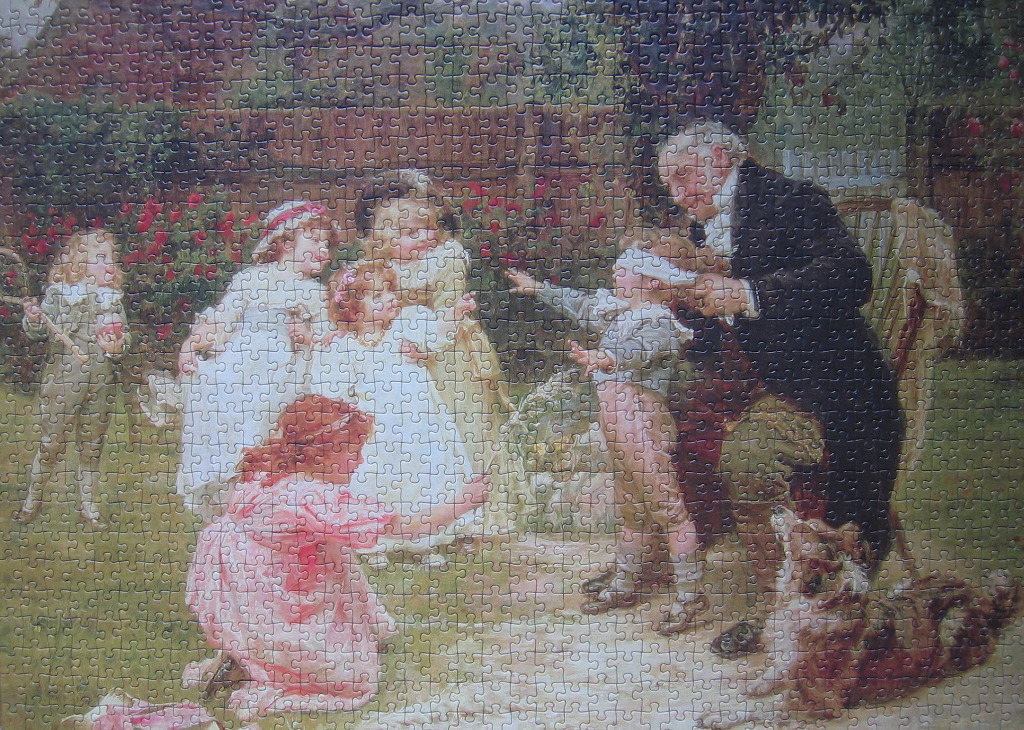
This classic illustration depicts a scene of Victorian-era children playing the game of blindman's buff in a lush, private garden. The focal point is a young boy in the center, blindfolded, while a kind-faced elderly man in a dark frock coat and white cravat assists him. Several children surround them in varying poses of anticipation and mirth, their expressions full of youthful excitement.
Set against a backdrop of a brick wall partially obscured by vibrant, blooming red rose bushes, the composition is anchored on a well-manicured lawn. The children are dressed in period-appropriate attire: the girls wear elegant white and pastel gowns, while the boys are in suits and knee breeches. In the foreground, a young girl in a soft pink dress kneels on the grass, looking upward toward the blindfolded boy. A small, mottled brown and white dog sits patiently near the elderly man, watching the activity with interest.
The artistic style is painterly and detailed, reminiscent of 19th-century academic art. The colour palette is rich and soft, dominated by earthy greens, muted browns, and the bright, contrasting pops of red roses and white clothing. The light appears gentle and diffused, suggesting a sunny afternoon, which enhances the nostalgic, charming, and peaceful atmosphere of this tranquil outdoor gathering.