The Pet Vet
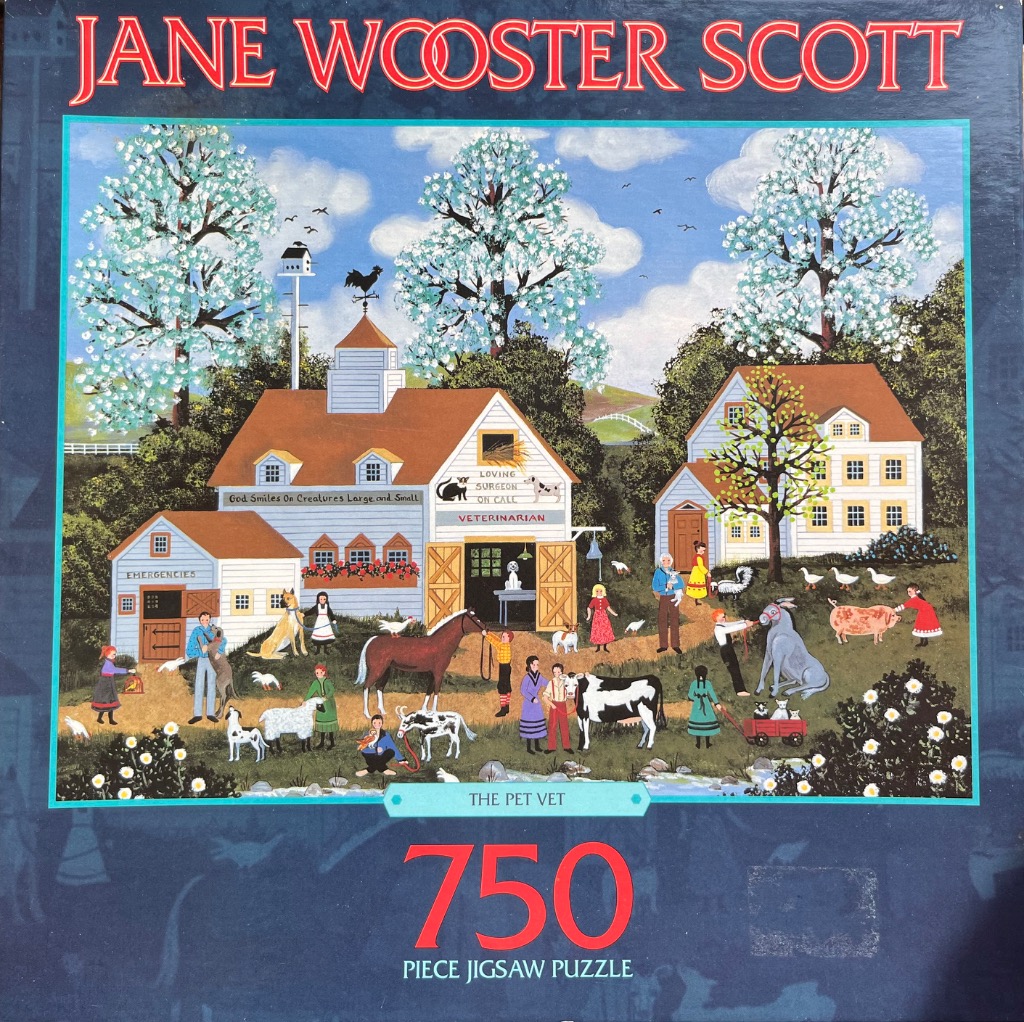
This folk art illustration depicts a quaint rural veterinarian clinic set within a lush, pastoral landscape. The main structure is a light-colored wooden barn with a central cupola and weathervane, featuring a sign above the open bay doors that reads, "Loving Surgeon on Call" and "Veterinarian." To the left, a smaller white building is marked with an "Emergencies" sign. A larger two-story farmhouse sits to the right, surrounded by blooming trees and green foliage.
The foreground is a hive of activity, filled with children in period-style clothing interacting with an array of animals, including a horse, a cow, a pig, sheep, a donkey, and various dogs and cats. The scene is brightly lit under a clear blue sky with fluffy white clouds, casting soft light over the verdant hills in the distance. Bird silhouettes dot the sky, and white flowering shrubs frame the bottom corners of the composition.
The style is quintessentially American folk art, characterized by flat perspective, simplified forms, and vibrant, saturated colours. Every surface is meticulously detailed with pattern and texture, from the individual leaves on the trees to the weathered wood of the buildings. The mood is idyllic, nostalgic, and wholesome, emphasizing the harmonious relationship between people, nature, and domesticated animals.

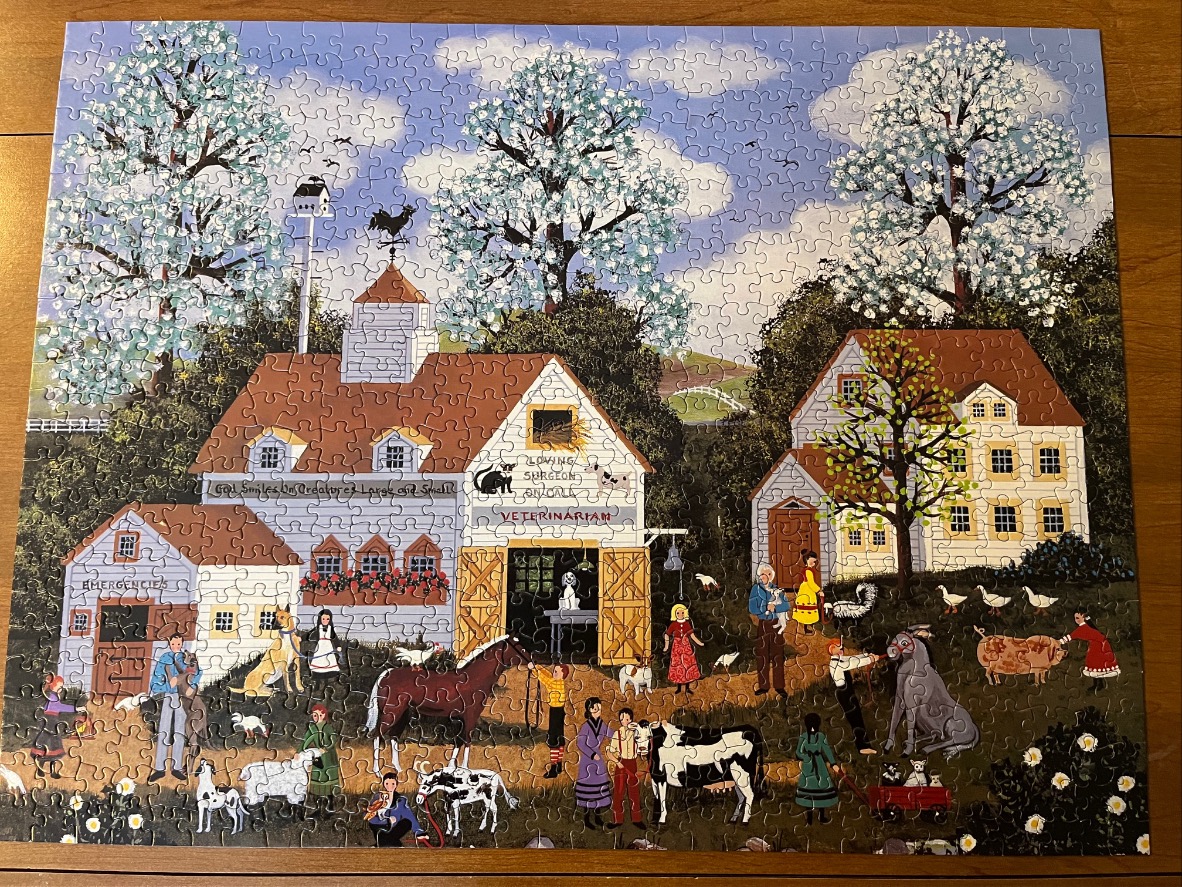
This folk art illustration depicts a charming, bustling veterinary clinic in a pastoral setting. The clinic is a multi-building structure with light blue siding, white trim, and a prominent cupola topped with a black rooster weather vane. A sign on the building reads, "God Smiles On Creatures Large and Small" and "Veterinarian." Adjacent to the clinic is a taller, two-story cream-colored house, and the entire scene is framed by large, lush trees covered in white blossoms, suggesting a bright spring day.
In the foreground, a vibrant group of people interacts with a variety of animals, creating a lively community atmosphere. A horse, a black-and-white spotted cow, a pig, goats, and several dogs occupy the yard alongside townspeople in period-style clothing. One person is seen with a small animal in a red wagon, while another tends to a donkey. The composition is balanced and narrative, filled with small, whimsical details like birdhouses, flower boxes, and a white fence in the distant background.
The colour palette is bright and cheerful, dominated by soft blues, earthy greens, and warm creams. The sunlight casts gentle shadows, enhancing the sense of a calm, idyllic day. The artistic style is reminiscent of primitive or folk art, characterized by flattened perspectives, clean lines, and a warm, storybook quality that emphasizes community and the gentle care of animals.
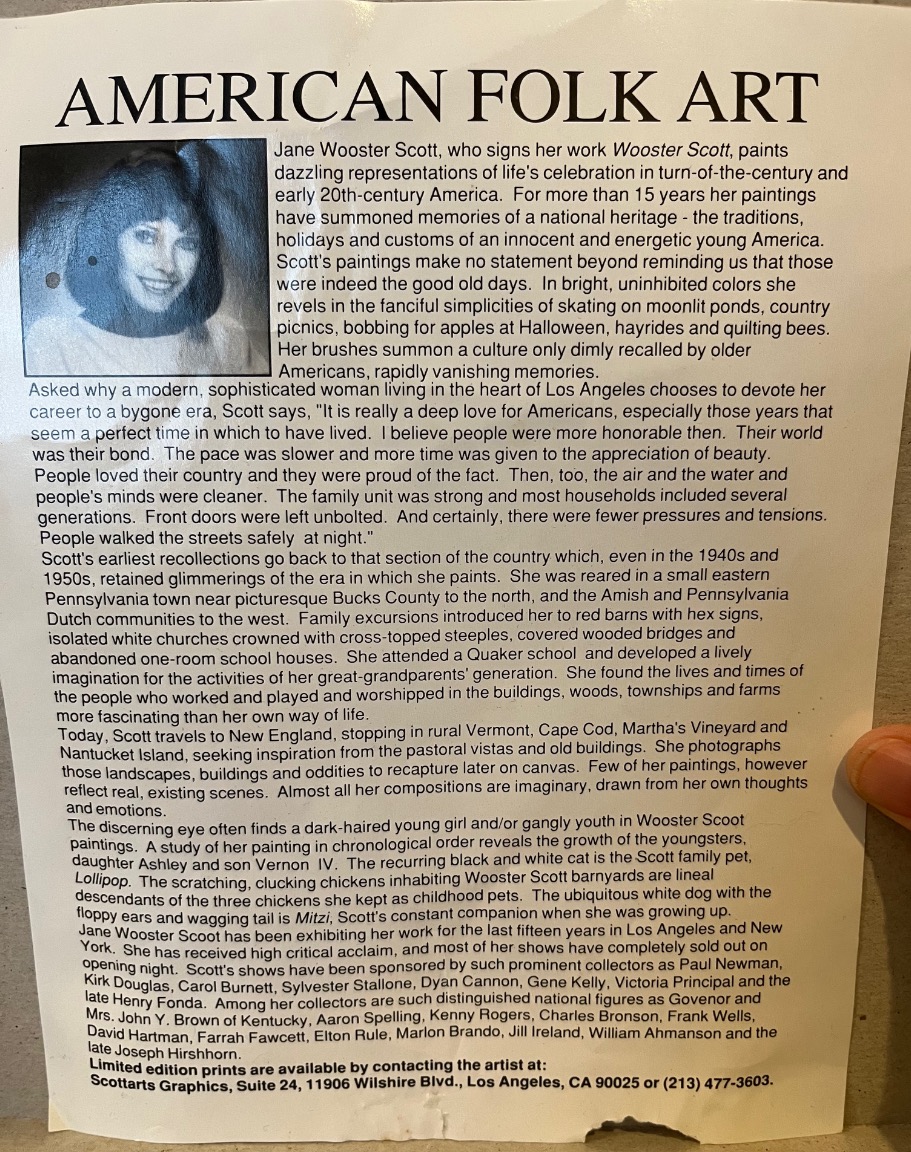
The document is titled American Folk Art in large, bold, black capital letters at the top. Below the title, on the left-hand side, is a small, black-and-white headshot portrait of a woman with dark hair, identified as the artist Jane Wooster Scott.
To the right of the portrait and continuing below it is several paragraphs of dense, black printed text. This text provides biographical information and commentary on the artist's work, describing her focus on turn-of-the-century and early 20th-century American life. The text details her inspirations, including childhood memories in Pennsylvania, her travels to New England, and her preference for creating imaginary scenes rather than replicating real locations.
At the very bottom of the document, smaller text provides contact information for ordering limited edition prints from the artist's studio in Los Angeles. The entire content is printed on a plain, light-colored background, giving the appearance of a brochure or artist biography insert.