Wie Nog Kon Lopen Ging Heen Wie Dat Niet Meer Kon Viel Om
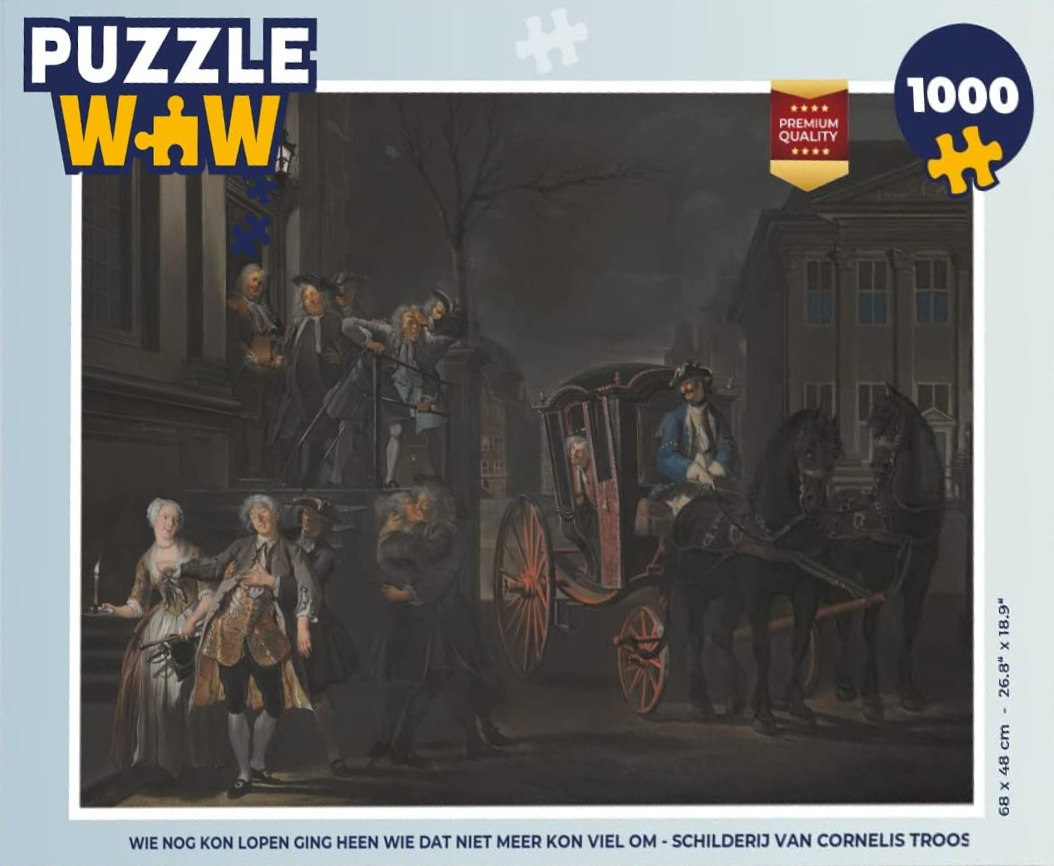
This 18th-century oil painting depicts a nighttime street scene in a Dutch city, centered around a group of elegantly dressed revelers departing a residence. A horse-drawn carriage waits on the cobblestone road, with the driver seated high on the box. Nearby, a man in a waistcoat and breeches stands in a lively posture, seemingly intoxicated, while a woman holds a single candle to light his way. In the background, other figures gather on the steps of a stately townhouse, adding to the sense of a social gathering concluding late at night.
The composition is dominated by deep shadows and dark, muted tones characteristic of the period, with the scene illuminated by the warm, flickering glow of the candle and perhaps faint moonlight. The architectural elements include the vertical lines of a classical-style building, which anchors the scene on the right and frames the gathering on the left. The figures are dressed in the fashion of the mid-1700s, featuring powdered wigs, elaborate coats, and gowns. The painting captures a moment of chaotic, humorous life, with expressive gestures and postures that suggest the boisterous end of a festive evening.
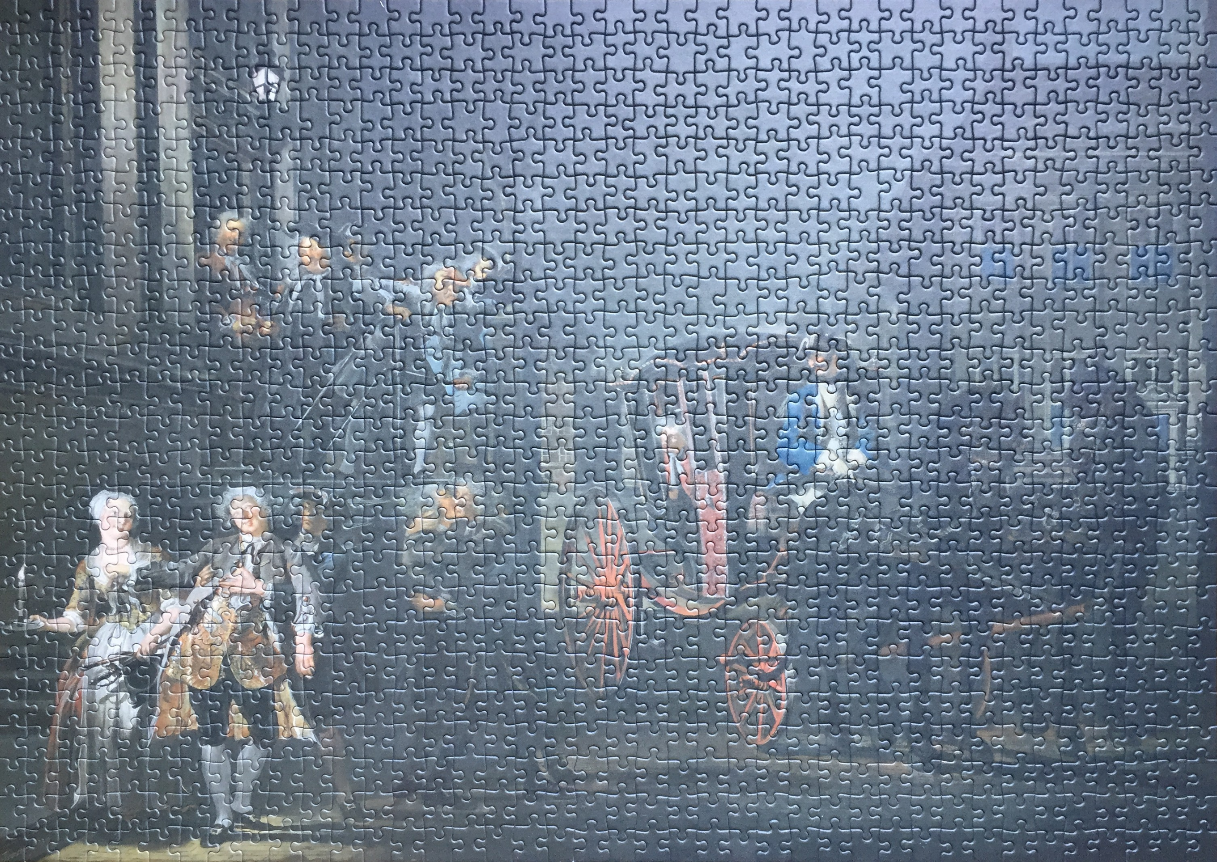
This 18th-century style oil painting depicts an evening scene in a European city, focusing on a well-dressed couple in the foreground. The man, wearing an ornate patterned waistcoat and knee-high breeches, and the woman, in a voluminous gown and white cap, stand near a stone building. A street lamp provides a soft, dim glow from above, casting long shadows and highlighting the texture of their period attire.
Behind the couple, the composition features a horse-drawn carriage stationed along a darkened street. A figure sits atop the carriage, partially obscured by the murky, atmospheric lighting. The scene is dominated by a cool, deep palette of blues, greys, and blacks, which creates a sense of midnight mystery and foggy urban depth. The heavy use of shadow obscures much of the background detail, emphasizing the illuminated figures in the left foreground.
The style is classical and formal, reminiscent of historical genre paintings from the mid-1700s. The brushwork appears deliberate, focusing on the contrast between the dimly lit street and the subtle light reflecting off the carriage wheels and the figures' clothing. The mood is somber and quiet, capturing a fleeting moment of aristocratic life during the late evening hours.