Waterloo - Scotland Forever
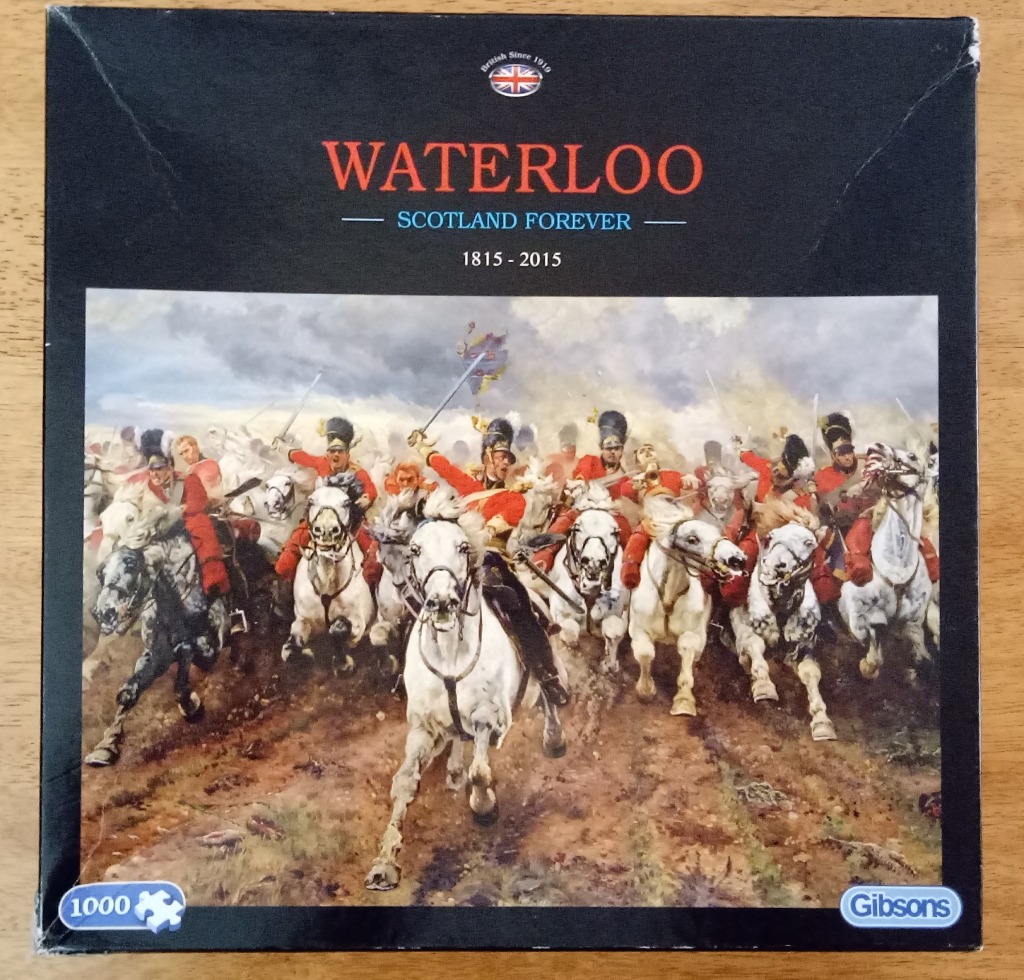
The central image is a famous historical oil painting depicting a thundering cavalry charge of the Scots Greys during the Battle of Waterloo. A mass of soldiers in bright red coats and tall, black bearskin hats ride forward on white and light-grey horses. The soldiers are caught in a dynamic, forward-leaning motion, with many brandishing sabres high in the air as they emerge through a haze of battlefield smoke and dust.
The composition is densely packed, emphasizing the chaotic and overwhelming power of the cavalry charge. The foreground horse and rider are positioned most prominently, with other soldiers flanking them in a wide, irregular formation that recedes into the murky, atmospheric background. The earth beneath the horses is a churned, muddy brown, contrasting with the pale coats of the steeds and the stark, vivid red of the uniforms.
The style is classical military art, characterized by expressive brushwork that captures the kinetic energy and intensity of the charge. The palette is grounded in earthy browns, greys, and muted whites, punctuated by the vibrant, saturated red of the military tunics. The lighting is dramatic and diffused, suggesting a gloomy, overcast day on the battlefield, which enhances the gritty, urgent mood of the scene. Above the painting, the text reads WATERLOO, SCOTLAND FOREVER, and 1815-2015, set against a solid black background.
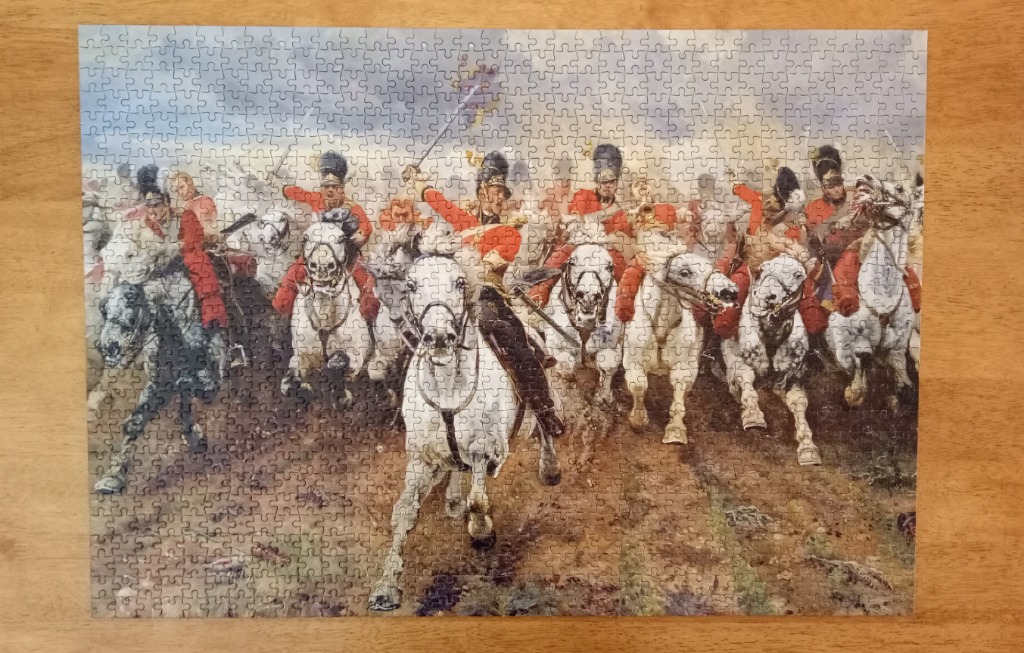
This painting depicts a dramatic charge of British cavalry, featuring soldiers in iconic red tunics and tall, dark busby hats riding white horses across a churned, muddy battlefield. The central focus is a mounted officer brandishing a sword, leading his squadron directly toward the viewer. The cavalrymen are arranged in a dense, chaotic formation, with their horses captured in various stages of a gallop, creating an intense sense of forward motion and urgency.
Set against a pale, overcast sky, the scene is rendered in an impressionistic style with visible, expressive brushstrokes that emphasize the turmoil of combat. The colour palette is dominated by the earthy brown tones of the muddied ground and the vivid, contrasting red of the soldiers' uniforms. The white horses provide a striking visual anchor, glowing against the darker, murky background, while subtle highlights suggest the smoke and dust of a distant, ongoing conflict.
The composition is horizontal and crowded, capturing the visceral energy of a historical military engagement. There is a sense of atmospheric depth as the ranks recede into the haze of the battlefield behind the leading figures. Small, indistinct details of flags, sabers, and equipment catch the dim light, reinforcing the overall mood of a desperate and heroic charge. The artistic style is reminiscent of 19th-century oil-on-canvas military portraiture, prioritizing action and emotional impact over sharp, photographic detail.
by Echo Sierra 2024-07-19