Eames Design Klassiker
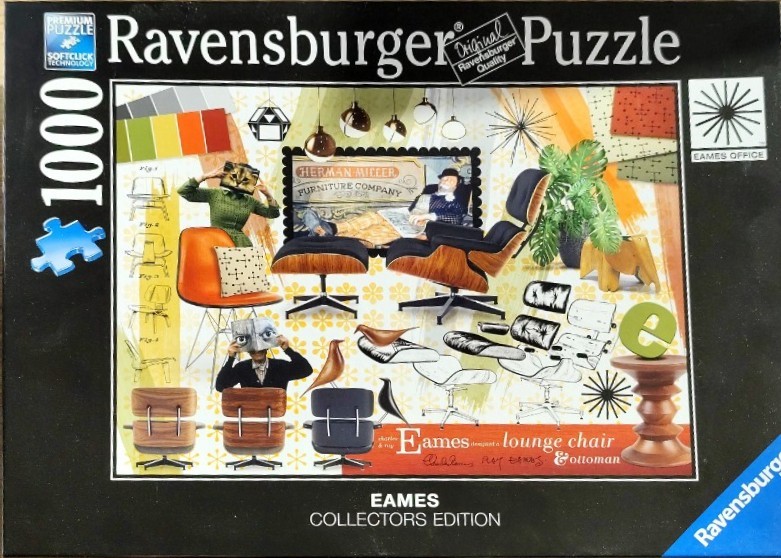
This collage serves as an artistic tribute to mid-century modern design, specifically focusing on the iconic lounge chair and ottoman. The center stage is held by a prominent photographic cutout of the classic molded plywood lounge chair with black leather cushions. Surrounding this focal point are various design elements, including technical line drawings of furniture parts labeled with "Fig. 1" through "Fig. 4," a vintage-style advertisement for the "Herman Miller Furniture Company," and a photograph of an individual reclining in an armchair.
Two playful, surreal human figures appear in the composition: one holding a cat mask and another holding a book cover displaying a pair of human eyes over their face. The backdrop is a decorative, warm-toned wallpaper featuring a repetitive retro floral pattern in orange and white. Additional visual accents include a potted tropical plant, starburst-shaped wall decorations, a set of colorful swatch samples, and several dangling orb-shaped pendant lights.
The artwork uses a vibrant, layered style that blends black-and-white photography with warm, earthy color tones like mustard yellow, burnt orange, and rich wood stains. Text is integrated into the design, including the phrase "Eames designed a lounge chair & ottoman" written in a graceful script. The overall mood is nostalgic, sophisticated, and celebratory of classic industrial design history, capturing the distinctive aesthetic of the 1950s and 60s.
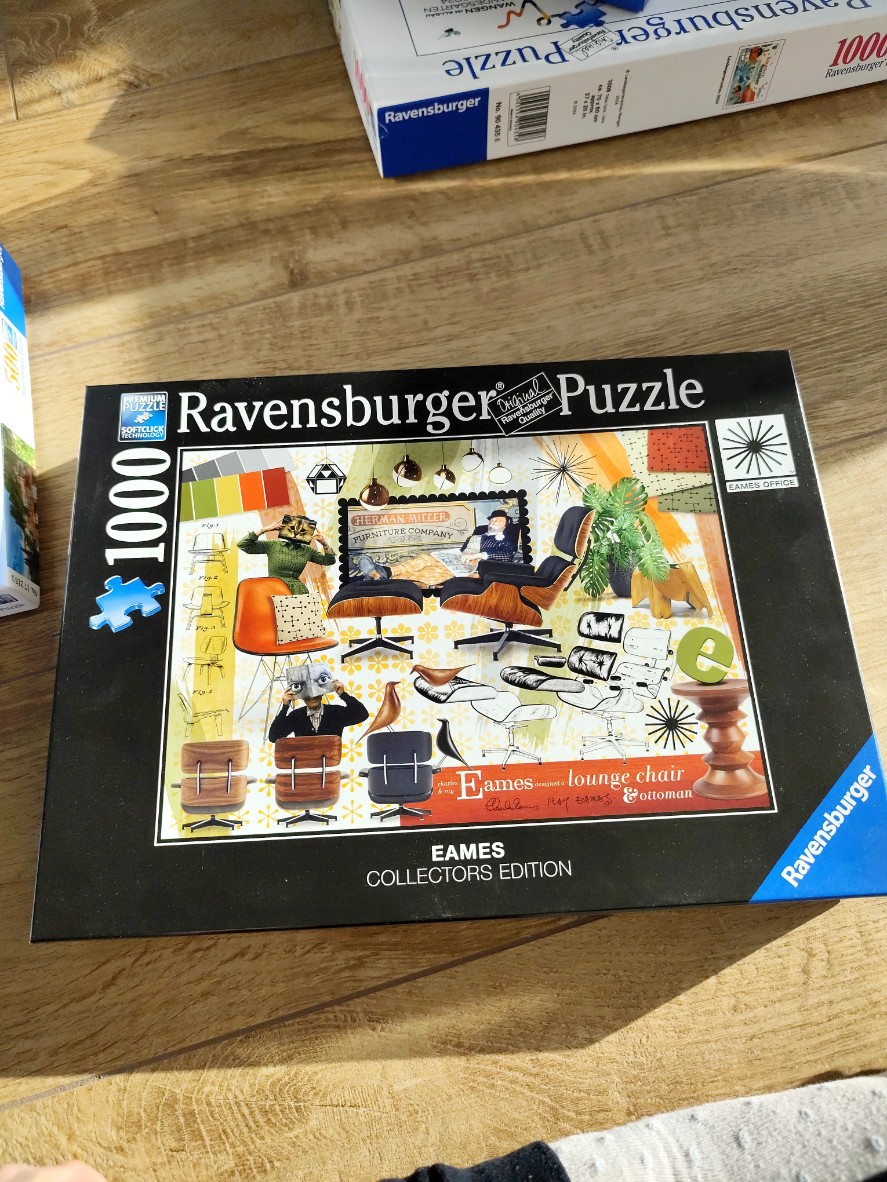
The main artwork is a stylized, illustrative collage celebrating mid-century modern design, specifically the iconic furniture creations of Charles and Ray Eames. The focal point is a rendered lounge chair and ottoman set, surrounded by an eclectic collection of chairs, sketches, and design ephemera. Two silhouetted figures are featured, each holding up images that obscure their faces, adding a playful, artistic touch to the arrangement. The background is a mix of patterned wallpapers and vintage graphic motifs, including a color swatch strip, line drawings of furniture profiles, and starburst geometric shapes.
Compositionally, the scene feels like a curated designer's mood board. It uses a warm, earth-toned palette dominated by oranges, browns, creams, and muted greens, evoking the 1950s and 60s design aesthetic. The arrangement is dense but balanced, blending realistic product photography of the lounge chair with sketch-style line art and retro typography. Elements like a large, sculptural letter 'e' sitting on a wooden pedestal and an vintage storefront sign for the "Herman Miller Furniture Company" reinforce the historical context. The overall mood is sophisticated and archival, paying homage to a specific era of American industrial design.