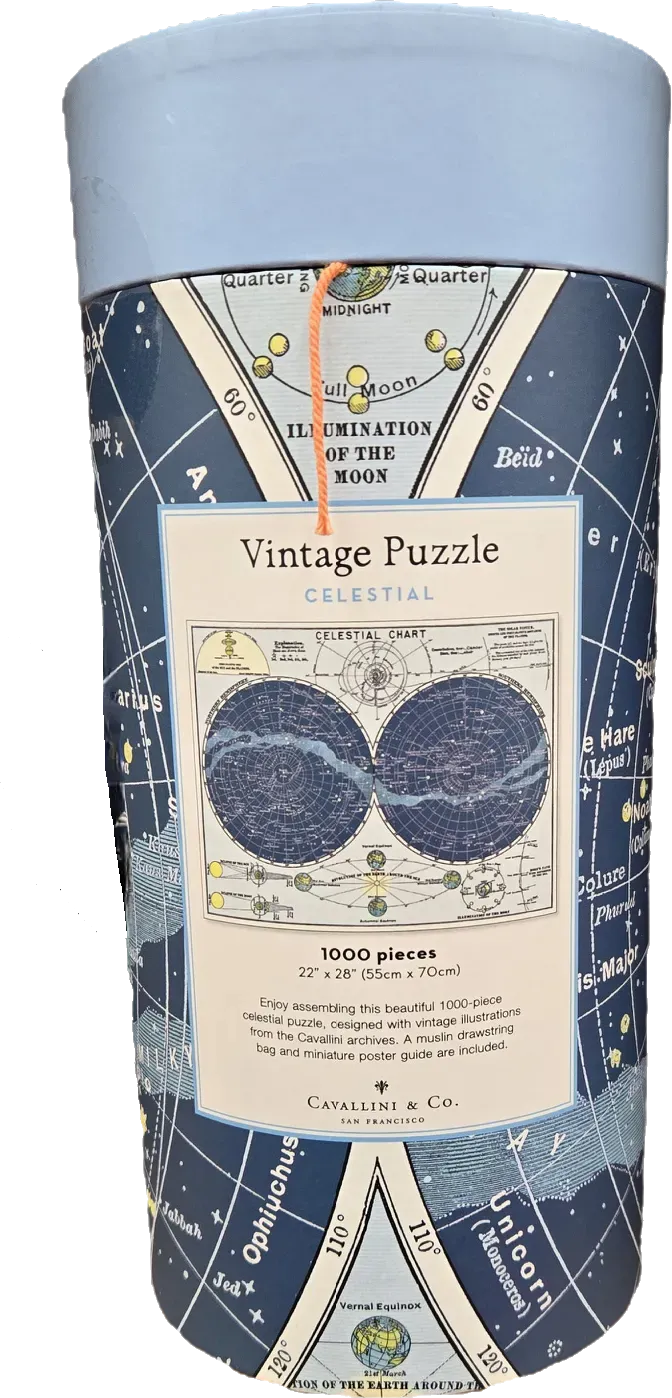
Celestial
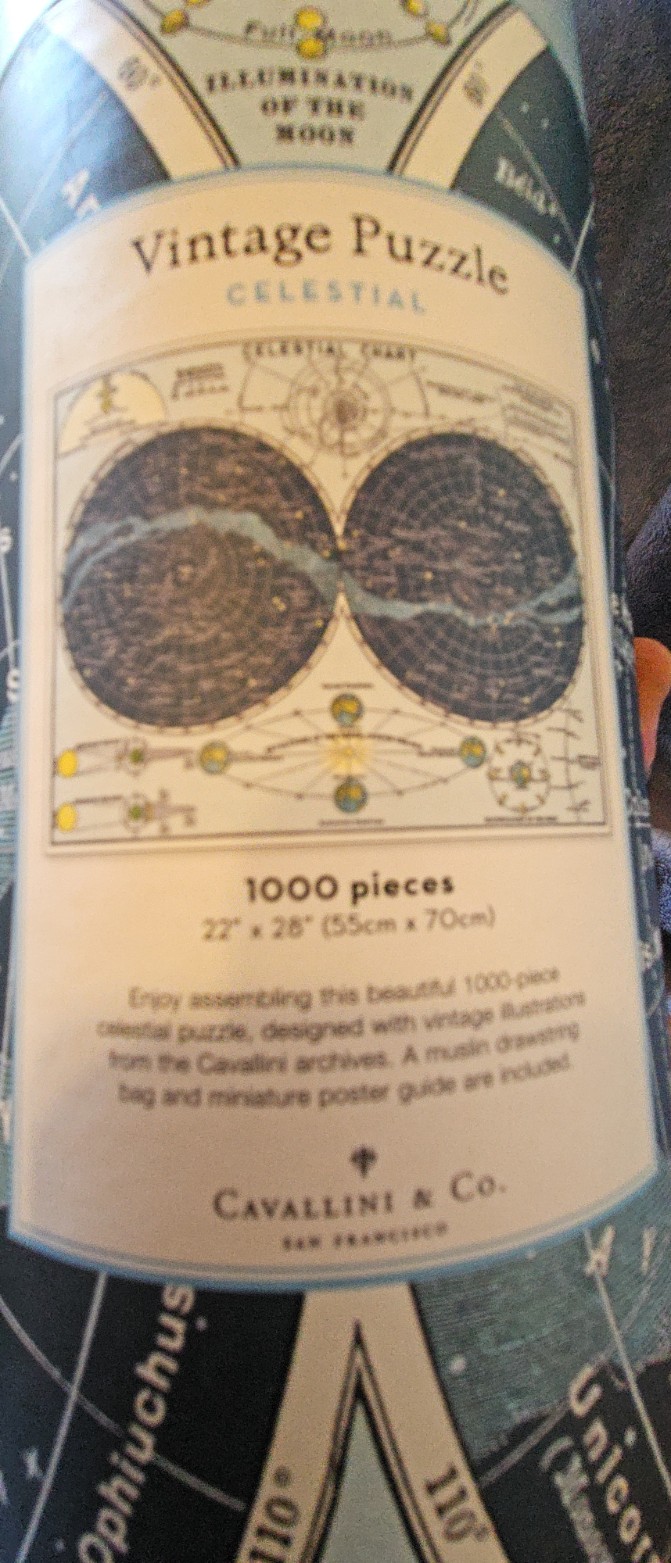
The central artwork depicts a vintage celestial chart, presented as a classic astronomical reference. The focal point consists of two large, side-by-side circular maps that represent the night sky in the northern and southern hemispheres. These spheres are filled with intricate lines, stellar markers, and constellation diagrams, all set against a deep, dark blue background that contrasts sharply with the lighter cream-coloured parchment-style border.
Surrounding the two primary circular maps are additional small diagrams and illustrative elements typical of historical scientific charts. These include geometric orbital diagrams, labeled phases of the moon, and smaller circular insets. The overall layout is balanced and symmetrical, emphasizing the scientific and decorative aesthetic of a nineteenth-century star map.
The colour palette is intentionally muted and aged, relying on parchment tones, slate blues, and cream whites to evoke an antique quality. The lines are fine and delicate, mimicking the hand-drawn or engraved style of early astronomical printing. The composition is highly detailed, filled with navigational text and scientific annotations that contribute to the scholarly, academic atmosphere of the scene.
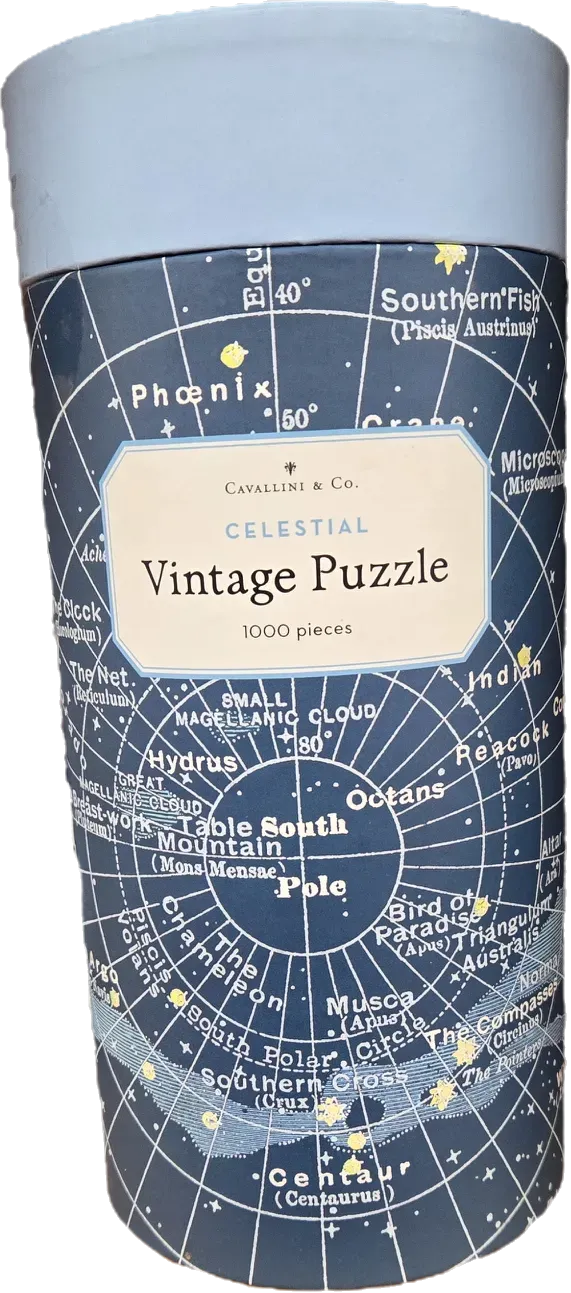
The main artwork features a vintage-style celestial star chart centered on the South Pole. The design is presented on a cylindrical surface, utilizing a deep, muted navy blue background that provides a stark, atmospheric contrast to the crisp white lines of the celestial coordinate system. The chart is structured with concentric circles and radiating longitude lines that emanate from the central pole, effectively mimicking historical astronomical maps.
The map is densely populated with the names of southern constellations and astronomical features, such as the Southern Cross (Crux), Centaurus, Octans, and the Small and Great Magellanic Clouds. These labels are printed in a clear, sans-serif white font that is easy to read against the dark background. Small, stylized yellow-gold star motifs are scattered across the chart to represent key celestial bodies, adding a touch of warmth and visual interest to the technical schematic.
The overall aesthetic is one of classic scientific illustration, evoking the era of Victorian-era cartography and astronomy. The composition is balanced and radial, emphasizing the South Pole at the center and drawing the eye outward along the grid lines. The aesthetic is clean, educational, and elegant, prioritizing readability and historical accuracy in its depiction of the night sky.