Under Your Command
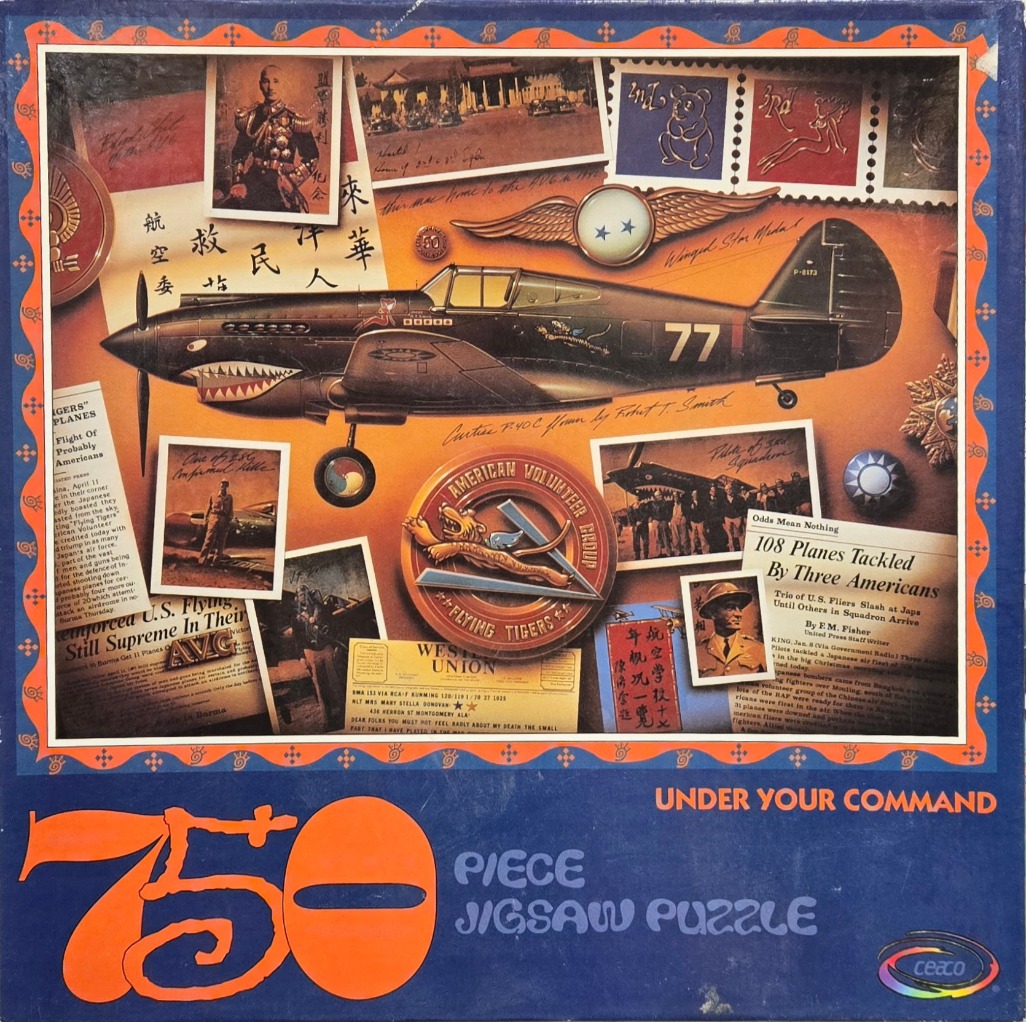
The central focus is a profile illustration of a Curtiss P-40C fighter aircraft, famously painted with a shark-teeth design on the nose and the number 77 on its fuselage. This central figure is surrounded by a collage of historical ephemera related to the American Volunteer Group, also known as the Flying Tigers. Included are several black-and-white photographs of pilots, snippets of newspaper articles with headlines like '108 Planes Tackled By Three Americans,' and a Western Union telegram. A prominent circular badge featuring a leaping tiger and the text 'American Volunteer Group Flying Tigers' sits in the lower center, anchoring the composition.
The overall aesthetic is a vintage military scrapbook style, layered against a warm, burnt-orange backdrop that suggests aged paper or a sunset glow. Various military medals, including a winged star, are scattered throughout, adding metallic texture and a sense of commemorative history. The composition is dense and layered, with edges of paper documents overlapping one another to create a tactile, collage-like feel.
Warm, earthy tones dominate the palette, with deep oranges, browns, and creams providing a nostalgic, sepia-toned atmosphere. The dark, matte finish of the aircraft contrasts with the lighter, paper-textured documents. The style is illustrative, blending detailed technical drawings of the aircraft with authentic-looking historical archives, resulting in an evocative tribute to World War II aviation history.