Birds of the Druid Tradition
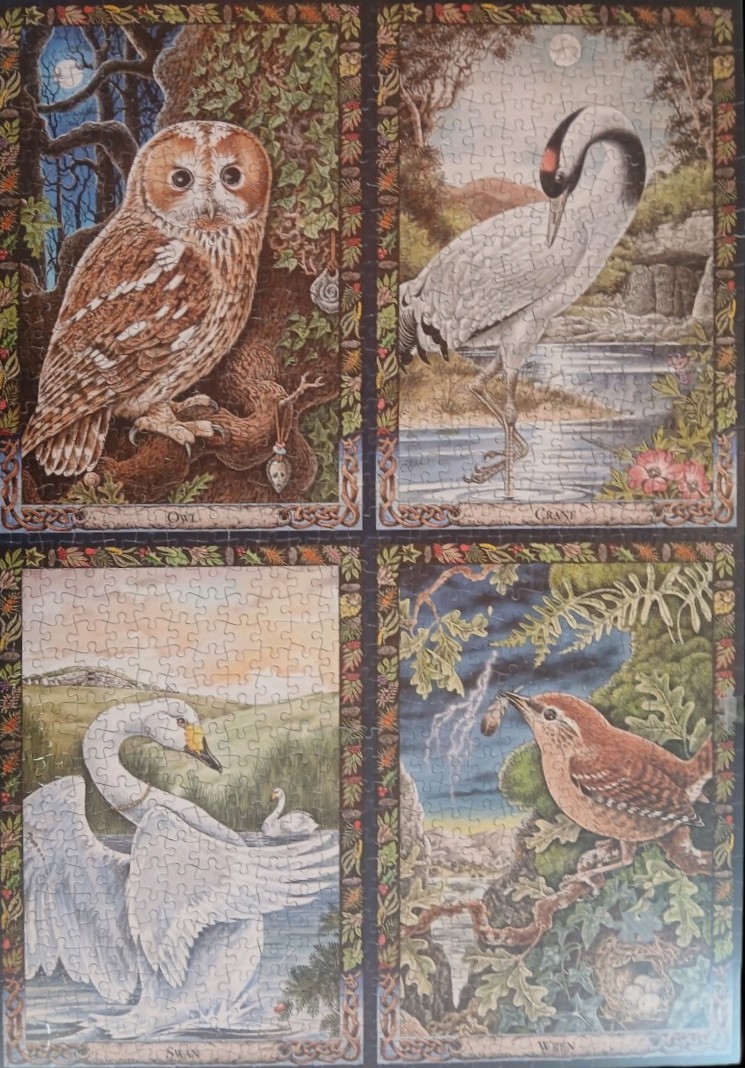
This illustration is divided into four distinct panels, each featuring a different bird species set within a detailed, botanical-inspired frame. Each panel is labeled at the bottom with the name of the bird. The overall style is reminiscent of a classic nature field guide or folklore art, utilizing intricate line work and a rich, earthy colour palette.
The top-left panel depicts a tawny owl perched on a mossy branch, with a dark, moonlit forest in the background. Beside it, the top-right panel shows a crane standing in shallow water, captured in a pale, ethereal light. The bottom-left panel features a graceful swan spreading its wings on a calm lake, with a soft, sunset-toned meadow in the distance. The bottom-right panel displays a small wren perched among oak leaves, with a turbulent, stormy sky visible behind the foliage.
The aesthetic throughout the image is rustic and somewhat mystical, emphasized by the decorative borders that feature repeating motifs of acorns, leaves, and berries. The lighting varies by panel, ranging from the deep blues of the night-time forest and the moody storm clouds to the gentle, diffused light of the swan's pond. Every section is rich with natural detail, from the textured feathers of the birds to the tiny nests and greenery nestled in the margins.
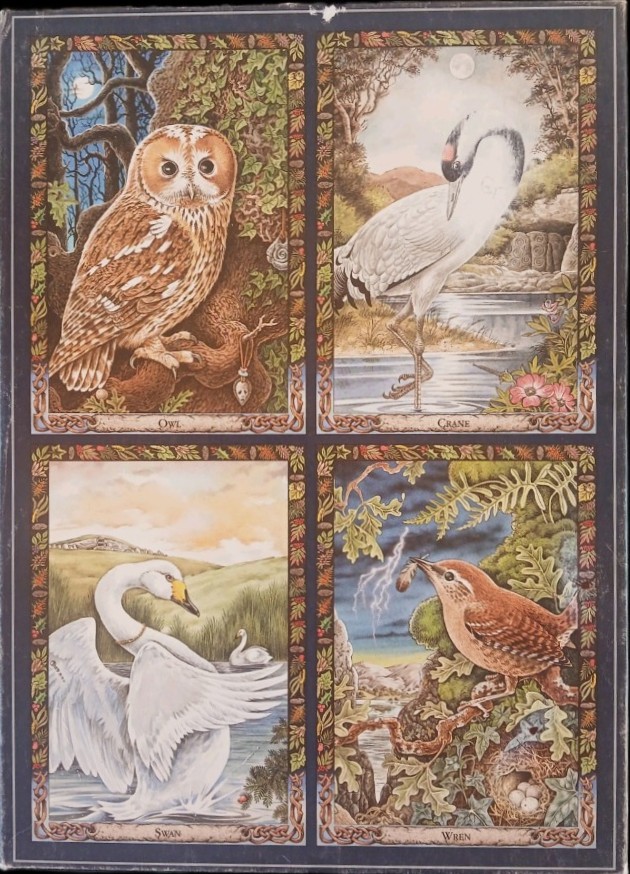
This illustration is organized into a grid of four distinct panels, each framed with an intricate border of autumn leaves, acorns, and Celtic-inspired knots. The top-left panel depicts a tawny-toned owl perched on a gnarled tree branch at dusk, with a small, mysterious pendant hanging from the bark nearby. To its right, a graceful white crane with a splash of crimson on its head stands elegantly in a shallow river, backed by soft, pale hills and an ethereal sky.
In the bottom-left panel, a majestic white swan arches its wings while gliding across water, set against a backdrop of rolling golden hills under a sunset-tinged sky. Beside it, the bottom-right panel shows a small wren perched on a mossy branch, holding a feather in its beak. Beneath the wren, a small, intricate nest holds three white eggs, while the background suggests an approaching storm with jagged lightning illuminating the sky above a rugged landscape.
The artistic style is detailed and naturalistic, reminiscent of classic botanical or wildlife plate illustrations. The colour palette varies across the panels, shifting from the deep earthy browns and nocturnal blues of the owl’s forest to the crisp whites, pastels, and hazy natural tones of the waterbirds, and the vivid, slightly dramatic lighting of the wren’s storm-touched habitat. Each section includes the name of the bird species printed in a simple serif font at the bottom edge of its respective frame.
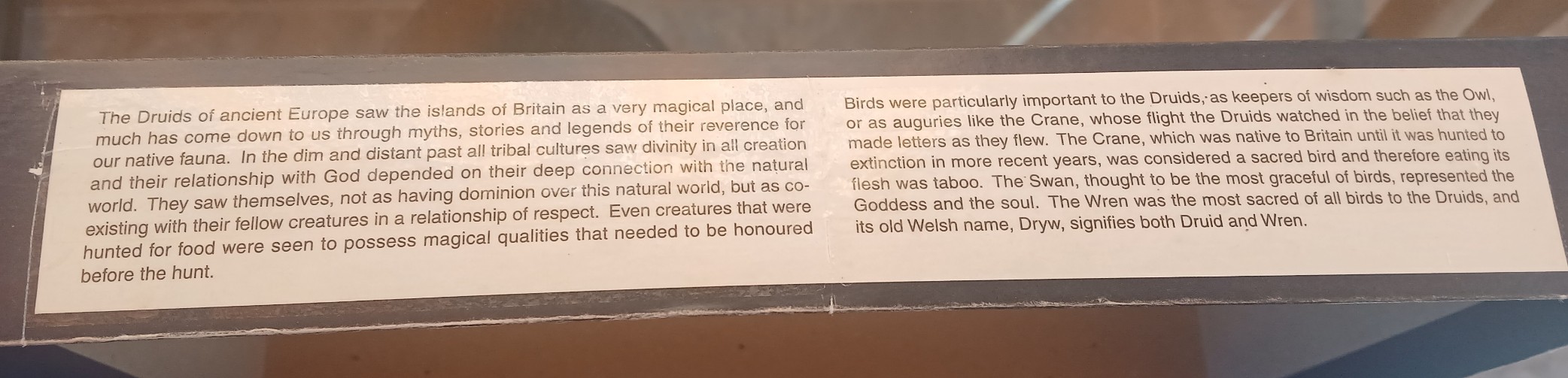
The image displays a block of educational text centered on a dark-colored surface, likely the side of a container. The text is presented on a pale, rectangular background panel that spans the horizontal center of the frame. The typography is a clean, sans-serif black font, organized into two distinct paragraphs separated by a small gap.
The content discusses the historical relationship between the Druids of ancient Europe and the natural world, specifically focusing on their reverence for fauna. The left paragraph explores the Druids' view of Britain as a magical place and their spiritual connection to creation, emphasizing a philosophy of coexistence rather than dominion over nature. It notes that even hunted creatures were honored for their perceived magical qualities.
The right paragraph shifts focus to the spiritual significance of specific birds. It mentions the Owl as a keeper of wisdom, the Crane as a sacred bird used for augury, and the Swan as a symbol of the Goddess and the soul. It concludes with a note on the Wren, the most sacred of all, explaining that its old Welsh name, 'Dryw,' signifies both 'Druid' and 'Wren.' The overall presentation is minimalist and informative, typical of historical or cultural reference materials.
The image is a close-up shot of a white rectangular label set against a dark, out-of-focus background. The label features a standard black-and-white barcode centered in the middle of the frame.
Printed at the top of the label in clean, sans-serif black capital letters is the text "DRUID BIRDS". Below the barcode, there are two distinct numeric sequences: "26-46-95" on the left and "H0540" on the right. The text and the lines of the barcode are sharp and legible, contrasting clearly against the plain white background of the sticker.
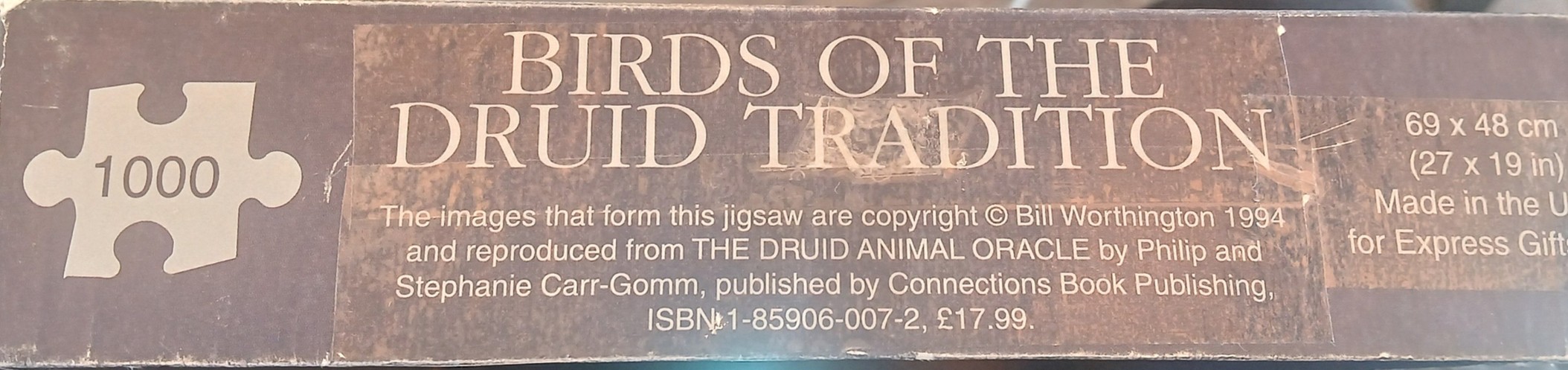
The visual content consists of the large, serif-font title "BIRDS OF THE DRUID TRADITION" centered against a dark, textured brown background that resembles weathered stone, wood, or worn parchment. The aesthetic is muted and earthy, leaning into themes of mysticism and ancient lore.
Beneath the main title, smaller lines of text provide credit for the source material, citing "THE DRUID ANIMAL ORACLE" by Philip and Stephanie Carr-Gomm, with illustrations by Bill Worthington. The layout is utilitarian, emphasizing a stark, academic presentation of the subject matter rather than an illustrative scene. The overall color palette is composed of deep browns, chocolate tones, and light tan typography, creating a cohesive and somber atmosphere.
by Margaret York 2025-10-27