The IJ near Amsterdam (Het IJ voor Amsterdam, van de Mosselsteiger Gezien)
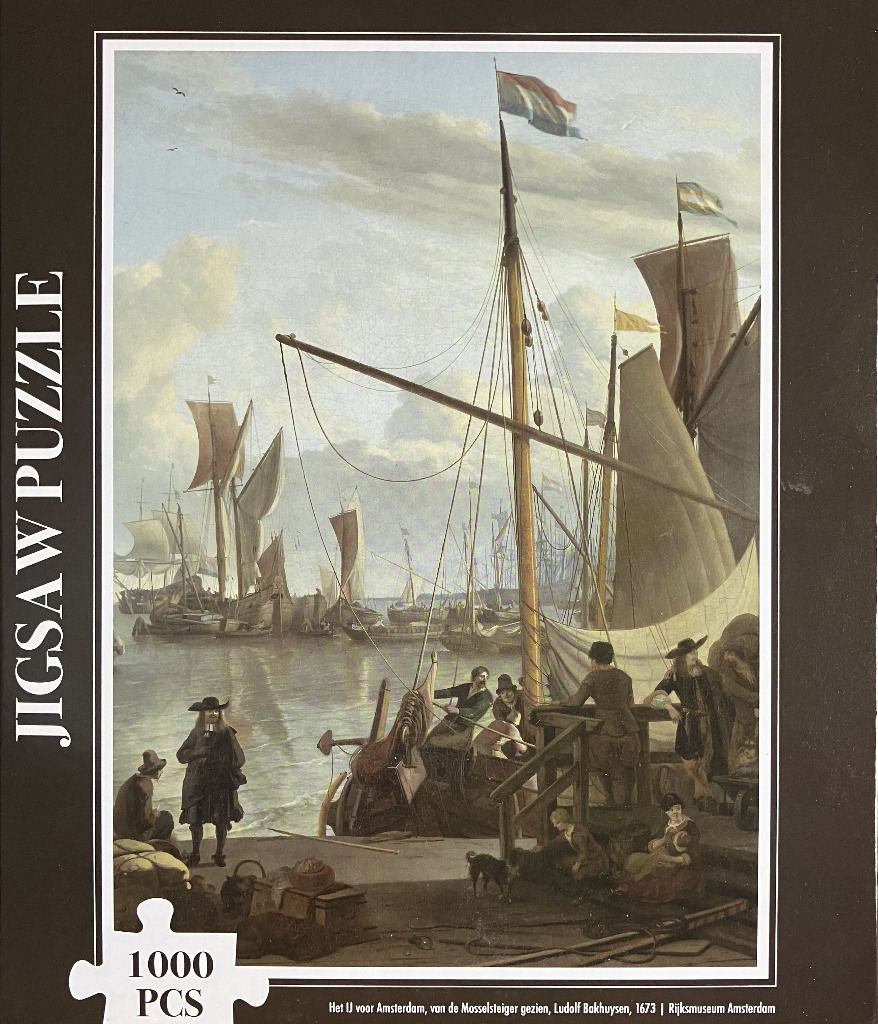
This image is a reproduction of the 1673 oil painting 'Het IJ voor Amsterdam, van de Mosselsteiger gezien' by Ludolf Bakhuysen. The foreground features a busy stone quay where several figures in 17th-century period attire are gathered. A prominent man in a dark coat and hat stands near the water's edge, while a woman sits on the ground nearby. A small dog walks along the dock toward a set of wooden stairs that lead up to a docked ship. The scene exudes the atmosphere of a bustling maritime trade hub.
Beyond the dock, the composition is dominated by a cluster of tall sailing vessels with large masts and furled or partially unfurled sails. These ships are moored in the harbor, their reflections shimmering on the calm, pale water. The sky is expansive and filled with soft, muted clouds, creating a sense of depth and a wide-angle perspective typical of Dutch Golden Age seascapes. The Dutch tricolor flag flies from the tallest mast.
The colour palette is composed of natural, earthy tones including muted browns, grays, creams, and faded ochres, reflecting the typical lighting of a hazy, overcast day. The overall mood is calm, historical, and observational, with fine attention paid to the rigging of the ships, the textures of the clothing, and the architectural elements of the quay. The style is classic European realism from the 17th century, emphasizing atmospheric perspective and nautical detail.

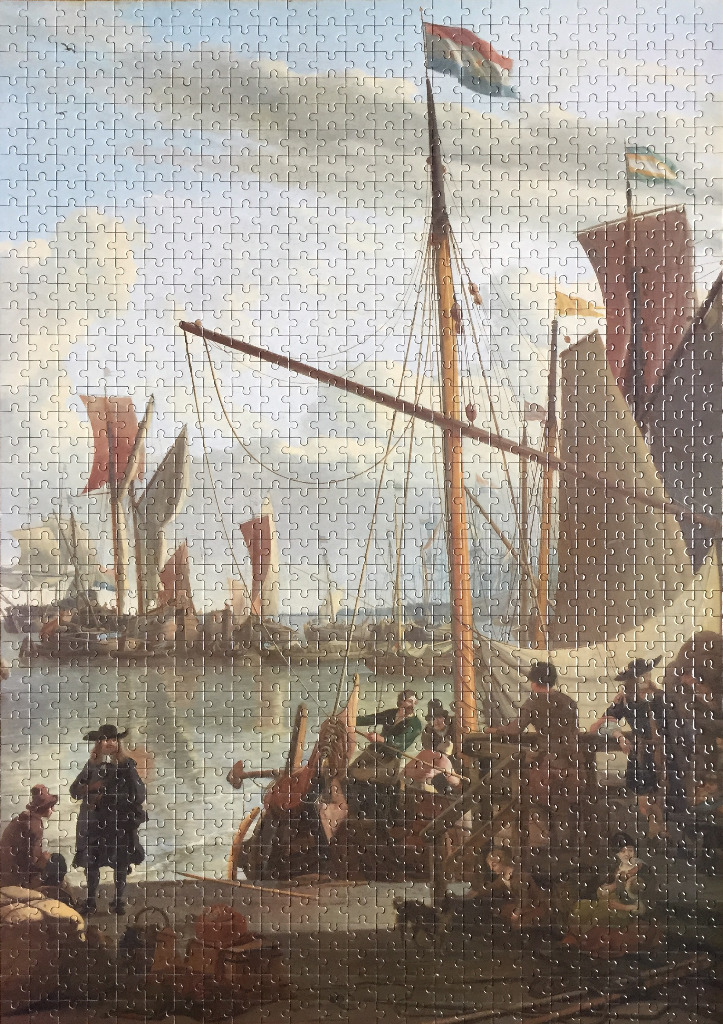
This classical oil painting captures a bustling 17th-century maritime harbor, dominated by several tall-masted sailing vessels. The primary focus is a large wooden boat moored at the foreground, its tall mast extending upward toward the top of the frame, crisscrossed with delicate rigging. Other ships with partially unfurled, muted-red and cream-colored sails are visible in the background, creating a sense of depth and activity within the port.
In the foreground, a group of figures dressed in period clothing—including wide-brimmed hats and dark coats—gather on the wooden dock. Some stand near the edges of the water, while others sit amongst stacks of goods and cargo, suggesting a scene of trade or arrival. The composition is balanced by the verticality of the masts on the right and the open water extending toward the horizon on the left.
The color palette is earthy and subdued, characteristic of the Dutch Golden Age style. Soft, muted tones of brown, ochre, grey, and ochre dominate, punctuated by the faint red of ship flags and the subtle blue of the sky. The lighting is diffused and natural, casting soft shadows that emphasize the texture of the ships' wood and the worn appearance of the dock. The overall mood is quiet and industrious, depicting a historical moment of maritime daily life.
by Nick 2024-10-03