The Museum at Le Havre
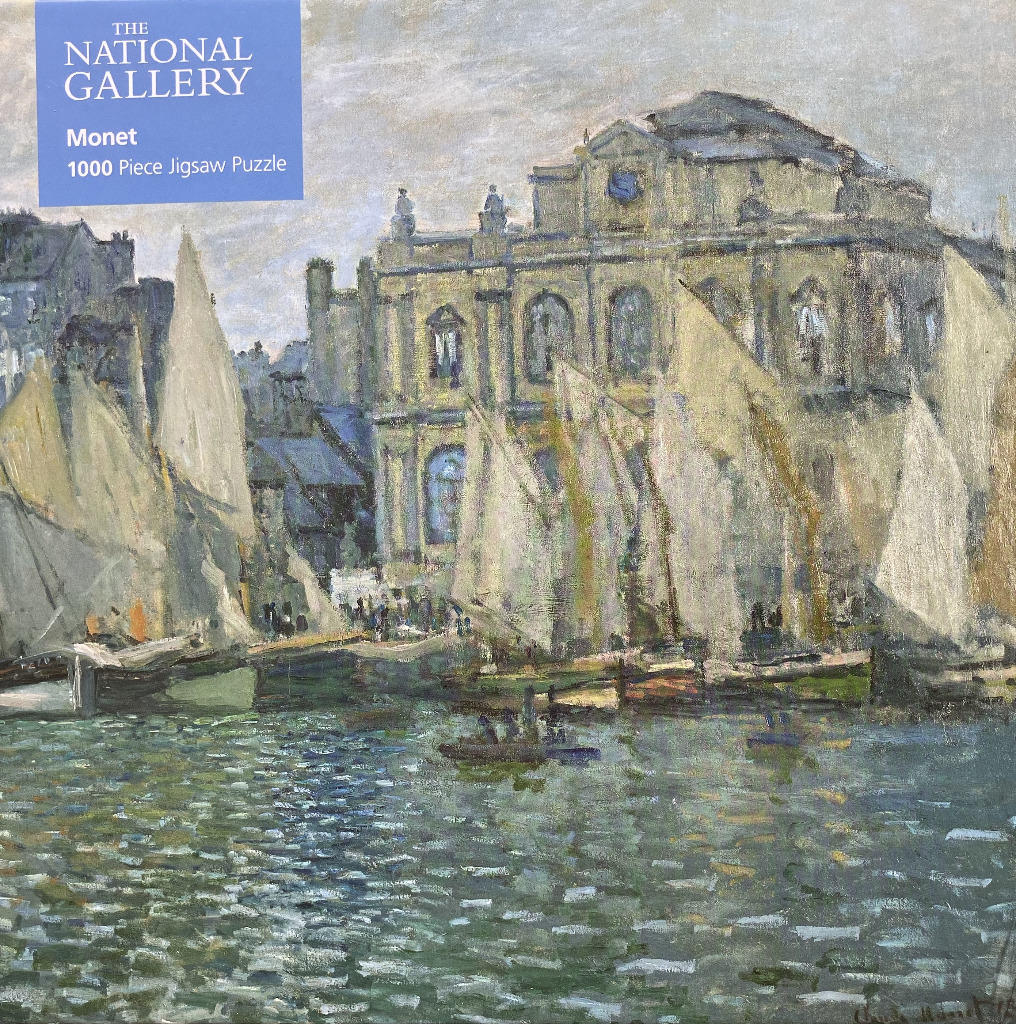
This impressionist oil painting depicts a bustling harbor scene, dominated by a large, ornate stone building situated directly on the waterfront. Multiple sailing vessels are docked in the foreground and middle ground, their tall, triangular sails rising like monochromatic, off-white shapes against the backdrop of the architecture and the overcast sky. The composition creates a dense, layered effect where the masts and rigging blend into the urban structures beyond.
The water in the foreground is rendered with choppy, rhythmic brushstrokes in shades of grey, muted green, and flecks of blue, capturing the movement of light upon the surface. The entire palette is restrained and tonal, utilizing a range of desaturated earth tones, ochres, cool greys, and pale whites to convey the hazy atmosphere of a cloudy day. The soft, diffuse lighting minimizes sharp shadows, giving the scene a hazy, atmospheric quality characteristic of mid-to-late nineteenth-century landscape painting.
Small, indistinct figures populate the docks and the decks of the ships, providing a sense of scale and human activity amidst the solid, imposing architecture. The brushwork remains visible throughout the piece, emphasizing the texture of the canvas and the artist's focus on capturing the immediate impression of light and motion rather than fine detail. The building itself is intricately painted with deep-set windows and classical structural elements that anchor the composition.
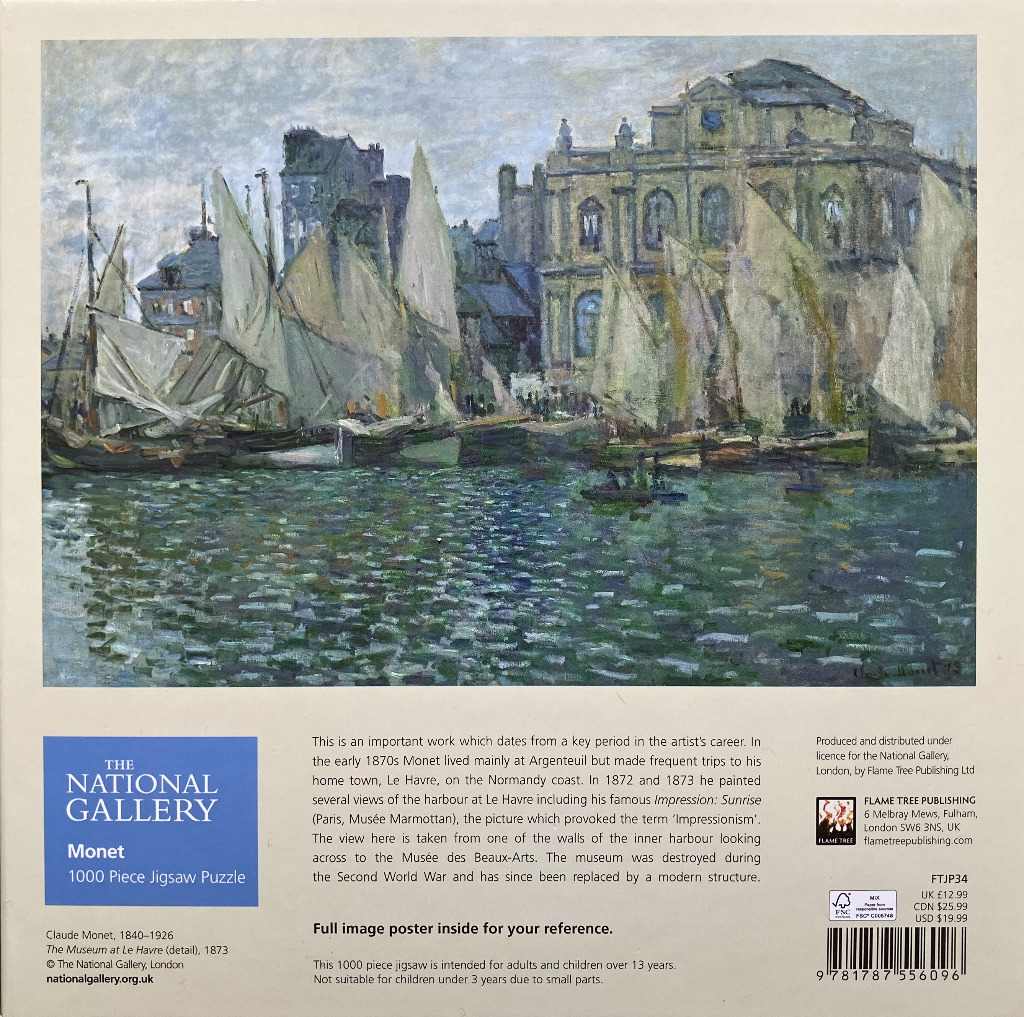

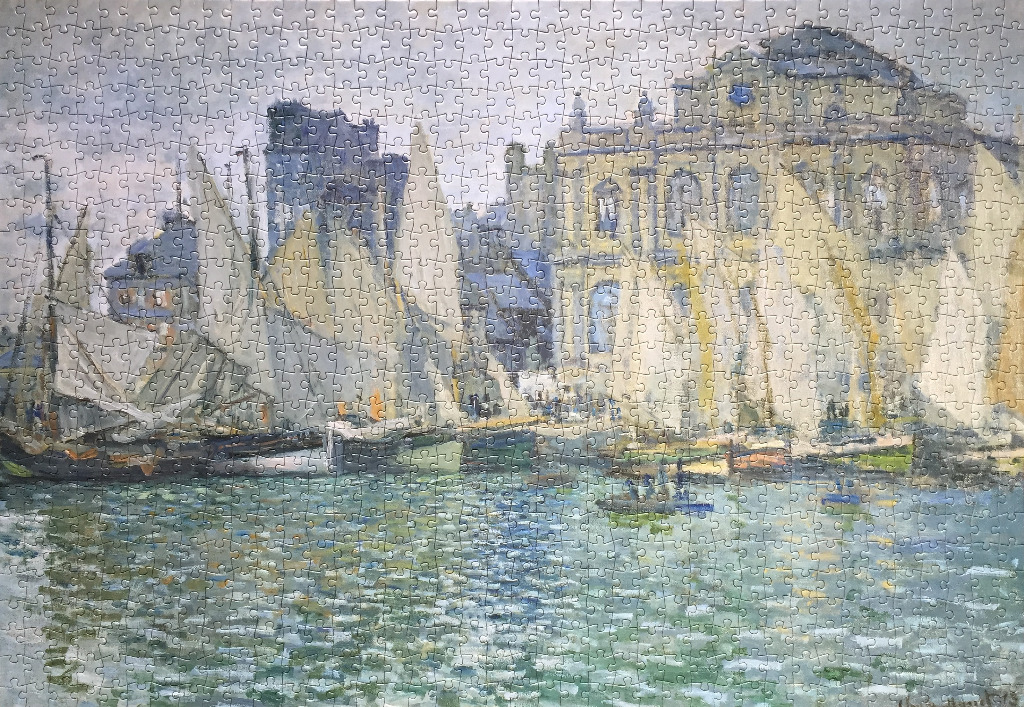
This impressionist-style painting captures a busy harbor scene, dominated by the sails of various vessels docked along the waterfront. In the background, a substantial stone building with arched windows and a prominent dome rises above the masts, anchoring the urban architectural element of the composition. Small figures of people can be seen along the quay and in a few smaller rowing boats on the water, providing a sense of scale and activity to the quiet port.
The foreground is dedicated to the shimmering surface of the water, rendered with energetic, textured brushstrokes that capture the play of light and movement. The colour palette is muted and atmospheric, dominated by cool greys, soft blues, and creamy, sun-bleached yellows of the sails. The light suggests an overcast or hazy day, softening the edges of the buildings and the rigging of the ships, which creates a hazy, dreamlike quality common to the era's impressionist landscapes.
The artist uses short, visible strokes to define the water's surface, creating a rhythmic pattern that contrasts with the more static, solid forms of the buildings. The overall mood is calm and slightly nostalgic, evoking the feeling of a historic European port city. The lack of sharp details emphasizes the fleeting nature of the light and the tranquil, everyday scene of the working harbour.