Churchill Polar Bears
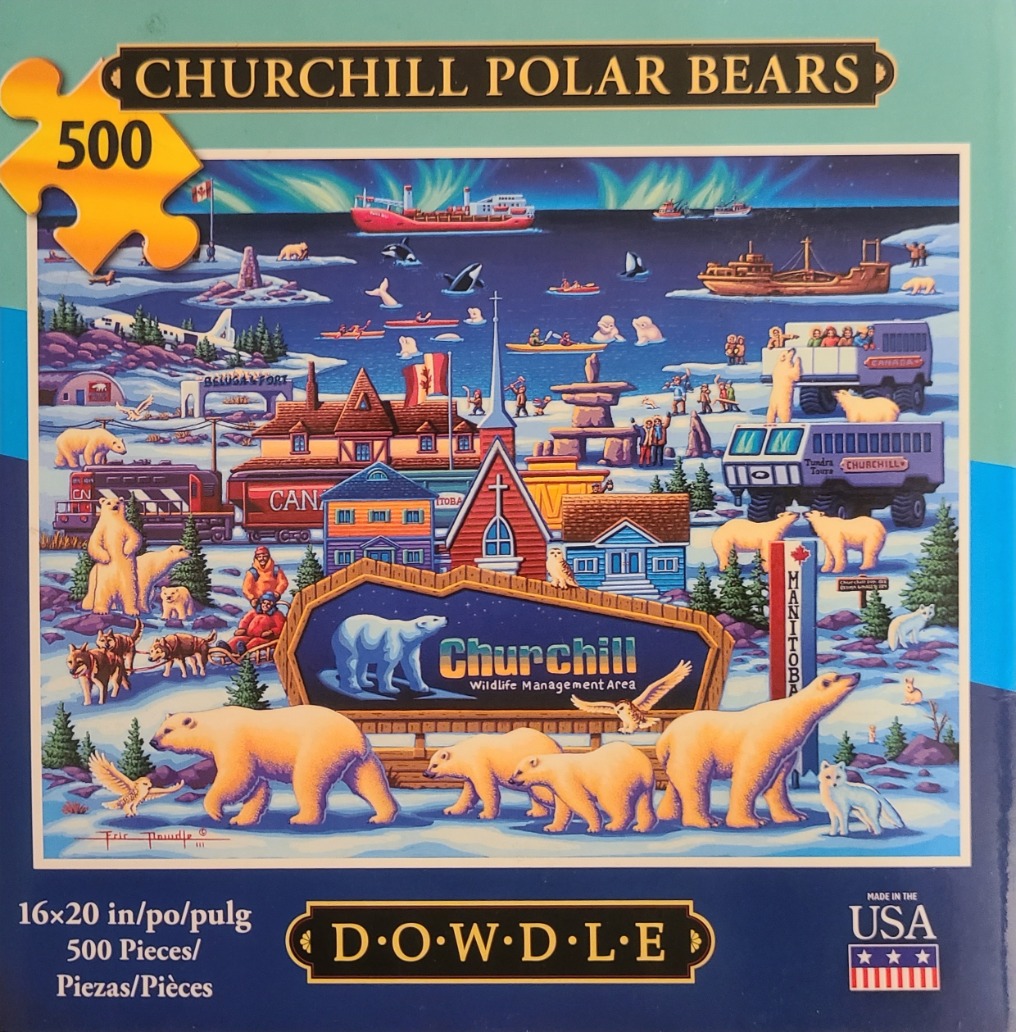
This folk-art style illustration depicts the Churchill Wildlife Management Area in a vibrant, multi-layered composition. The foreground is dominated by several large, cream-colored polar bears roaming across a snowy tundra, accompanied by an arctic fox and an owl taking flight. In the mid-ground, a prominent wooden sign welcoming visitors to Churchill sits before a collection of stylized buildings, including a small church with a steeple, residential houses, and a train station with a freight train passing through. A sign marked "Manitoba" stands nearby, surrounded by pine trees and additional bears.
Moving into the background, the scene expands to show the icy waters of a bay dotted with ships, boats, and kayaks. Several whales are visible surfacing in the water, while large specialized all-terrain vehicles transport tourists across the snowy landscape. An airplane is seen descending toward a distant landing strip, and small figures of people are scattered throughout, hiking and exploring. The entire scene is set against a deep blue twilight sky illuminated by vibrant ribbons of green aurora borealis.
The artwork uses a rich palette of cool blues, snowy whites, and deep forest greens, contrasted by the warm, earthy tones of the buildings and the golden hues of the bears. The lighting creates a serene, magical atmosphere typical of a northern winter evening. The painting style is characterized by clear, defined outlines and simplified, whimsical forms, typical of modern folk art depictions of local landmarks and wildlife.

This whimsical illustration depicts the Churchill Wildlife Management Area in Manitoba, Canada. The foreground is dominated by a large, rustic wooden sign that reads "Churchill Wildlife Management Area," featuring an image of a polar bear. Below this sign, a family of polar bears walks across a snow-covered landscape, accompanied by a snowy owl in flight and a small arctic fox. The scene is populated with various polar bears roaming throughout the area.
In the mid-ground, a charming small town is nestled in the snow, featuring a red-roofed church, brightly coloured houses, a train engine marked "CAN," and large all-terrain vehicles used for tundra tours. People are seen exploring the area, some in small boats or kayaks, while others are riding in the tour vehicles or walking near the buildings. A signpost pointing toward Manitoba stands near the center.
The background reveals a frozen bay or ocean filled with ice floes, where cargo ships and smaller vessels navigate the cold waters. The sky above is a deep, dramatic indigo, illuminated by vibrant, swirling streaks of green and purple northern lights. The overall style is that of a colorful, cartoon-like folk art painting, capturing the busy, snowy atmosphere of a northern wildlife sanctuary under a breathtaking aurora borealis.
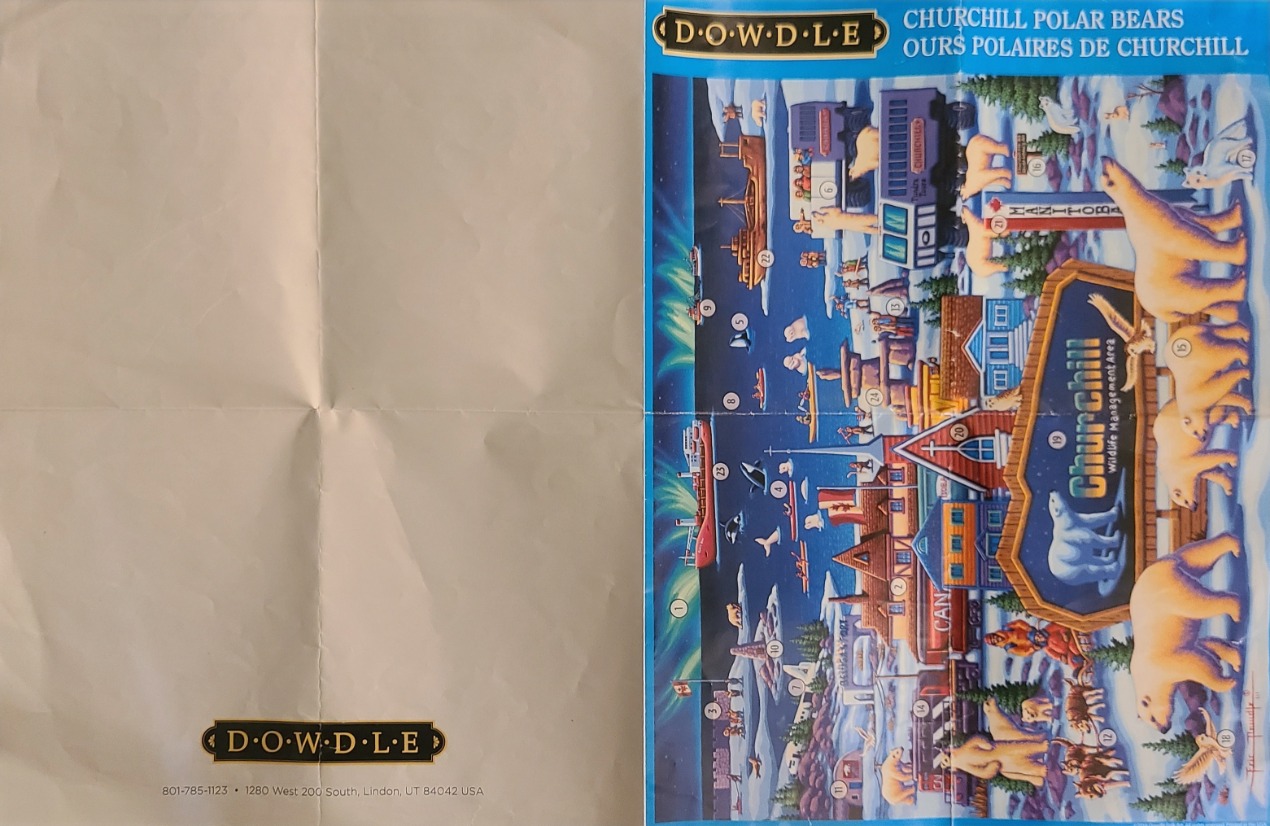
This folk-art illustration depicts a whimsical, stylized scene of Churchill, Manitoba, set against a deep blue night sky illuminated by vivid green and purple aurora borealis. On the right side, the composition is dense with activity, featuring polar bears roaming through a snowy, mountainous terrain that includes rustic cabins, a church, and large, specialized tundra vehicles. A prominent sign marks the area, with numerous numbered indicators scattered across the landscape to highlight specific points of interest or wildlife sightings.
The setting is a blend of arctic wilderness and human settlement. To the left of the central scene, the paper is mostly empty and off-white, creased from being folded. The illustration on the right features a variety of arctic animals, including polar bears, whales in the water, and birds, all rendered in a flattened, vibrant artistic style. The presence of shipping vessels and small boats suggests a coastal environment, while the snowy ground and coniferous trees anchor the location firmly in a northern climate.
The overall mood is cheerful and adventurous, characterized by bold, saturated colors and clean lines. The light emanates from the colorful ribbons of the northern lights, casting a soft, magical glow over the busy village and the natural surroundings. The scene is presented as an instructional or guide-style illustration, with the numbered markers acting as an invitation for the viewer to explore the specific details of the arctic habitat and local landmarks.
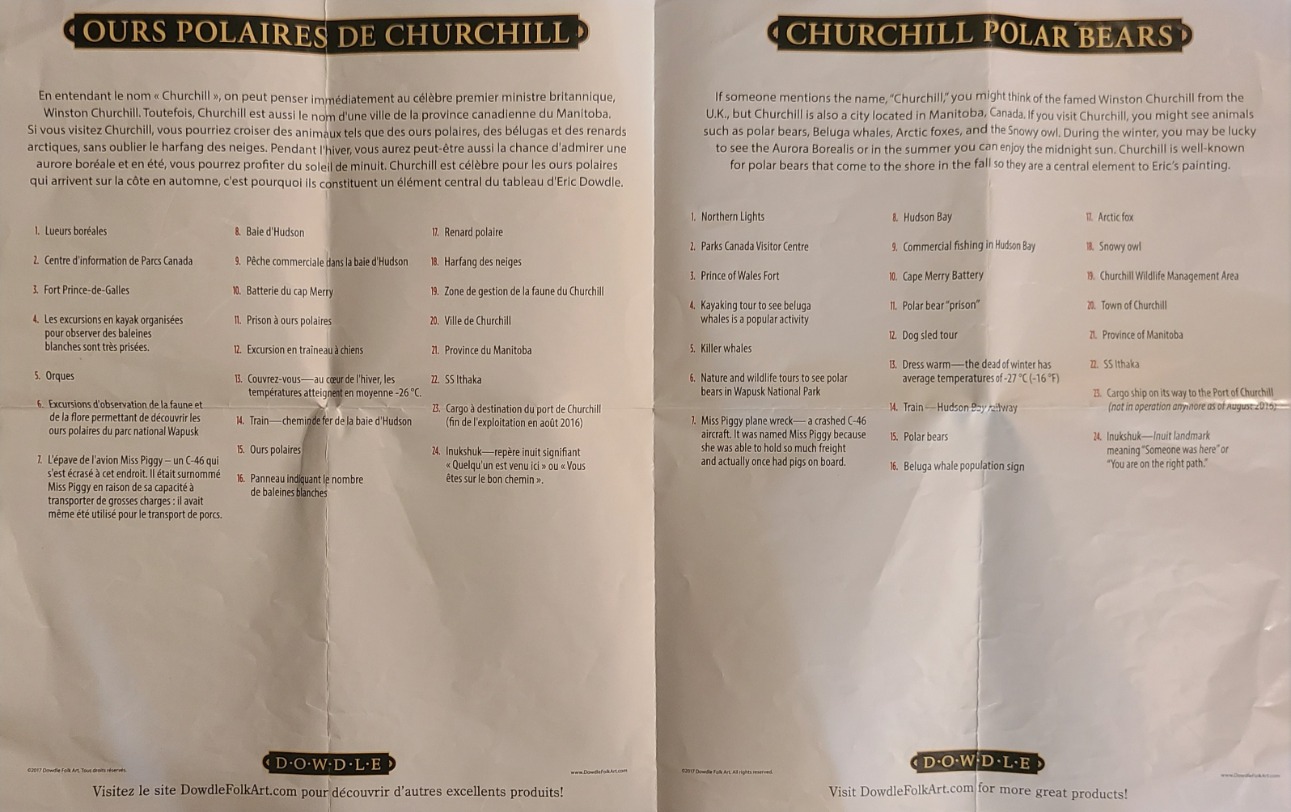
This document presents information about the town of Churchill, Manitoba, organized into two columns: one in French on the left and one in English on the right. Both sides are headed by the title "Churchill Polar Bears" or its French equivalent, "Ours Polaires de Churchill," set against a cream-colored background. The text provides a brief introduction to the region, mentioning its famous polar bear population, the Northern Lights, and the midnight sun, while contextualizing these natural features within the local geography.
Below the introductory paragraphs, each column features a numbered list of twenty-four points. These items describe local landmarks, wildlife, and significant sites, such as the Prince of Wales Fort, the "polar bear prison," the SS Ithaka, and the wreck of the "Miss Piggy" C-46 aircraft. The lists serve as a legend or guide, detailing the cultural and environmental significance of each numbered feature.
The layout is symmetrical and utilitarian, resembling an educational pamphlet or insert. The text is printed in a clear, dark sans-serif font, making the information easily readable. At the bottom of both columns, there are small logos and website references, framing the information as a companion guide to a larger artistic work depicting the region.