Detail From Winterlandscape
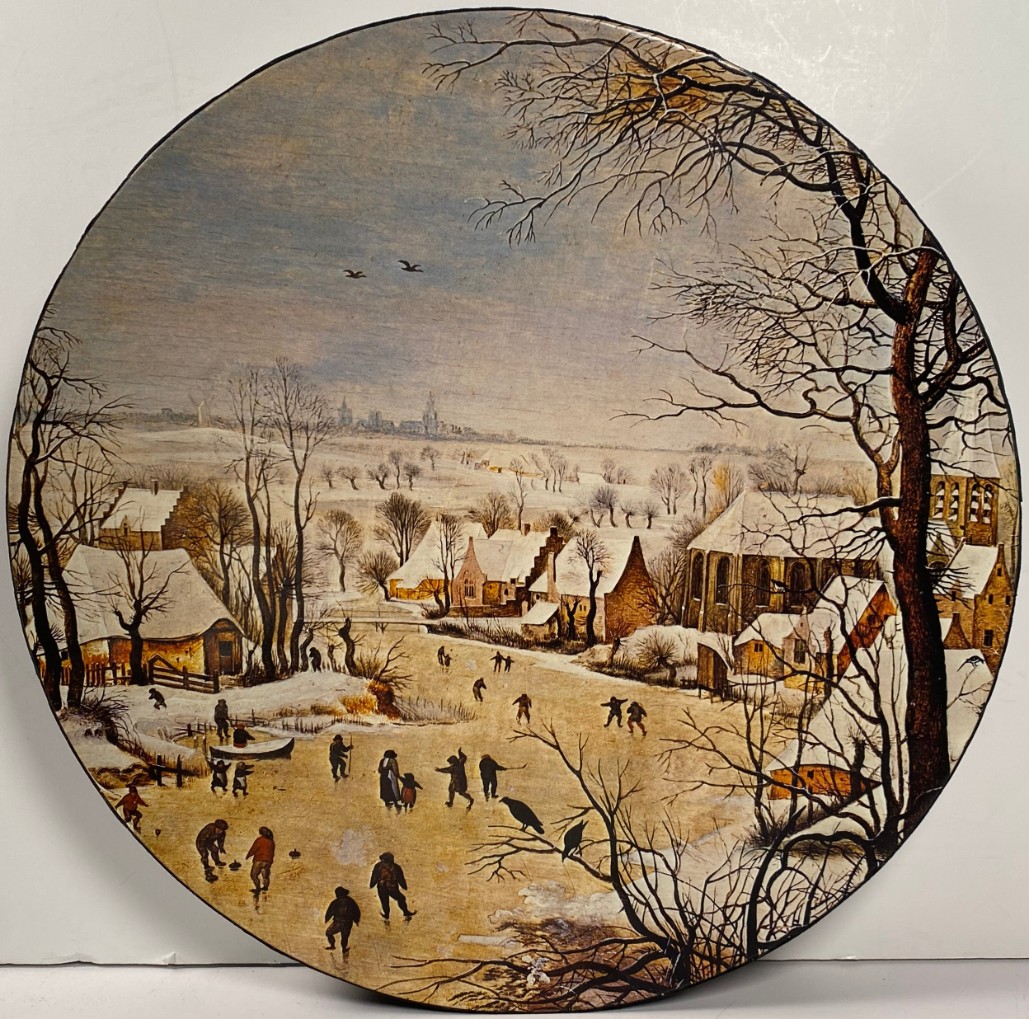
This circular artwork depicts a classic winter landscape, reminiscent of Old Masters style, centered on a frozen waterway bustling with activity. In the foreground, numerous small figures are scattered across the ice, some skating, others walking, and some engaged in leisure activities. The scene is framed by silhouetted, dark, bare-branched trees that curve inward from the edges, creating a natural vignette that focuses the viewer’s eye on the village nestled in the middle ground.
Beyond the ice, a cluster of quaint, gabled village houses with snow-covered roofs sits along the banks. Further in the distance, the landscape opens up into a flat, muted horizon featuring a faint outline of a town or cathedral under a pale, overcast sky. Two small, dark birds are visible in flight against the expansive, cooling blue-grey horizon, adding a touch of life to the chilly, quiet atmosphere.
The color palette is dominated by muted, earthy tones—warm tans and ochres for the frozen ice, crisp whites for the snow, and deep, dark browns and blacks for the barren trees and figures. The light is diffused and soft, characteristic of a cloudy winter day, casting gentle shadows that suggest a late afternoon stillness. The composition feels balanced and historical, capturing a timeless, rural slice of life set against a serene, icy backdrop.
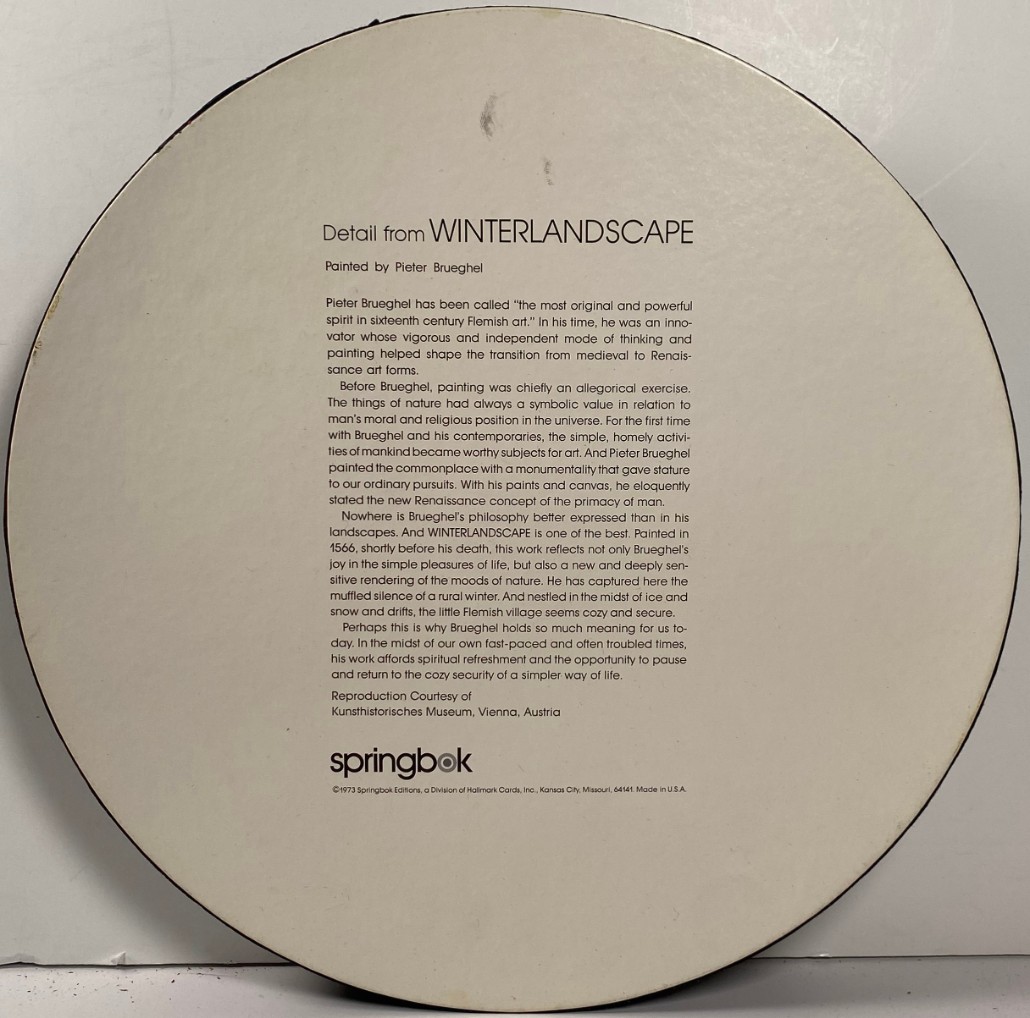


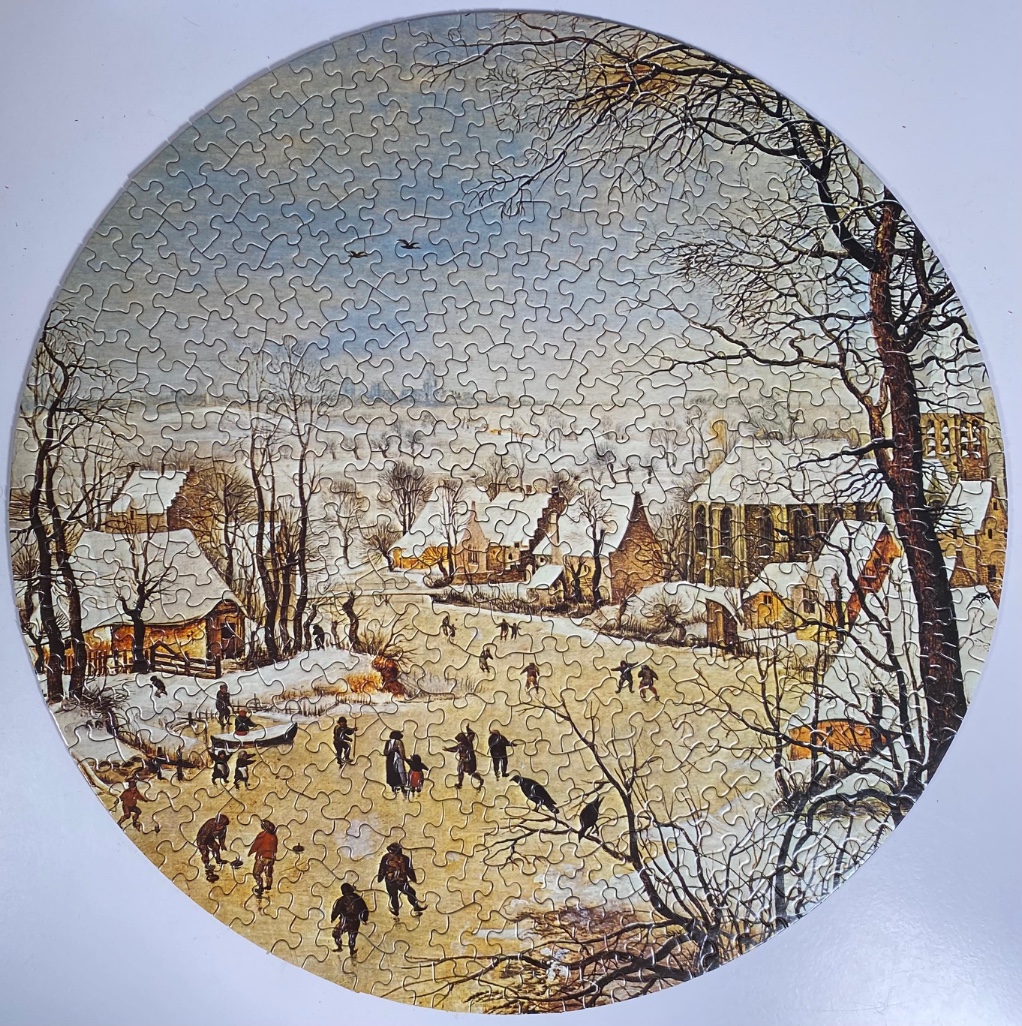
This circular illustration depicts a bustling, snow-covered village scene during the winter. A large frozen pond or canal takes up the foreground and mid-ground, where numerous figures in period clothing are actively ice skating. Some individuals glide gracefully, while others appear to be interacting or walking along the icy surface. Several dark birds are scattered across the ice, adding a sense of natural movement to the tranquil setting.
Surrounding the water are traditional European houses and buildings with snow-dusted gabled roofs, clustered together to form a cozy village. To the right, a large church or manor-like structure stands prominently, its architecture softened by the layer of white snow. Bare, intricate tree branches frame the scene, particularly on the right side and the upper edge, creating a sense of depth and peering into the life of the village from behind a natural veil.
The colour palette is dominated by muted, chilly tones, with soft blues and greys in the overcast sky and icy ground, contrasted by the warm, earthy browns and ochres of the village buildings. The light is diffused, suggesting a quiet, overcast winter day. The artwork is executed in a detailed, classical style characteristic of 16th-century Northern European landscape paintings, capturing the quietude of a winter day punctuated by the lively, communal activity of the skaters.