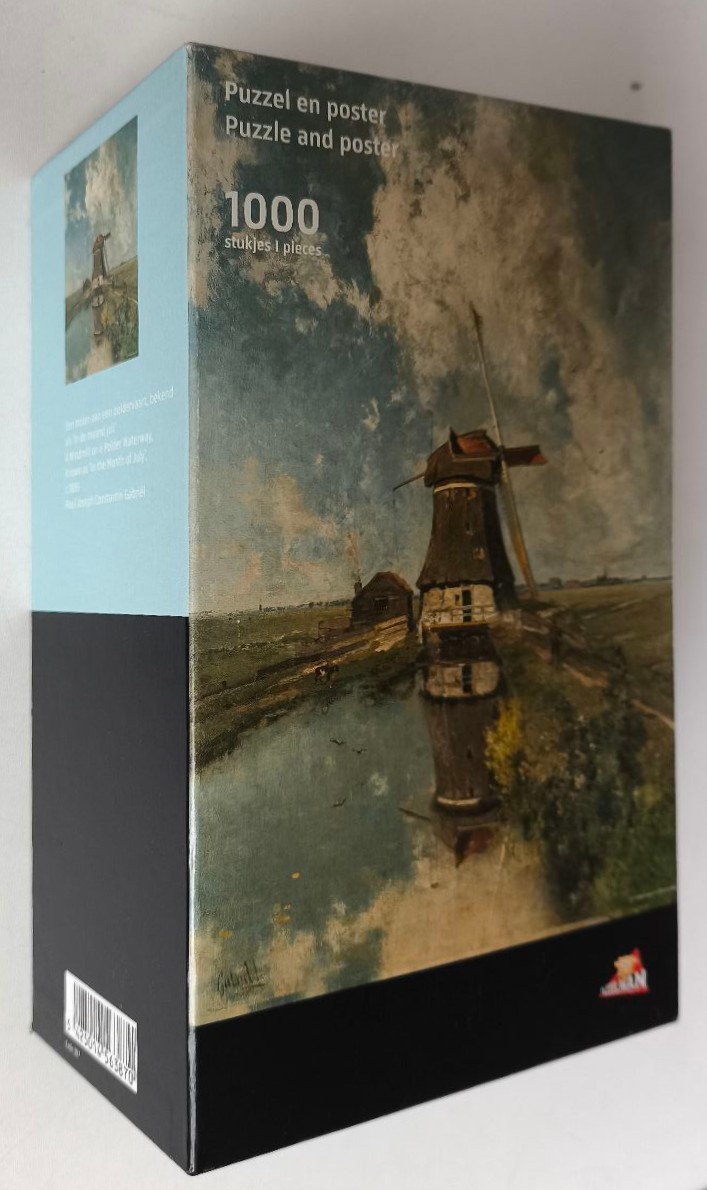
In the Month of July: a Windmill on a Polder Waterway, c. 1889
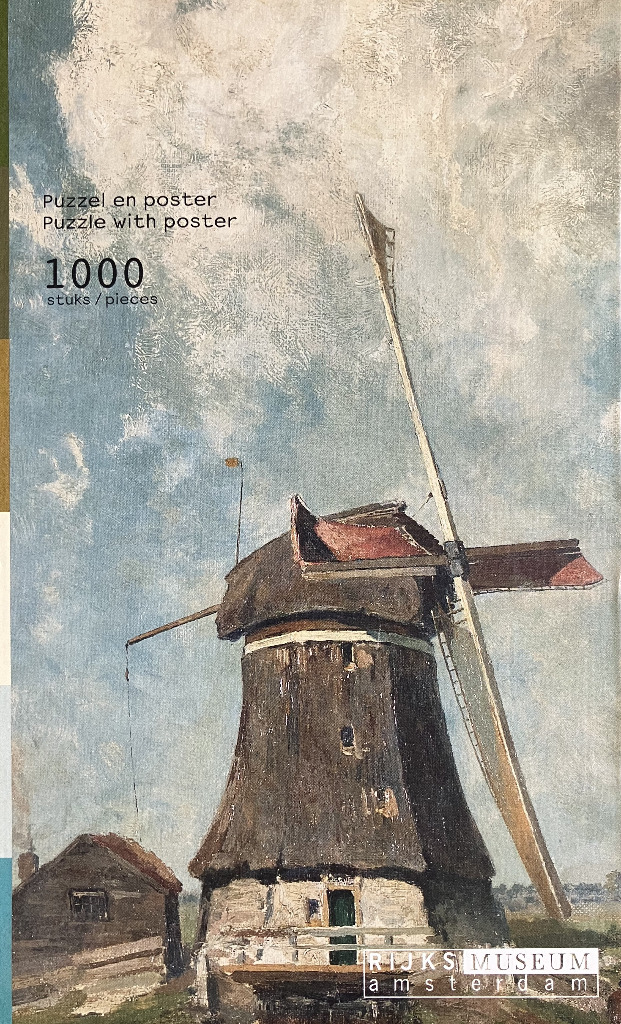
The central focus of this artwork is a traditional Dutch windmill standing prominently in the landscape. It is depicted in an impressionistic style with visible brushwork and textured layers. The windmill features a dark, thatched-style main body and long, prominent sails reaching diagonally upward toward the top right of the frame. To the lower left, a small, humble wooden cottage sits quietly, grounded in the grassy terrain.
The composition is dominated by an expansive, dramatic sky that occupies the upper two-thirds of the image. The clouds are painted in thick, swirling strokes of soft white, grey, and pale blue, suggesting a breezy, overcast day. The lighting is diffused and natural, casting a soft, muted tone over the entire scene, which helps to unify the windmill and the surrounding rural environment.
Created in the style of 19th-century oil painting, the work emphasizes atmosphere over fine detail. The color palette relies heavily on earthy tones—deep browns, ochres, and weathered greys for the structures—contrasted against the cool, airy blues and whites of the sky. The overall mood is serene and nostalgic, capturing the timeless essence of a classic rural landscape.
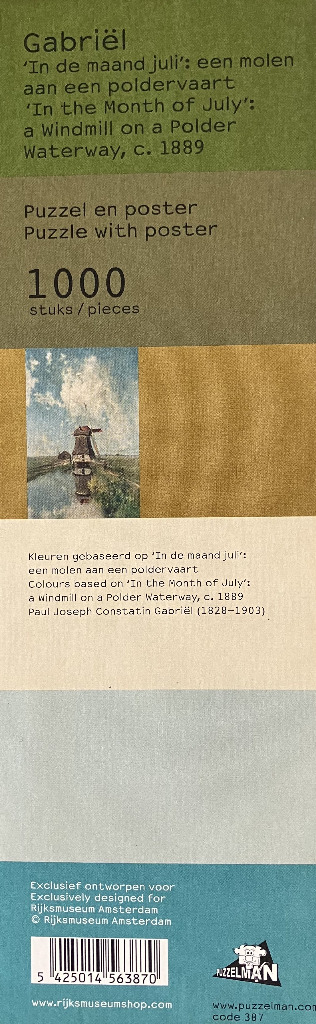
The image features a weathered, traditional Dutch windmill standing prominently in a lush, green rural landscape. The mill, constructed with dark, textured wood and a sturdy base, is positioned centrally, with its sails angled upward. Beside it sits a small, rustic cottage nestled among the grass. A calm canal stretches across the foreground, its surface mirroring the structure of the mill and the expansive sky above, creating a serene and symmetrical visual effect.
Set under a vast, cloud-filled sky, the composition conveys the classic atmosphere of the Dutch countryside. The horizon line is low, emphasizing the grand scale of the sky and the gentle rolling hills in the distance. The overall scene is captured with the loose, expressive brushwork typical of 19th-century oil painting, focusing on the interplay of natural light and shadow.
The colour palette is dominated by cool tones of blue in the sky and water, contrasted by the earthy browns of the windmill and the vibrant greens of the verdant meadow. The light appears diffused, suggestive of a bright, breezy day where sunlight filters through the clouds to highlight textures on the mill and the ripples on the water. This artwork evokes a peaceful, timeless pastoral mood, typical of historical landscape paintings found in museums.
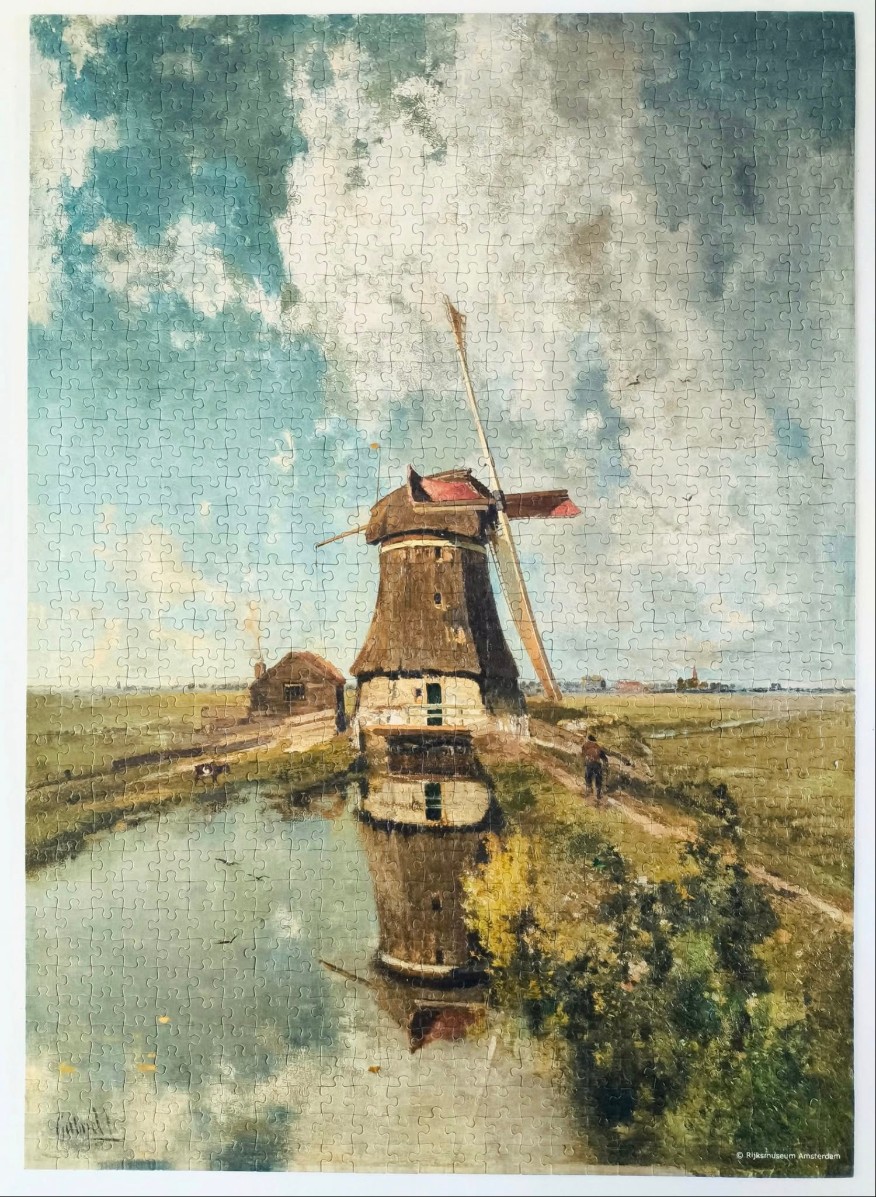
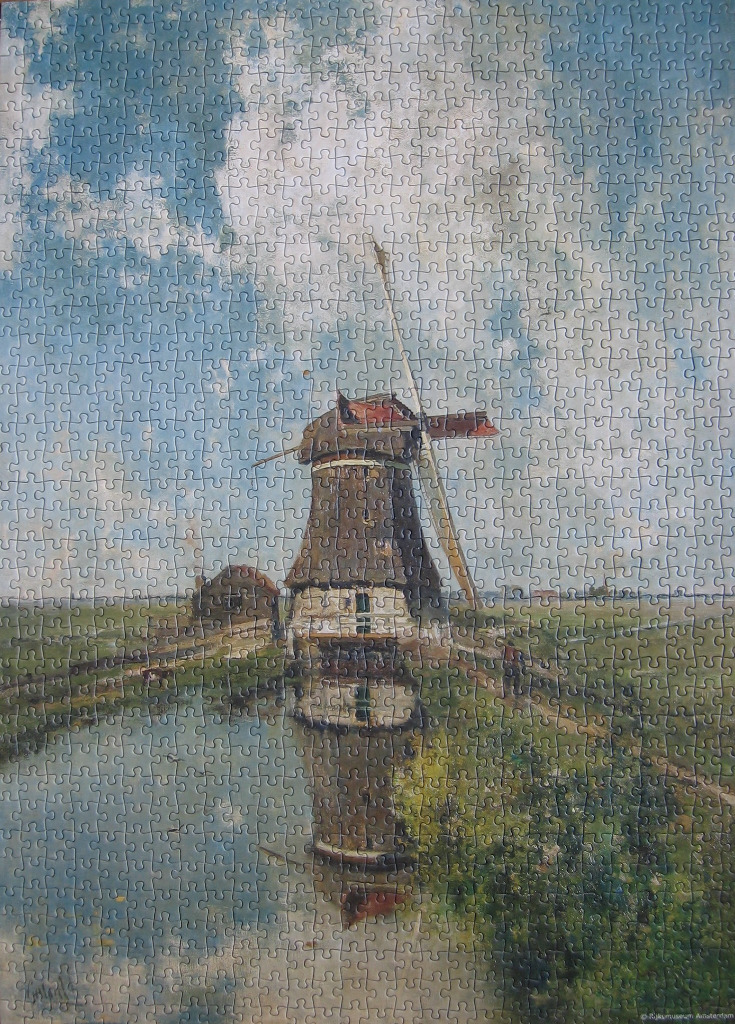
This image features an oil painting of a rustic Dutch windmill, standing prominently in the center of a flat, marshy landscape. The windmill, with its traditional thatch-covered structure, is positioned along the bank of a still canal that mirrors its form. The blades are angled towards the right, and the surrounding terrain is a sprawling, grassy plain that stretches into the distance, where a faint silhouette of a village or town can be seen near the horizon.
The composition is dominated by a vast, expansive sky filled with dramatic, turbulent clouds in shades of grey, white, and soft blue. The light suggests a bright but overcast day, casting gentle shadows across the fields and highlighting the reflective surface of the water. The overall palette is composed of muted, earthy tones—ochres, browns, and deep greens of the meadows—contrasted against the cooler, atmospheric blues and greys of the heavens.
A single figure walks along a path beside the water, providing a sense of scale to the quiet, pastoral scene. To the left of the mill, a small cottage sits tucked away in the field. The artistic style is reminiscent of 19th-century landscape painting, characterized by loose, textured brushwork that captures the movement of the clouds and the stillness of the rural countryside. The atmosphere is one of serene, timeless melancholy.