Cat's Eyes
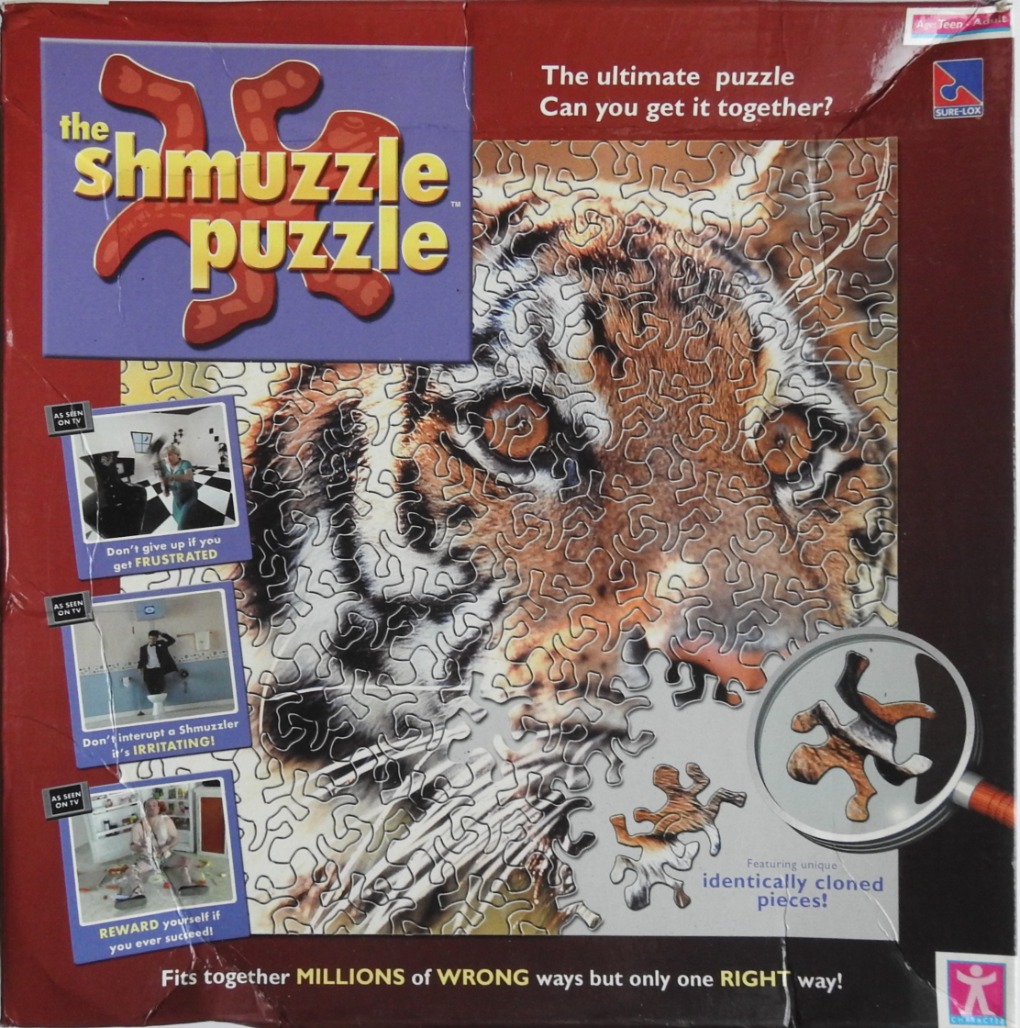
The central artwork features a striking, high-detail photograph of a tiger's face, focusing specifically on its intense, amber-colored eyes and the complex patterns of its black-and-orange fur. The image is rendered with a unique cutting style where the pieces themselves are all shaped identically in a repeating, non-traditional curvilinear pattern that resembles small, stylized amoebas or puzzle-like icons.
To the left of the main image, three small inset snapshots depict people in humorous, frustrated scenarios, such as someone hitting their head, looking annoyed in a bathroom, and sitting surrounded by scattered pieces. In the lower right corner, a magnifying glass illustration hovers over the surface, highlighting the repeating shape of the individual pieces and showing how they fit together in a repetitive, uniform interlocking pattern.
The overall composition balances the natural, organic textures of the tiger with the rigid, mechanical repetition of the cutting design. The color palette relies heavily on the warm, earth-toned oranges and deep blacks of the tiger's coat, contrasted against a deep red and purple background on the frame. The effect is one of visual complexity, emphasizing the difficulty of fitting together pieces that share identical, unusual forms.
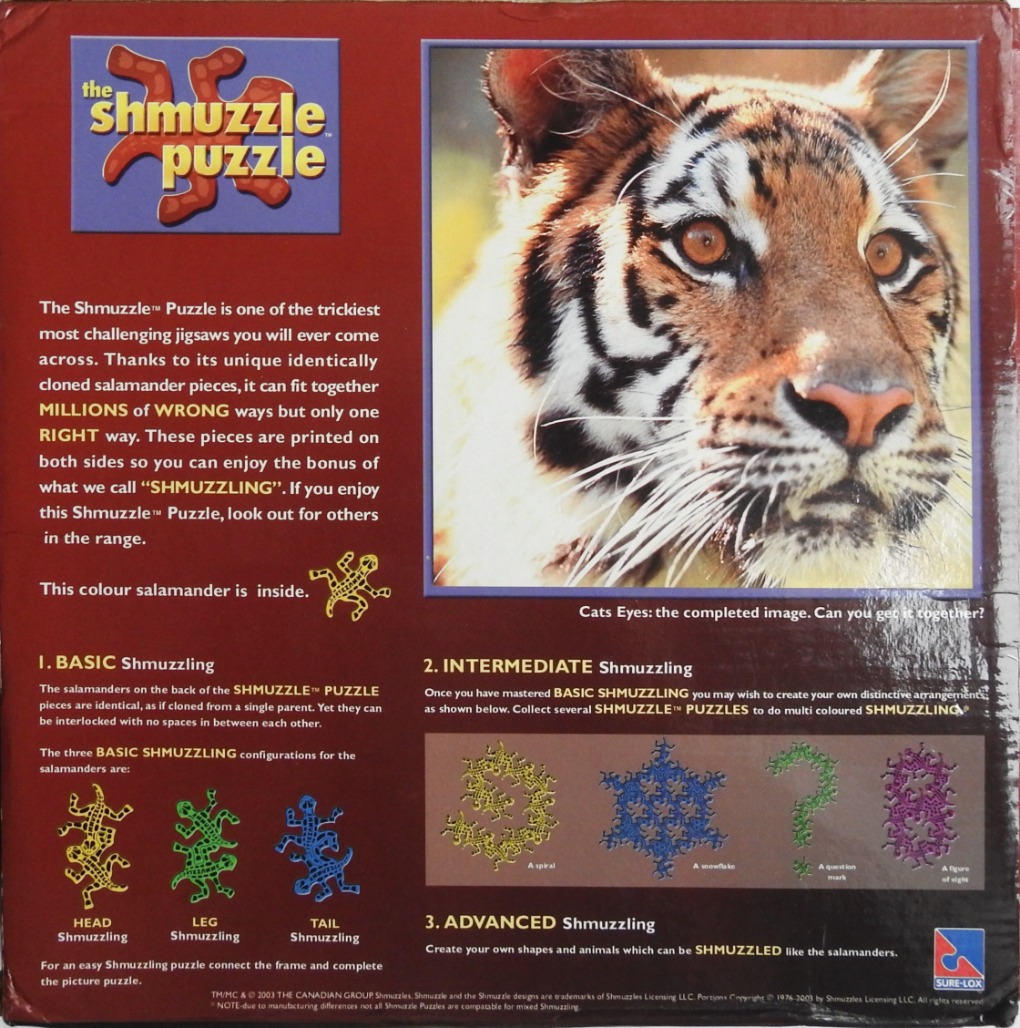



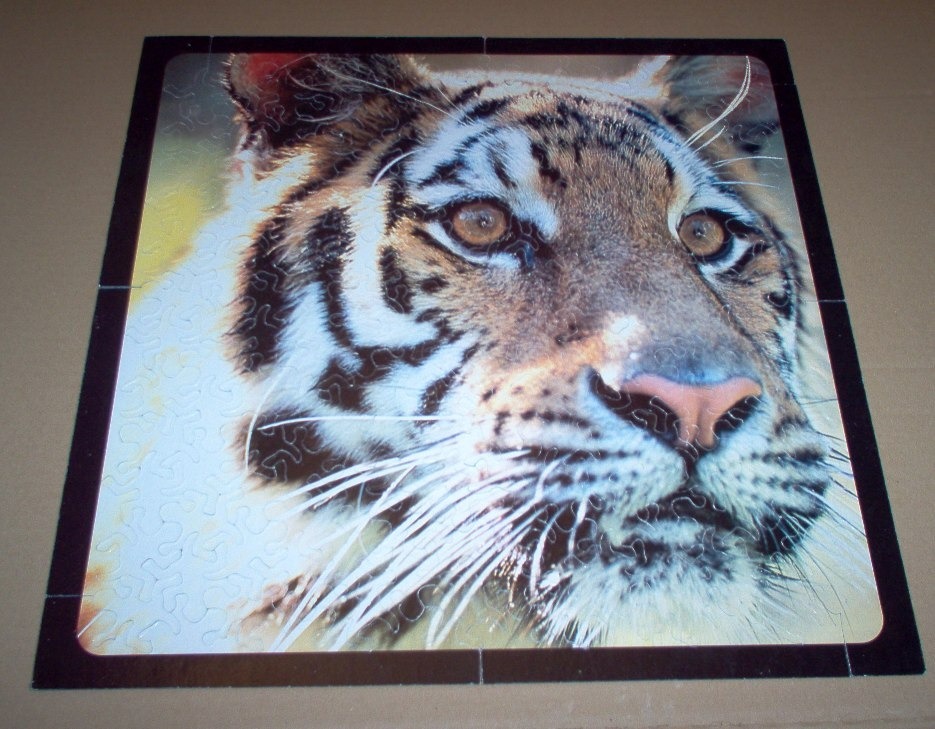
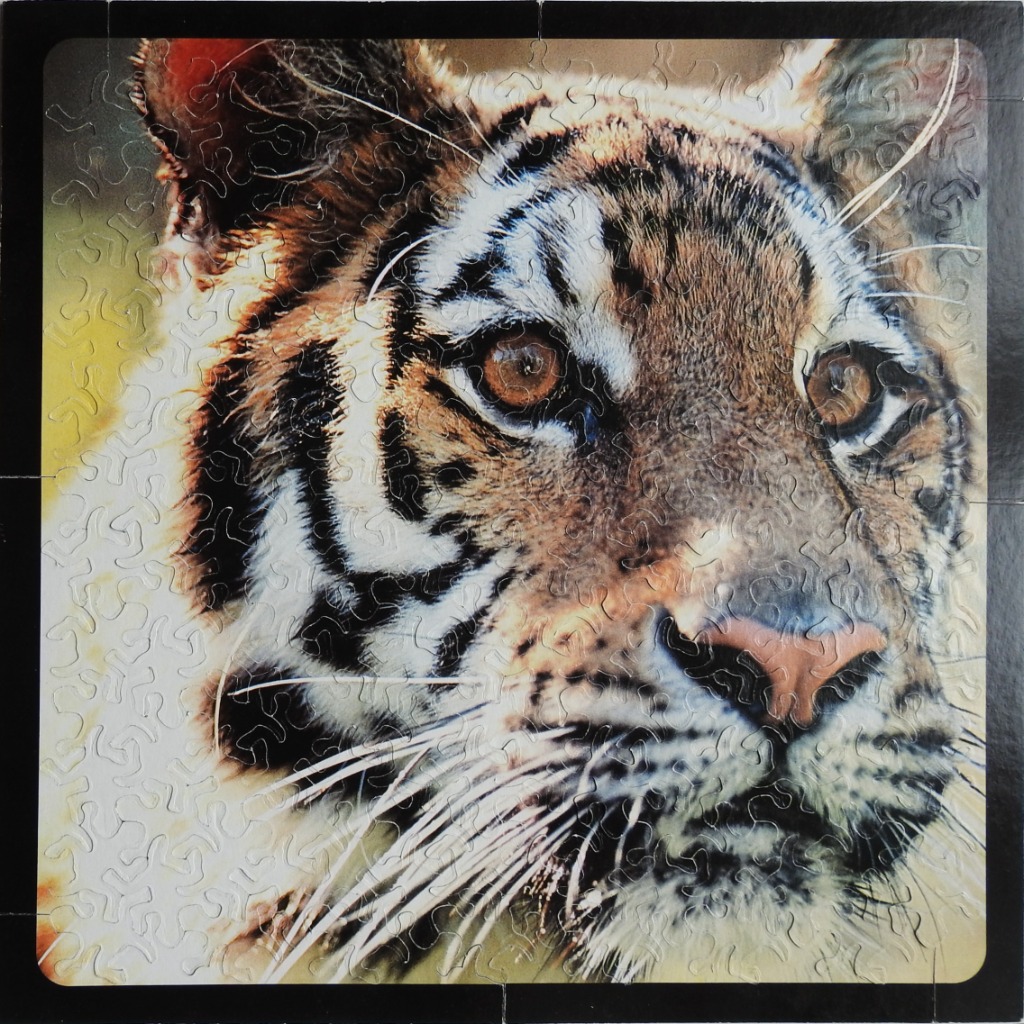
This high-resolution photograph features a striking, tight close-up portrait of a tiger's face. The tiger is positioned to the right of the center, looking off to the side with an intense, steady gaze. Its golden-brown eyes are the clear focal point, capturing a sense of alertness and natural majesty.
The animal's fur is rendered in rich, realistic detail, showcasing the classic orange and black striped pattern. The thick, textured coat transitions from deep, dark stripes on the forehead to a lighter, creamy white fur around the muzzle and cheeks. Long, crisp white whiskers sweep outward from the nose and chin, adding depth and a sense of movement to the composition.
The lighting is warm and natural, highlighting the golden tones in the tiger’s eyes and the fine texture of its fur. The background is soft and out of focus, appearing as a blurred blend of earthy greens and yellows, which keeps the attention squarely on the tiger's expressive features. The overall style is a classic nature portrait, emphasizing the sharp details of the tiger's anatomy, from the slight pink hue on its nose to the subtle variations in the dark fur along its brow.