Peasants Making Music in an Inn (1635)
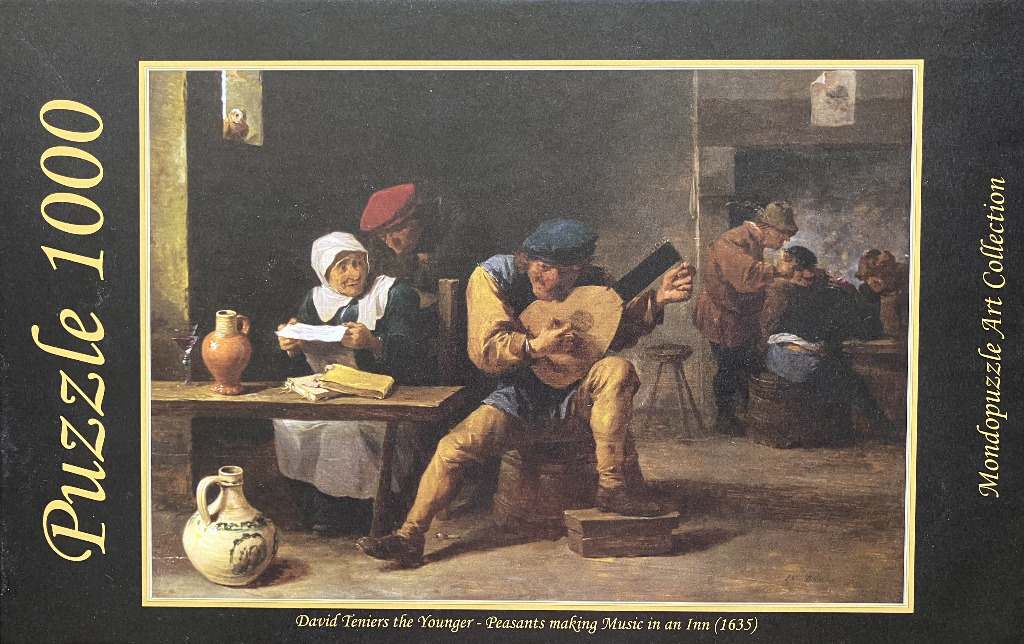
The central focus of this 17th-century oil painting is a musician seated on a barrel, playing a lute. To his left, an elderly woman wearing a white cap sits at a wooden table, intently reading a document. Beside her on the table sit a pitcher and a glass of wine, while a larger ceramic jug rests on the floor in the foreground. Behind the musician, a third figure wearing a red cap leans in, partially obscured by shadow.
The scene is set within the dim, rustic interior of an inn, characterized by earth tones, deep shadows, and a muted, atmospheric palette. The composition is balanced by secondary figures in the background to the right, where a man appears to be attending to another person seated on a barrel near a hearth. The lighting is soft and directional, highlighting the figures while leaving corners of the room in darkness.
The artwork is rendered in the classic style of a Dutch Golden Age genre painting, featuring detailed textures on the clothing and ceramic wares. The composition evokes a sense of quiet, daily life in a tavern, with brushwork that prioritizes the interplay between light and dark to create depth and a contemplative, somber mood. The overall effect is one of realism and historical observation, capturing a candid moment of leisure.


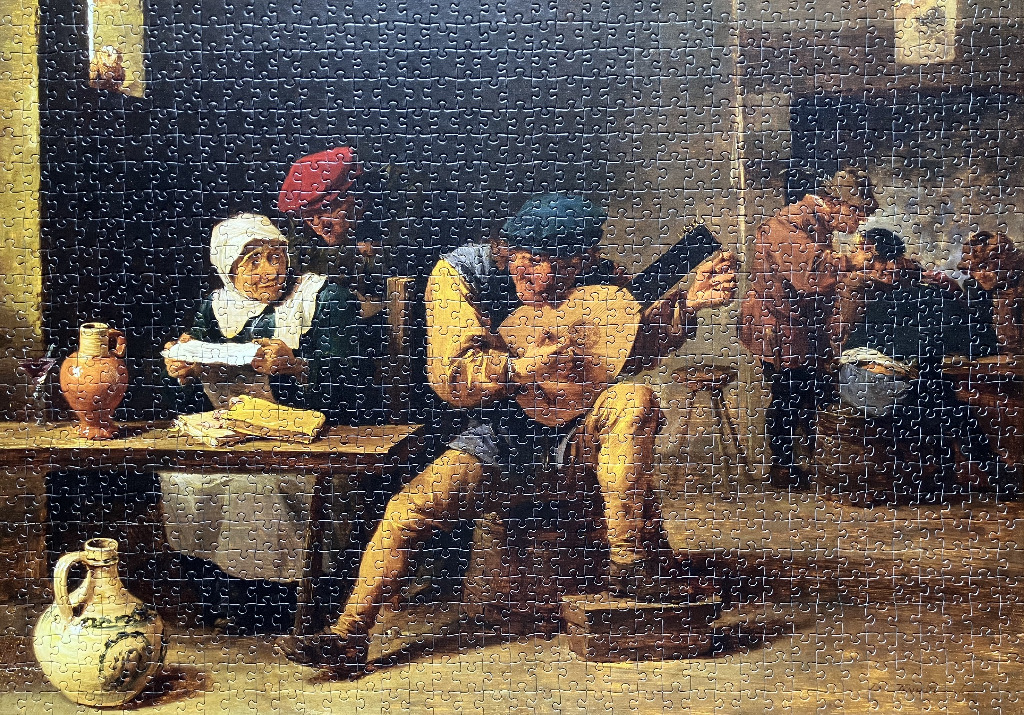
This atmospheric genre painting depicts a dimly lit tavern interior filled with rustic figures. At the centre, a man wearing a blue cap sits on a wooden block, intensely focused on playing a lute. To his left, an elderly woman with a white headscarf sits at a wooden table, examining a small document. Beside her, a prominent ceramic jug sits on the table, while another larger, decorated vessel rests on the floor in the foreground.
The composition is anchored by the central musician and the seated woman, creating a balanced scene of quiet activity. In the background, partially obscured by shadow, other figures are gathered around a table, suggesting a social atmosphere. A small, bright window high on the left wall serves as a primary light source, creating a sharp contrast between the illuminated figures and the deep, dark surroundings.
The painting uses a warm, earthy palette dominated by ochres, deep browns, and muted blues. The chiaroscuro technique emphasizes the textures of the period clothing, the grain of the wooden furniture, and the weathered expressions of the peasants. The style is reminiscent of 17th-century Dutch or Flemish Old Masters, characterized by realistic detail and a narrative focus on everyday life.