Crimson Fiesta
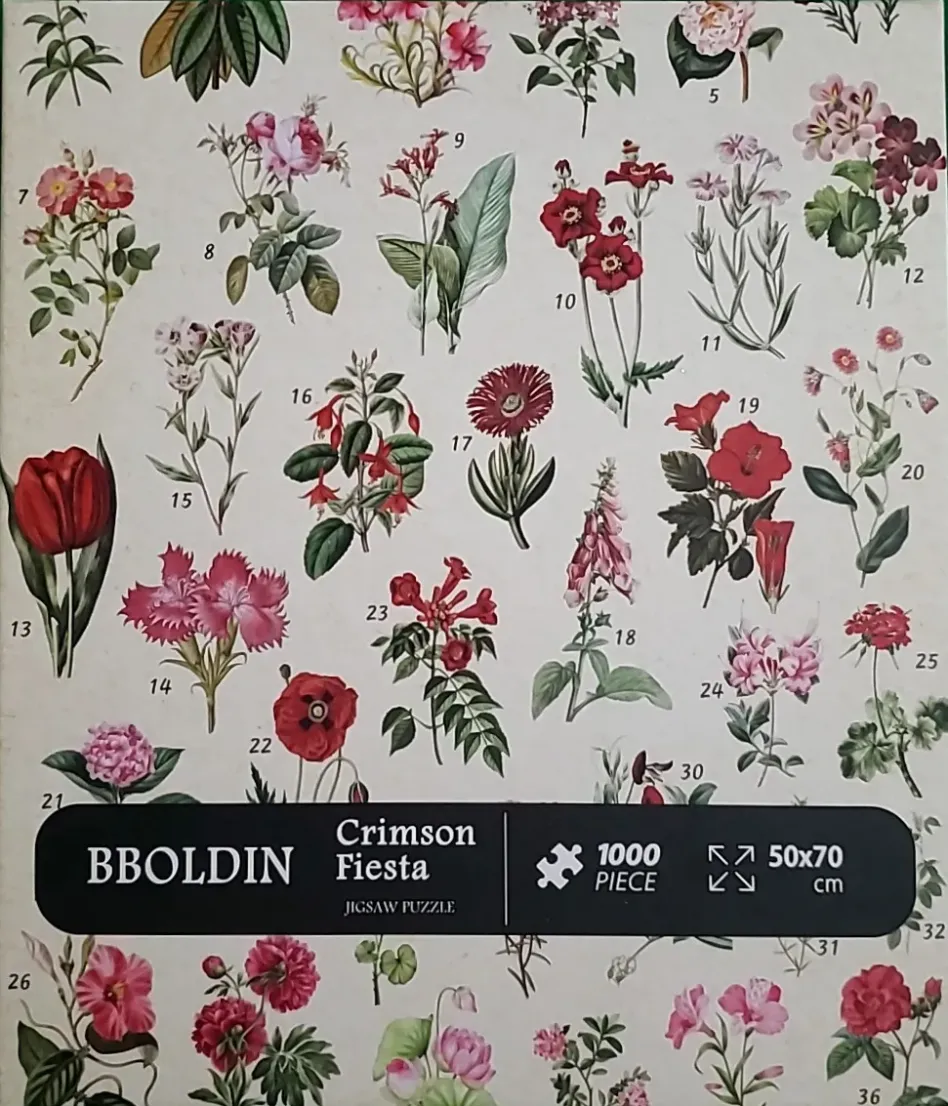
This botanical print features a curated collection of various flowers, primarily rendered in shades of red, crimson, and delicate pink. The illustration style is reminiscent of classic Victorian nature studies, focusing on precise anatomical detail, naturalistic leaf structures, and soft, muted colour palettes against a light cream-coloured background. Each plant is depicted as an individual specimen with its own stem, foliage, and bloom, arranged in a loosely ordered grid.
Individual flowers are numbered with small, dark Arabic numerals, suggesting an educational or cataloguing purpose for the artwork. The composition spans a variety of floral species, including distinct red tulips, poppies, fuchsias, and hibiscus-like blossoms, alongside smaller, clustered pink buds and sprigs. The spacing between the plants is generous, allowing each botanical drawing to be viewed clearly without clutter.
Technically, the medium appears to be a digital rendering or fine ink-and-wash style illustration, capturing the intricate veining of leaves and the delicate texture of petals. The overall mood is academic, serene, and vintage-inspired, emphasizing the organic elegance of the selected flora. The arrangement maintains a sense of balanced asymmetry, making the various shapes and sizes of the plants feel harmonious across the frame.
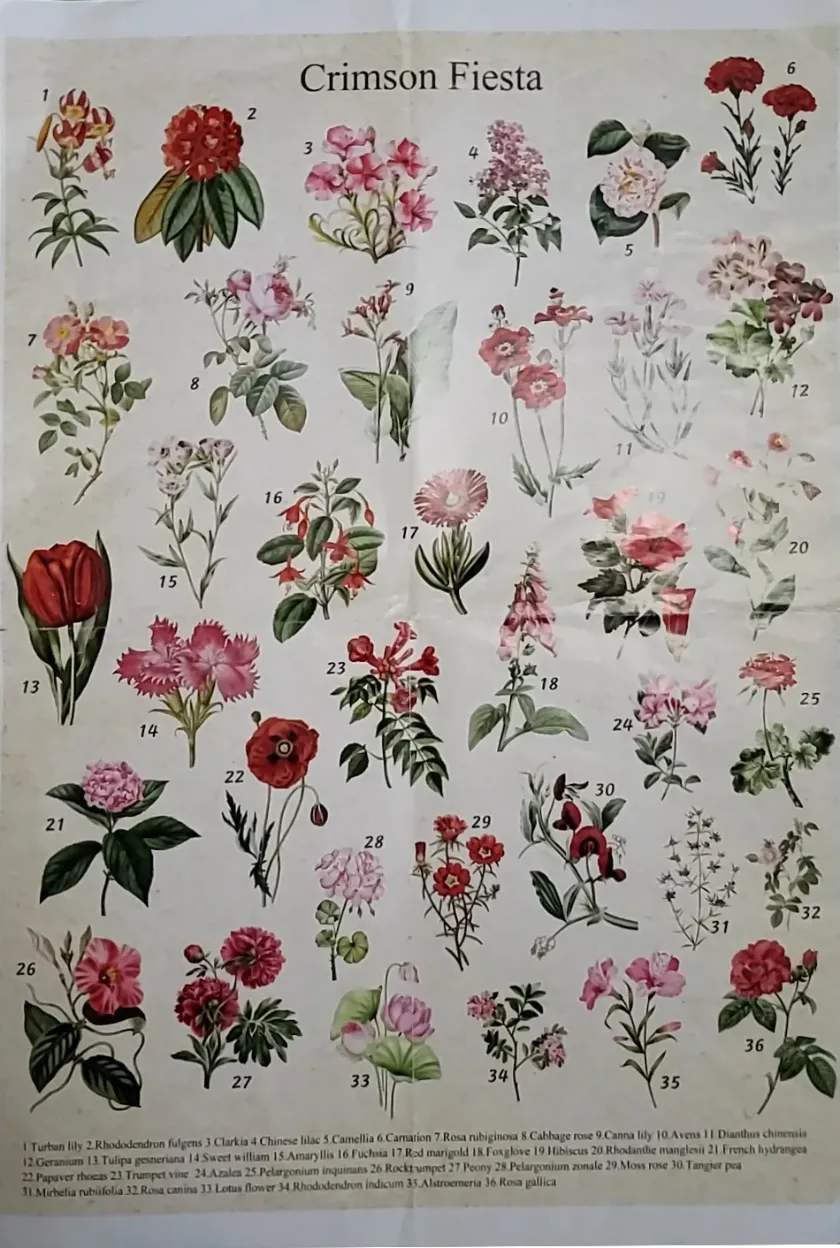
This botanical illustration presents a systematic collection of thirty-six distinct flowers, arranged in a grid-like pattern across a light cream-colored field. At the top, the title "Crimson Fiesta" is printed in a clean, black serif font. Each floral specimen is individually rendered with scientific precision, showcasing varying shades of red, pink, and white blossoms, accompanied by their characteristic foliage, stems, and buds.
Each flower is assigned a small black number corresponding to a key at the bottom of the page, which lists their names such as Turban lily, Rhododendron, Camellia, and Peony. The composition is structured as an educational reference chart, with each plant spaced evenly to allow for clear observation of their unique botanical structures, from the intricate petals of the poppies to the layered blooms of the roses and carnations.
The artwork style is reminiscent of classic 19th-century botanical prints, utilizing fine lines and soft color washes to create a vintage aesthetic. The lighting is flat and even, highlighting the detailed textures of leaves and petals without cast shadows. The overall mood is scholarly, serene, and appreciative of natural beauty, capturing a diverse array of garden flora in a disciplined, cataloged format.