(No Name)
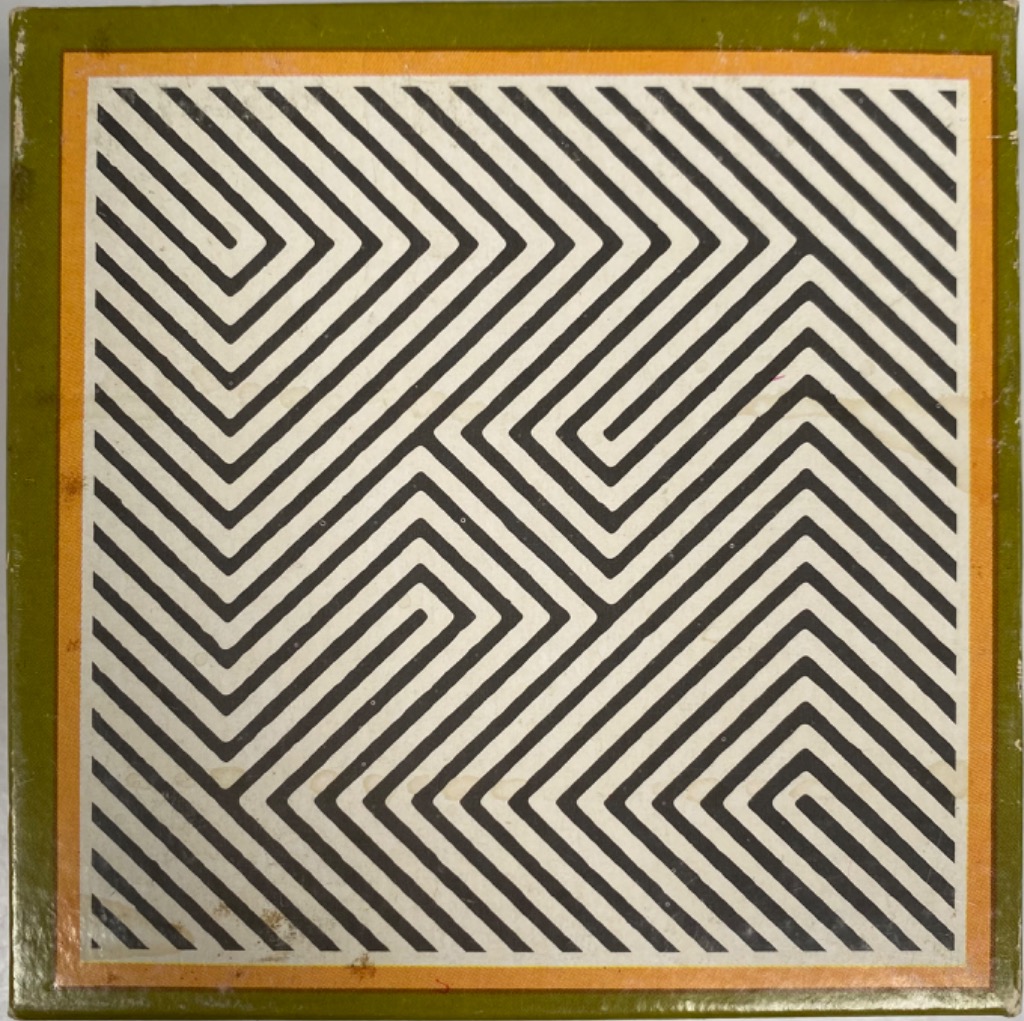
This image features an op-art style geometric composition consisting of repeating black and white angular lines. The central square area is filled with a pattern of dark, thick lines that form interconnected, zig-zagging motifs, creating a sense of rhythmic motion and depth. The lines are arranged in a series of ninety-degree turns that mirror and repeat across the plane, resulting in a complex, labyrinth-like appearance that draws the eye across the surface.
The central monochromatic square is framed by two distinct borders. Immediately surrounding the pattern is a thin, warm orange square border, which is then enclosed by a wider, solid olive-green outer frame. This layering of borders provides a sharp contrast to the high-contrast black and white graphic center.
The aesthetic is minimalist and mid-century modern in style, relying on clean lines and a structured, mathematical layout to create its visual impact. The overall tone is orderly and kinetic, characteristic of optical illusions that prioritize geometric precision over representational subject matter.
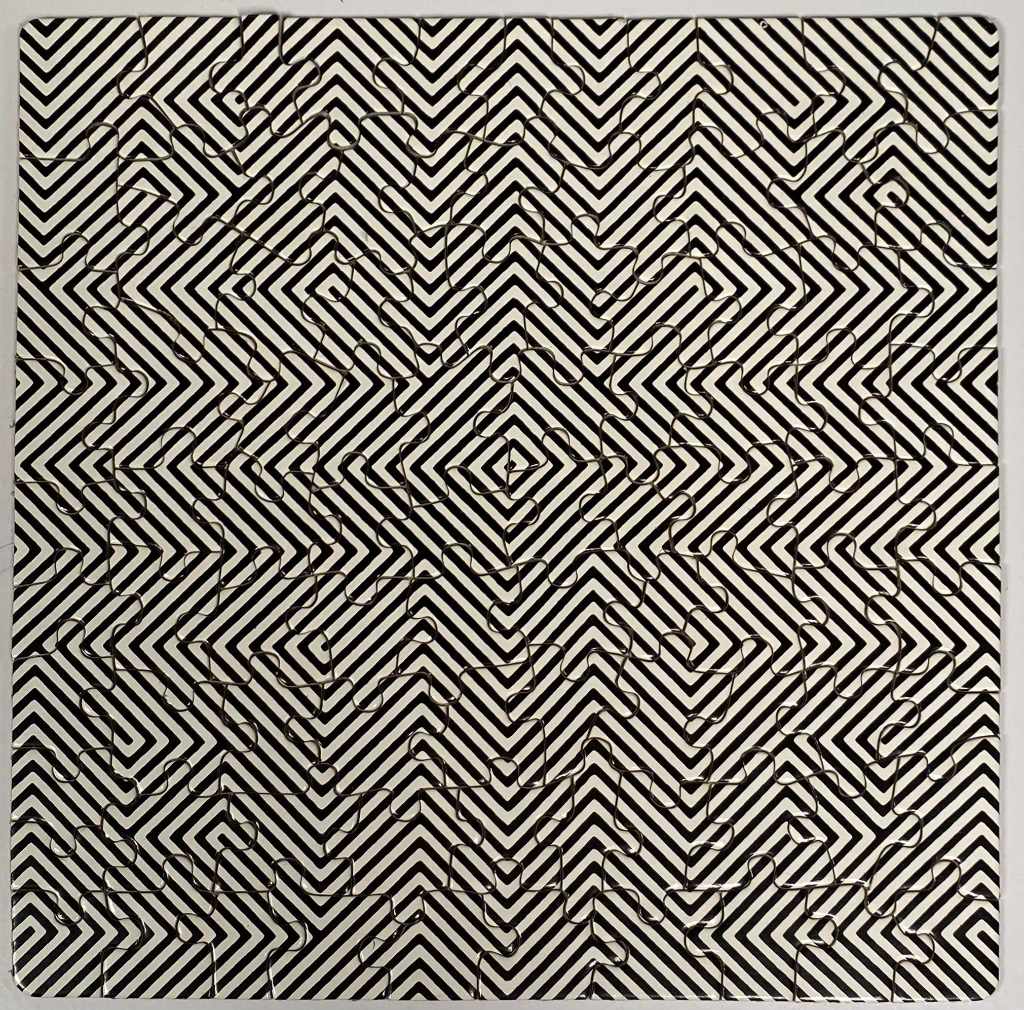
This image displays a stark, high-contrast optical illusion created through a repeating geometric pattern. The design consists entirely of black and white stripes arranged in a series of nested chevrons and diamonds, creating a rhythmic, hypnotic effect that draws the eye toward the center. The composition is highly symmetrical, with the lines radiating outward from a central diamond shape, repeating the sequence across the entire square field.
Technically, this is a minimalist graphic illustration, focusing on clean lines and sharp edges to manipulate perception. The interaction of the black and white stripes creates a sense of depth and vibration, characteristic of Op Art. There are no secondary details, figures, or background elements; the pattern serves as both the foreground and the entire content of the image, relying solely on the geometry and the interplay of negative and positive space to create its visual impact.
by Gingrins 2025-01-06