Painting with Red Spot
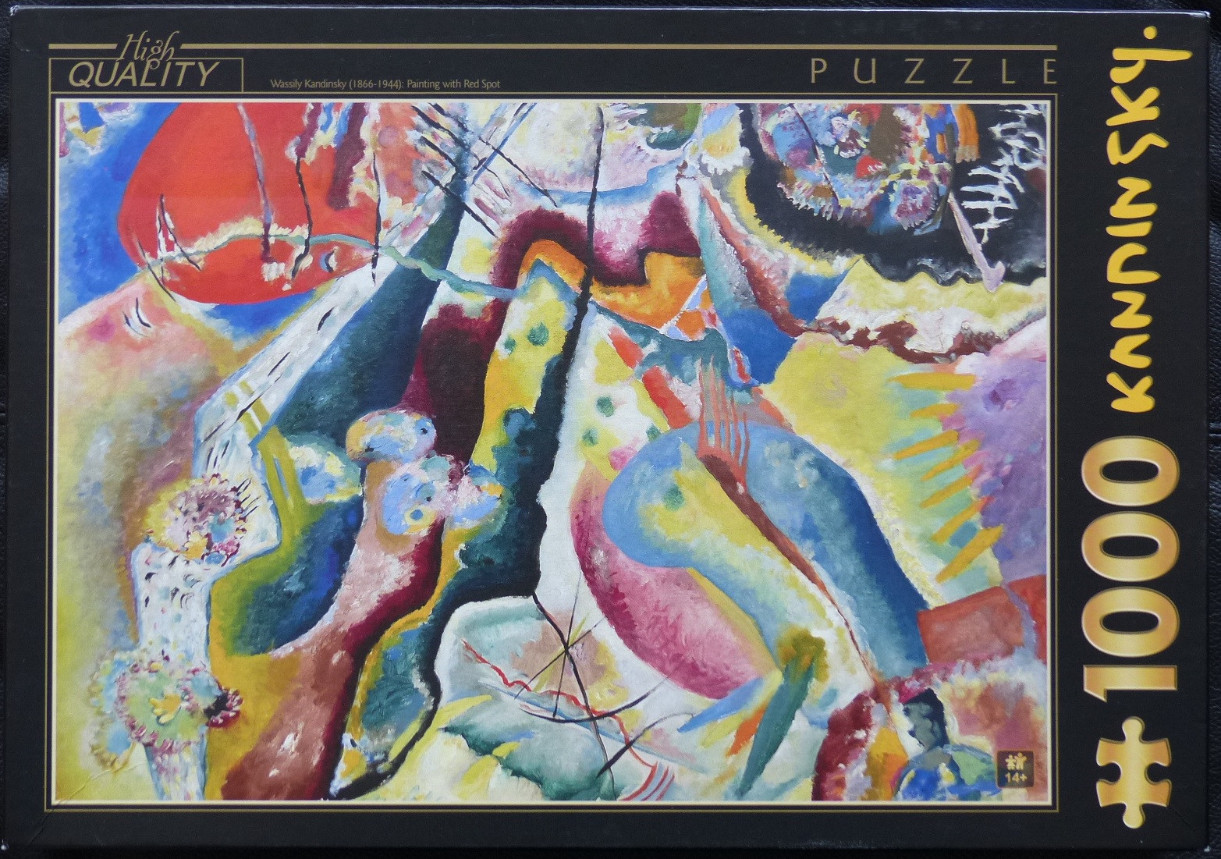
This abstract painting, titled "Painting with Red Spot" by Wassily Kandinsky, is a dynamic composition of fluid forms, bold geometric shapes, and expressive lines. The scene is anchored by a large, prominent red oval in the upper-left quadrant, which serves as a focal point against a backdrop of swirling color fields. These fields transition from deep blues and dark, murky greens to bright patches of canary yellow, pale pink, and soft lavender, creating a sense of layered depth and movement.
The composition is non-representational, characterized by a complex interplay of intersecting black lines, delicate squiggles, and scattered marks that suggest a rhythmic, almost musical chaos. Some areas feature clusters of intricate, almost floral-like speckles, while other sections are defined by broad, sweeping strokes of pigment. The layout lacks a traditional horizon line, instead drawing the viewer's eye across the canvas through the interaction of contrasting hues and varying brush textures.
The piece exhibits the signature style of early 20th-century abstract expressionism. The light seems to emanate from within the layers of paint, giving the image a luminous quality. The combination of intense primary colours balanced against softer, pastel-toned washes creates an overall feeling of joyful energy and intellectual complexity, typical of the artist's exploration into the emotional resonance of colour and form.
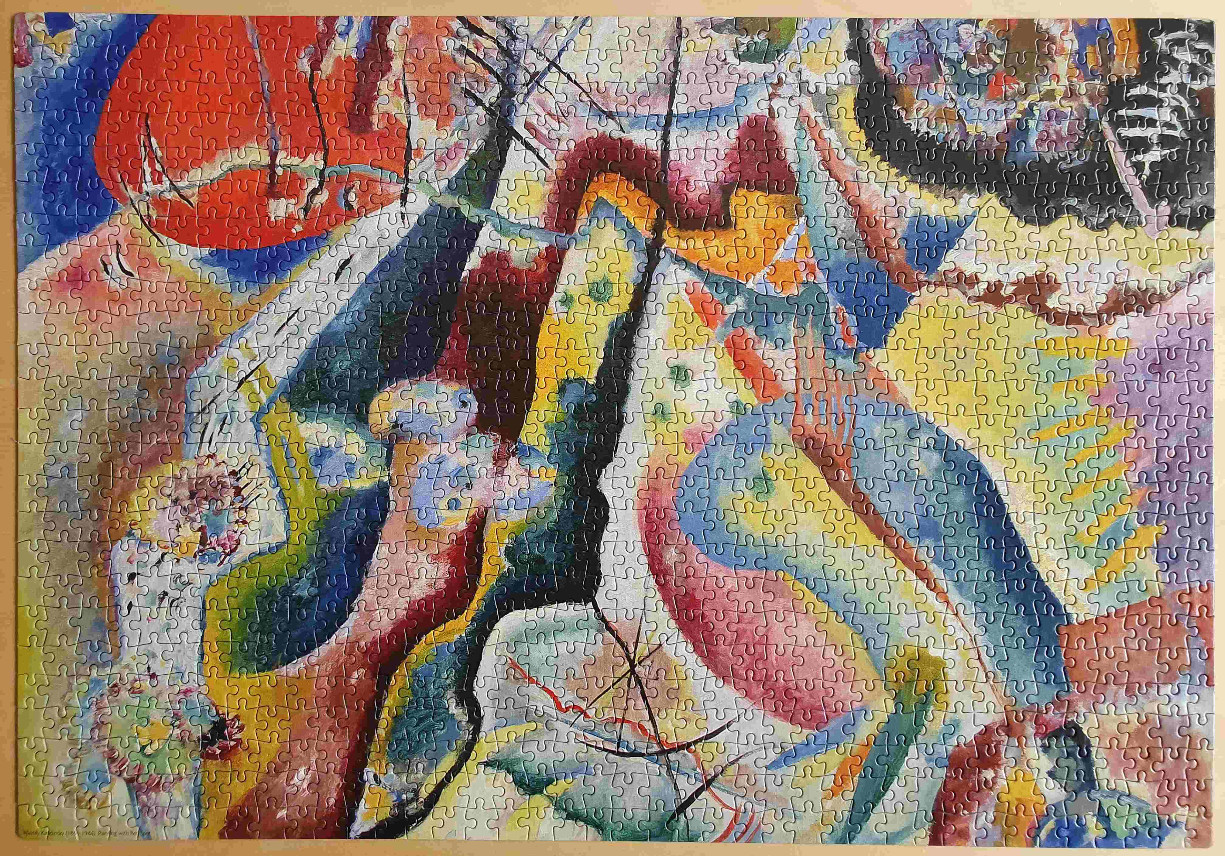
This image captures a vibrant abstract expressionist painting characterized by a complex, layered composition of organic shapes and expressive marks. A large, dominant semi-circular red form anchors the upper left quadrant, contrasted by sweeping gestural black lines that cut across the canvas, suggesting movement and depth. The composition lacks a traditional focal point, instead inviting the eye to wander through an intricate network of interconnected, irregular shapes and textures that occupy the entire space.
The colour palette is intense and varied, featuring a mix of warm and cool tones. Bright yellows and oranges sit alongside softer blues, greens, and muted earth tones, creating a rhythmic sense of harmony and discord. The application of paint suggests a variety of techniques, with some areas featuring solid washes of colour while others display stippled patterns, subtle gradients, and overlapping layers that imply translucency.
Overall, the work conveys a high-energy, emotive mood typical of early twentieth-century avant-garde art. There are no recognizable figures or landscapes; instead, the focus remains on the interplay between form, line, and hue. The visual experience is dynamic and restless, with the density of shapes and lines creating a feeling of chaotic yet balanced complexity.