Tiger Lily
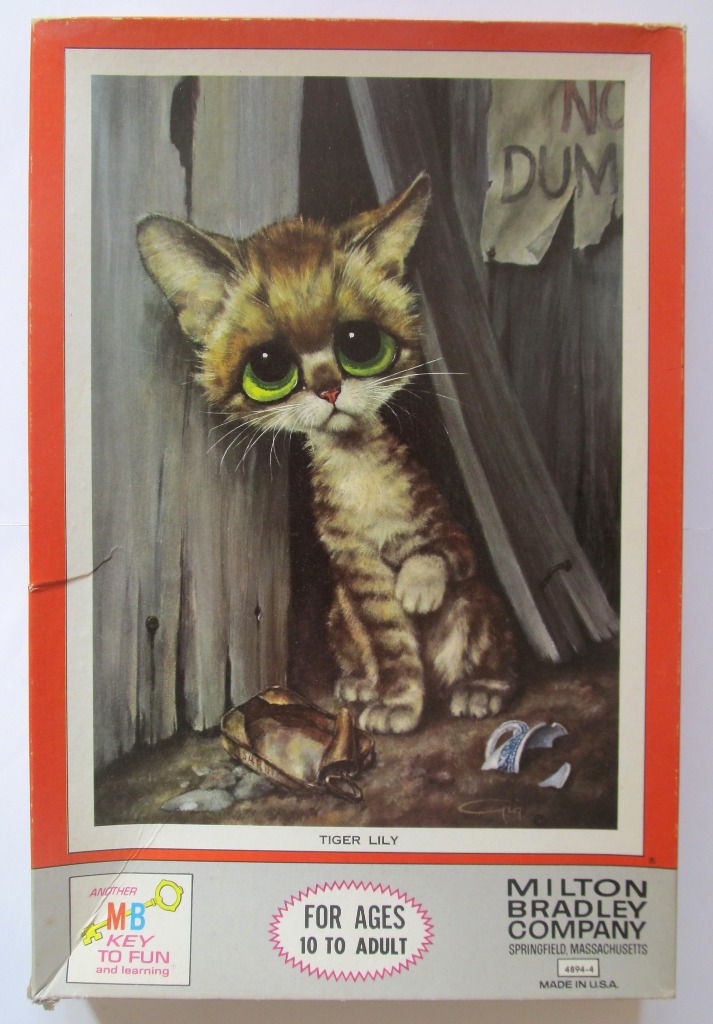
The central focus of this vintage illustration is a small, brown tabby kitten with oversized, expressive, watery green eyes. The kitten has a forlorn, mournful expression, with its head tilted slightly to one side. It is posed in a sitting position, looking out from a gap in a weathered, grey wooden fence. Its fur is rendered in shades of brown, tan, and cream, giving it a soft, textured appearance.
Behind the kitten, the fence panels are worn and splintered, with a torn piece of paper partially visible on the right side that bears the faint text "NO DUMP". In the foreground, scattered on the dark, earthy ground, are a discarded, dented metal food tin and a broken piece of blue and white ceramic pottery. The composition uses a low angle that emphasizes the kitten's helplessness and diminutive size.
The colour palette is muted and atmospheric, dominated by earthy browns, grays, and the deep, striking green of the kitten's eyes. The lighting is soft and dim, suggesting an overcast or shadowy environment, which reinforces the melancholy mood of the piece. The artwork is executed in a mid-20th-century painterly style, characteristic of the era's popular "big-eyed" animal art. The name "TIGER LILY" is printed in small, simple black text at the bottom edge of the illustration.
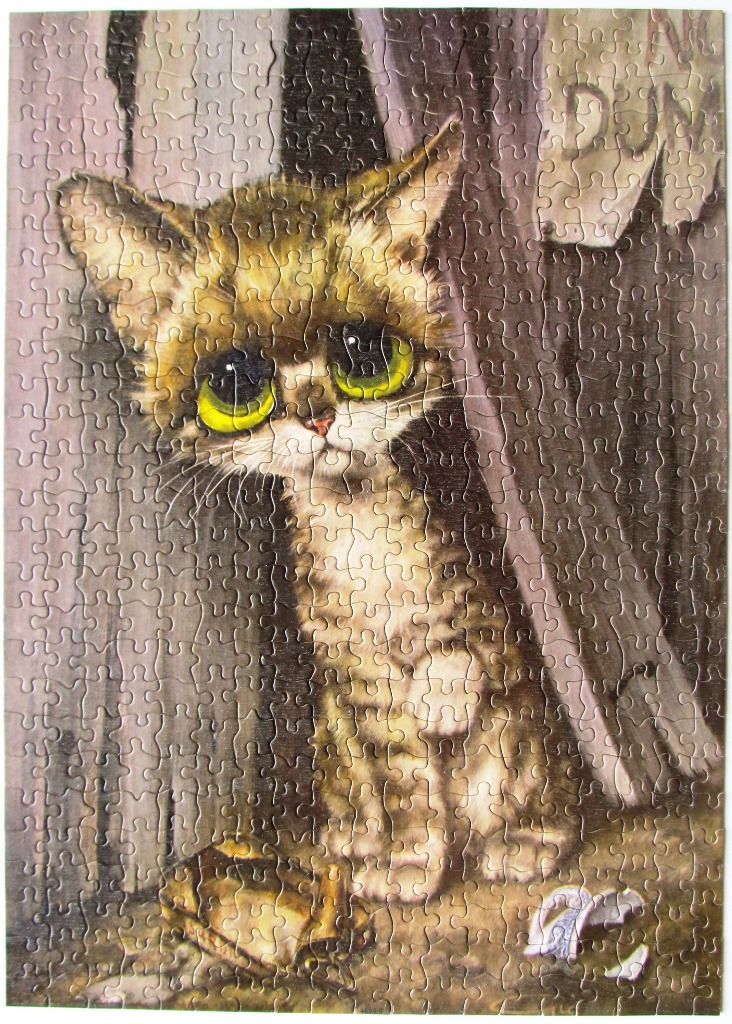
This illustration depicts a melancholic-looking tabby kitten with exaggerated, oversized green eyes that express deep sadness. The cat is small and fuzzy, with mottled brown and cream fur, and it stands in a posture of dejection. Its gaze is directed slightly downward and toward the viewer, reinforcing the poignant and sympathetic mood of the scene.
The kitten is positioned in front of a weathered wooden fence made of vertical planks, which provides a rustic and somber backdrop. The lighting is muted and moody, emphasizing the dark, shadow-filled environment around the cat. At the base of the fence, there is a small, discarded object resembling an old-fashioned lunch box or small trunk, alongside what appears to be a crumpled piece of paper or broken debris, suggesting a narrative of being lost or abandoned.
The artistic style is reminiscent of mid-century sentimental art, characterized by the use of large, expressive eyes to evoke emotional responses. The colour palette is dominated by earthy tones, including shades of brown, tan, grey, and muted charcoal, which complement the dim and lonely atmosphere of the setting. The overall effect is a nostalgic and slightly heart-rending portrait of a vulnerable creature.
by Leonisha 2024-08-17