Delta
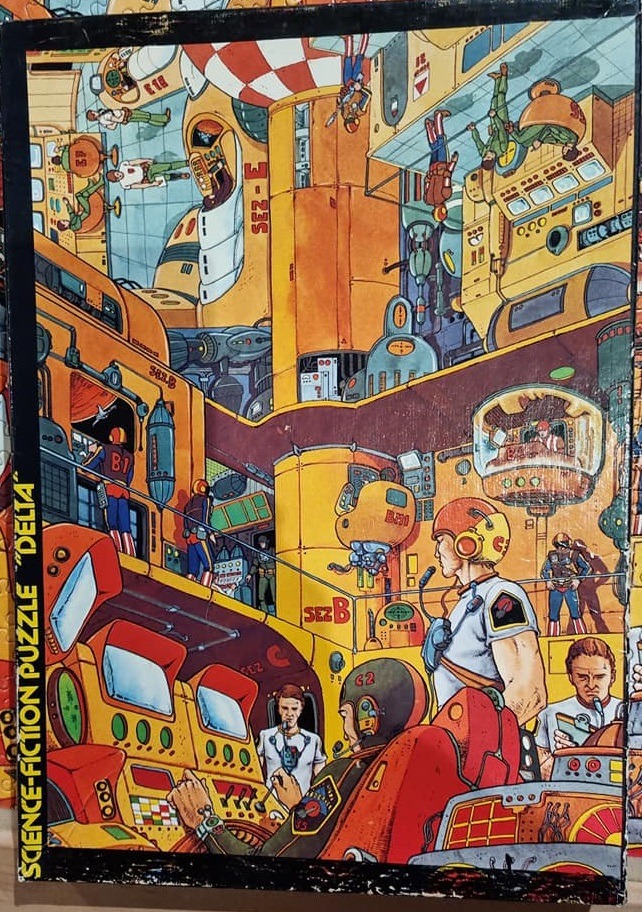
This science fiction illustration depicts a complex, multi-level interior of a futuristic spacecraft or command station. The composition is crowded with industrial machinery, control panels, and various interconnected modules. The perspective is unusual, with characters and equipment oriented in different directions, some seemingly upside down or sideways, suggesting a zero-gravity environment or a labyrinthine ship design. The scene is filled with pipes, observation windows, and technical equipment that create a sense of mechanical density.
In the foreground, several human figures dressed in flight suits and helmets operate the controls. One man in the center wears a white t-shirt and looks towards the viewer, while others are seen interacting with the yellow and red machinery. Their attire, including headphones and patches, reinforces the aeronautical theme. The surrounding architecture is dominated by rounded shapes and modular sections labeled with codes like "SEZ-B," "SEZ-E," and "C2."
The color palette is vibrant and saturated, relying heavily on warm yellows, deep oranges, and bold reds, contrasted against muted metallic greys and cool blue accents on the screens and control panels. The art style is reminiscent of classic mid-20th-century comic book or graphic novel illustration, featuring clear ink outlines, flat color fills, and dramatic, technical shading. The overall mood is one of busy, high-stakes space exploration and mechanical complexity.
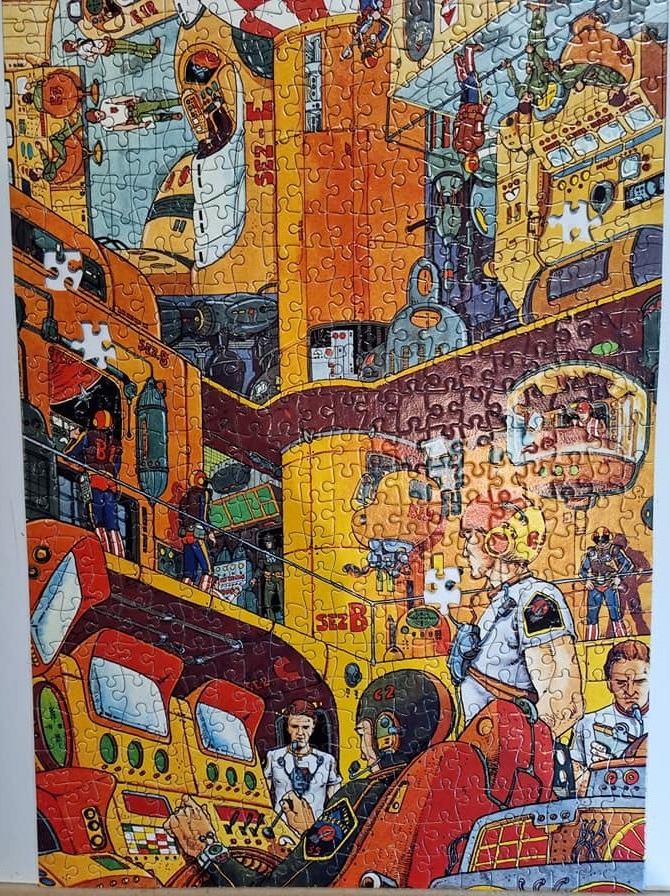
This complex, retro-futuristic science fiction illustration depicts the bustling interior of a high-tech space facility or massive spacecraft. The composition is dense and multi-layered, showing a vertical cross-section of a hangar or command deck. Various levels are connected by walkways and platforms, populated by numerous figures, including pilots in flight gear, technicians working at consoles, and personnel moving through the industrial corridors. Some characters are positioned in cockpits, while others are seen climbing ladders or operating intricate machinery.
The scene is rendered in a distinct comic-book art style, reminiscent of 1970s and 1980s sci-fi aesthetic. The architecture is modular and mechanical, dominated by rounded forms, protruding pipes, and control panels marked with obscure labels like "SEZ-B." The perspective is intentionally dizzying, suggesting a large, multi-level environment where gravity seems secondary to the mechanical layout.
The color palette is vibrant and warm, heavily saturated with golden-yellows, deep oranges, and rusty reds that contrast sharply with dark grey machinery and cool blue accents. The lighting is artificial and varied, casting strong shadows that highlight the textures of the metallic surfaces and the intricate details of the equipment. Overall, the scene evokes a sense of organized chaos, depicting a high-stakes, industrial setting typical of classic space-faring adventures.