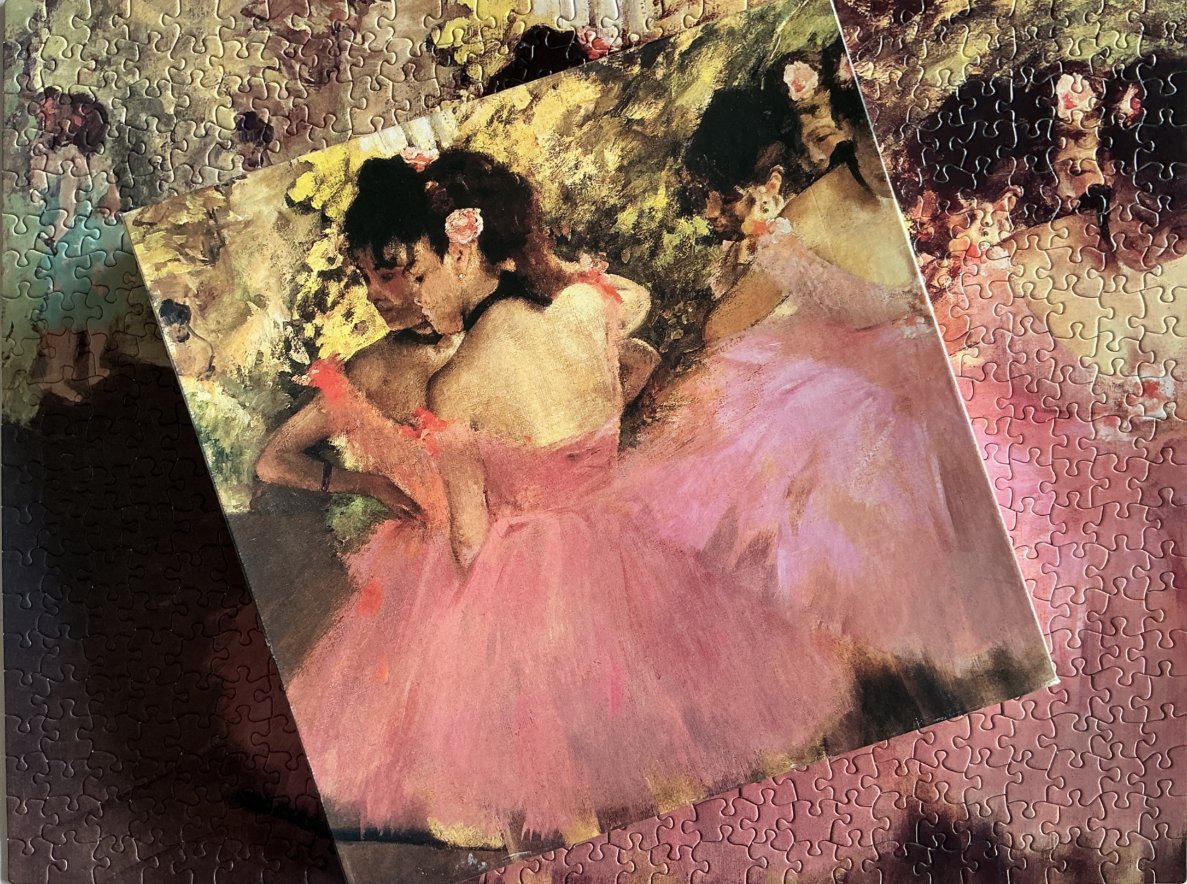
Dancers in Pink
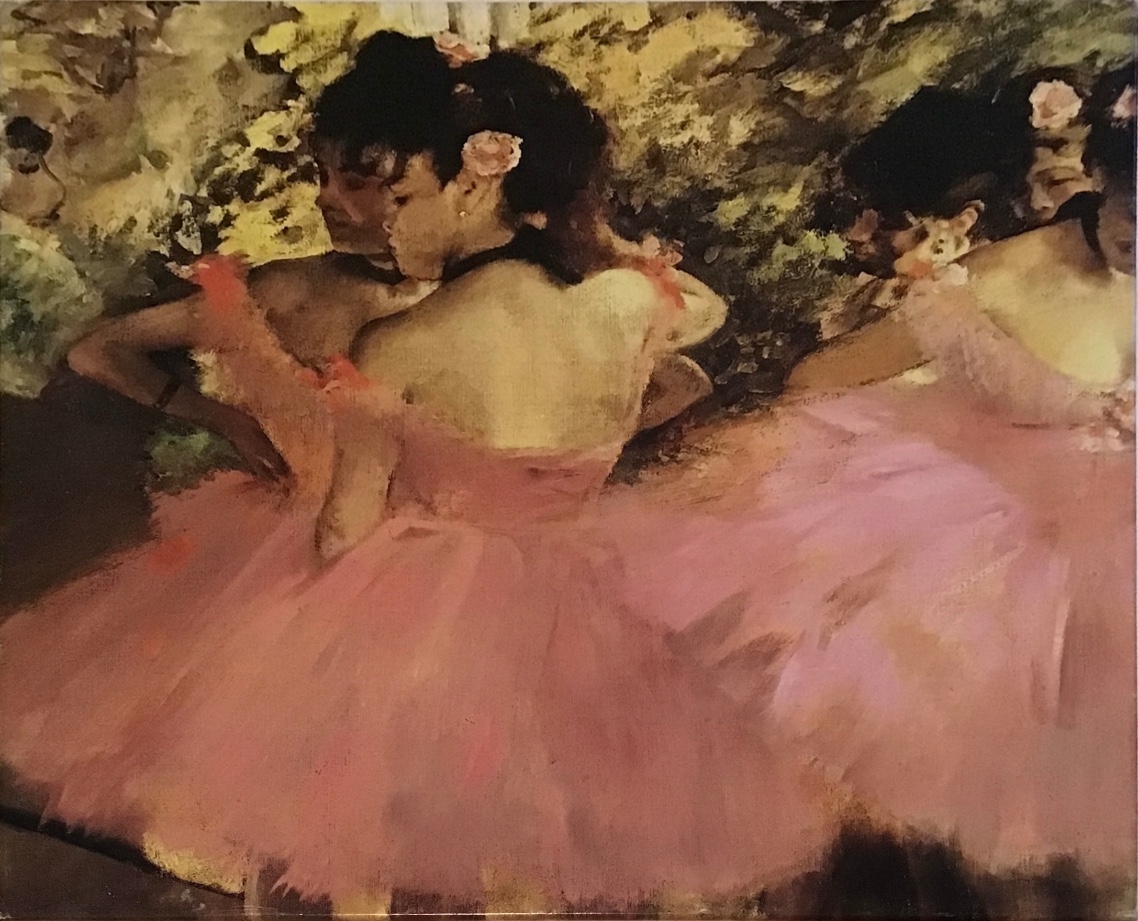
The artwork depicts three young ballet dancers in an intimate, informal setting, likely backstage or in a practice studio. The figures are closely grouped, with the central dancer facing away, highlighting the bare shoulders and neck of her form-fitting bodice. The dancers are dressed in matching pink, voluminous tulle tutus that dominate the lower half of the composition. Each dancer has dark hair pulled back, adorned with subtle floral accents, and they wear thin black ribbons around their necks.
The composition is tight and focused, capturing a fleeting moment of preparation. The dancers are arranged in a horizontal line, with their bodies angled toward each other, creating a sense of quiet camaraderie. The background is abstract and softly out of focus, rendered with loose, expressive brushstrokes in shades of ochre, moss green, and shadow, suggesting a dimly lit, cluttered theater environment.
The style is classic Impressionism, characterized by visible, textured brushstrokes and an emphasis on light and movement rather than precise detail. The color palette relies heavily on soft, dusty pinks, warm skin tones, and earthy greens. The lighting appears soft and directional, catching the edges of the dancers' shoulders and the layers of their skirts, creating a dreamy, atmospheric mood that captures the elegance and backstage reality of the ballet.

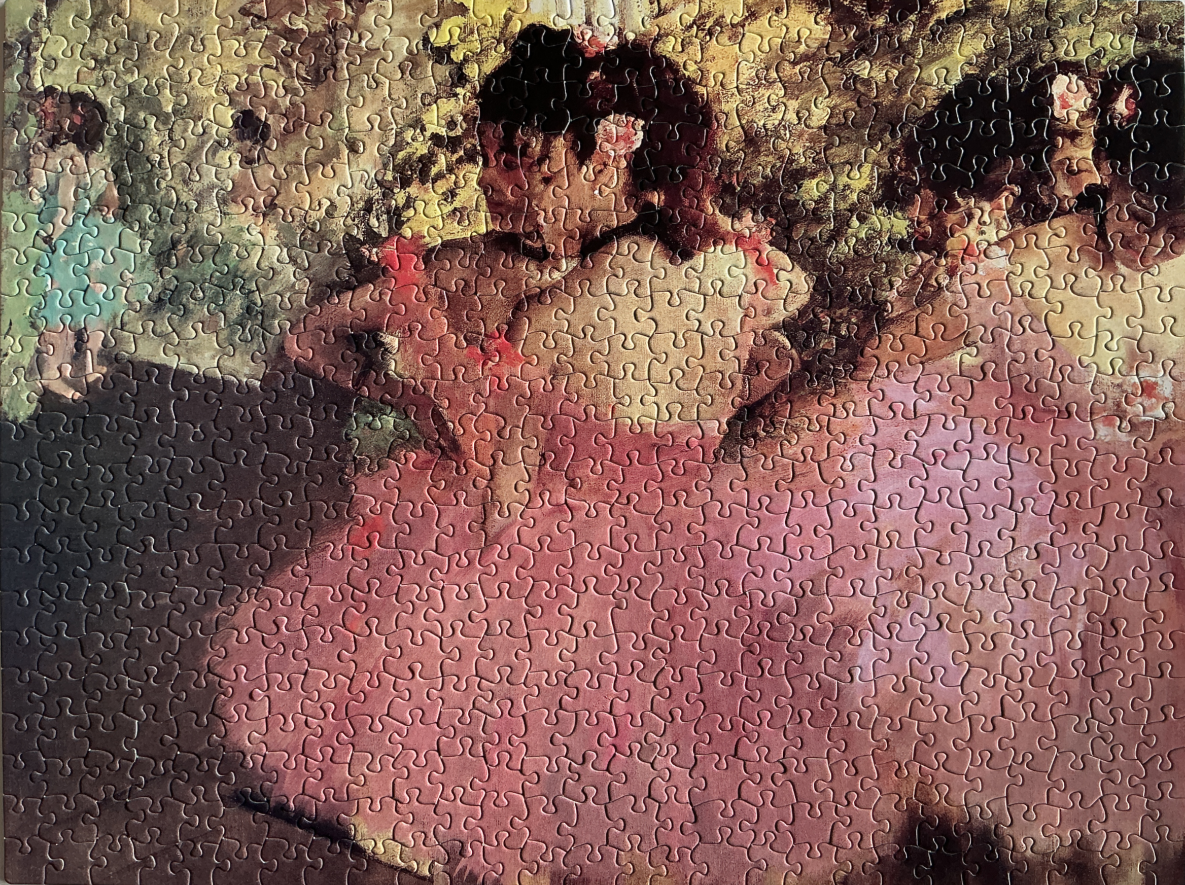
This impressionist artwork features a close-up, intimate view of two ballerinas seen from behind. Their dark hair is pulled back, adorned with subtle floral accents, and they are dressed in voluminous, layered pink tutus that dominate the lower portion of the frame. The subjects appear to be in a moment of quiet preparation or rest, their bodies angled slightly toward each other in a soft, atmospheric setting.
The composition is focused on the texture and form of the figures, with the background dissolving into a hazy, dreamlike wash of muted earth tones, yellows, and greens. The painting style relies on loose, expressive brushstrokes rather than sharp lines, creating a sense of movement and ephemeral light. This technique lends the scene an airy, delicate quality consistent with classical impressionist depictions of dance.
Warm and romantic, the color palette centers on soft rose and dusty pink hues, contrasted against the deep, dark tones of the ballerinas' hair and the shadowy backdrop. The lighting is diffuse and soft, as if capturing the interior of a dimly lit theater or rehearsal hall. The overall mood is one of grace, tranquility, and artistic elegance, emphasizing the texture of fabric and the subtle posture of the dancers.